Content
In a pharmaceutical plant's RTO exhaust treatment system, a carbon steel centrifugal fan developed severe pitting along the weld seam of its impeller after just five months of continuous service. Vibration velocity rose from 2.8 mm/s to 7.5 mm/s, and the whole unit was taken off line. The replacement cost, spare parts, and three days of downtime far exceeded the initial price difference between a carbon steel fan and a corrosion resistant model. The conclusion is straightforward: when your process gas contains corrosive components, a corrosion resistant centrifugal fan is a prerequisite for reliable operation, not an optional upgrade. This article walks through corrosion mechanisms, compares FRP, stainless steel, and Teflon material options, and provides selection parameters for real industrial projects.
“A corrosion resistant centrifugal fan is not an optional upgrade. It is a prerequisite for reliable operation.”
Corrosion in centrifugal fans is not merely surface rust. SO₂, HCl, NOx, alkaline mists, salt crystals, and hot humid air all attack impeller and housing materials differently. Pitting starts at the highest stress points of the impeller, then develops into fatigue cracks. Once a crack is initiated, dynamic balance degrades, bearings carry extra load, and the fan must be stopped.
Light corrosion also changes the aerodynamic profile of the impeller. Surface roughness from relatively mild attack can reduce fan efficiency by 3 to 5 percent. In systems where flow rate and static pressure are fixed, a lower efficiency means a higher motor input power. Over several years, the extra electricity cost can exceed the purchase cost of the fan. Selecting anticorrosion materials at the design stage is the simplest way to lower the total cost of ownership.
Different process media damage fans in very different ways. The table below summarizes typical failure modes according to the environment, which helps during selection and troubleshooting.
| Process environment | Corrosive agent | Typical fan failure mode |
| Combustion flue gas (boilers, incinerators) | SO₂, CO₂, high-temperature steam | High-temperature oxidation, thermal fatigue cracking |
| Acid and alkali scrubber outlet | HCl, NaOH, chlorine, high humidity | Chloride pitting, stress corrosion cracking |
| Paint booth exhaust | Organic esters, solvents, trace acid mist | Coating swelling, seal degradation, bearing corrosion |
| Chemical powder conveying | Salt dust, acidic carrier gas | Combined erosion-corrosion, casing perforation |
| Ship or water treatment CO₂ removal | Amine solutions, marine salt mist, high humidity | Galvanic corrosion, pitting along weld seams |
Mixed media are often more aggressive than a single component. When particle erosion and chemical attack act together, degradation can accelerate exponentially. That is why a precise media composition statement matters more than specifying a generic corrosion class.
Three families of materials dominate corrosion resistant centrifugal fan designs for industrial service. Selection starts with chemical compatibility, then temperature, price, and delivery time.
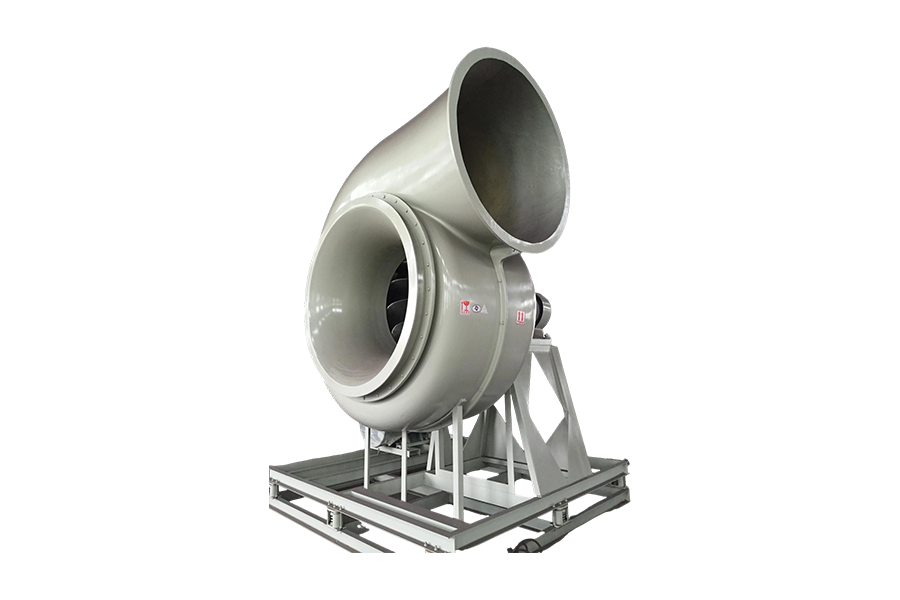 FRP anti-corrosion centrifugal fan for acid and alkali exhaustThis fiberglass reinforced plastic fan resists most acids and alkalis, weighs about one-third of carbon steel, and suits temperatures up to 80°C. Ideal for chemical and electroplating exhaust where corrosion resistance is key.View Product →
FRP (Fiberglass) — Glass fiber reinforced plastic fans are the most common choice for acid and alkali exhaust air. The whole impeller and casing are molded as one piece, which gives FRP good resistance to most acids and alkalis. FRP is roughly one third the weight of carbon steel, so it reduces structural loads. The practical temperature limit is around 80°C, so confirm the resin grade with the supplier if the process gas runs hotter.
Stainless Steel — Stainless steel fans work when temperatures are higher, moderate particulate loading exists, and higher mechanical strength is required. 304 stainless steel serves in mildly corrosive conditions; 316L contains molybdenum, which improves pitting resistance against chlorides. For strong sulfuric or hydrochloric acid, stainless steel still faces uniform corrosion, and the designer should calculate the corrosion allowance for the actual concentration.
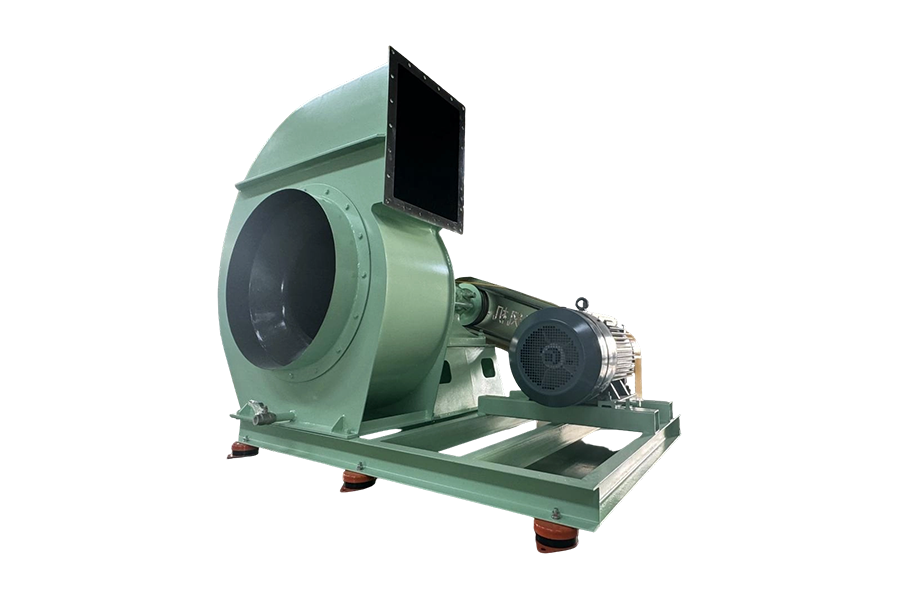
 Stainless steel anti-corrosion centrifugal fan for higher temperaturesStainless steel options like 304 or 316L handle higher temperatures and moderate particulates. 316L adds molybdenum for chloride pitting resistance, making them suitable for mildly corrosive industrial environments.View Product →
 Teflon-coated centrifugal fan for aggressive chemicalsPTFE coating on steel substrate resists nearly all acids, alkalis, and solvents, withstanding 240–260°C. Higher cost but suitable for severe corrosion, high-value media, or strict environmental compliance.View Product →
PTFE / Teflon Coated — PTFE/PFA coated fans address the most aggressive chemicals, high-value media, or strict environmental requirements. Teflon and its variants resist almost all acids, alkalis, and organic solvents, and they tolerate higher temperatures than FRP in many cases. The trade-off is higher cost. Coating thickness and defect control during the manufacturing process are critical for long service life.
To select a reliable fan for corrosive service, define the following parameters at the outset.
More step-by-step guidance on sizing and material selection can be found in our centrifugal fan selection guide.
“A precise media composition statement matters more than a generic corrosion class.”
A typical waste gas stream contains acids, solvent vapors, and particles. After a wet scrubber, FRP is the standard solution; if the gas temperature remains elevated or abrasive particles are present, stainless steel or Teflon-lined designs should be weighed.
Paint booth fans must handle solvent vapors and overspray. These are not strongly corrosive to steel, but they attack seals and coatings. Hot-air circulation fans are better made of stainless steel to prevent paint residue from attaching and eventually rusting the casing.
Flue gas is hot, acidic, and often carries molten salt and fly ash. This is a combined high-temperature and corrosion challenge. The plan should evaluate high-temperature stainless or a Teflon system suited to the actual flue gas temperature.
Corrosion is milder, but high humidity, saline air, and acidic cleaning agents still affect fan life. For food drying and powder conveying, stainless steel prevents product contamination and controls rust.
Even with the correct material, installation and operating details determine whether the fan reaches its design life.
A corrosion resistant centrifugal fan is not just an anti-rust coating on a standard machine. It is a material and design decision made on the basis of the actual media, temperature, and operating profile. Customers who provide a complete media analysis and invite the manufacturer to participate in material selection usually get more reliable service life than those who simply pull a standard fan from a catalog and hope for the best.
Your email address will not be published. Required fields are marked*
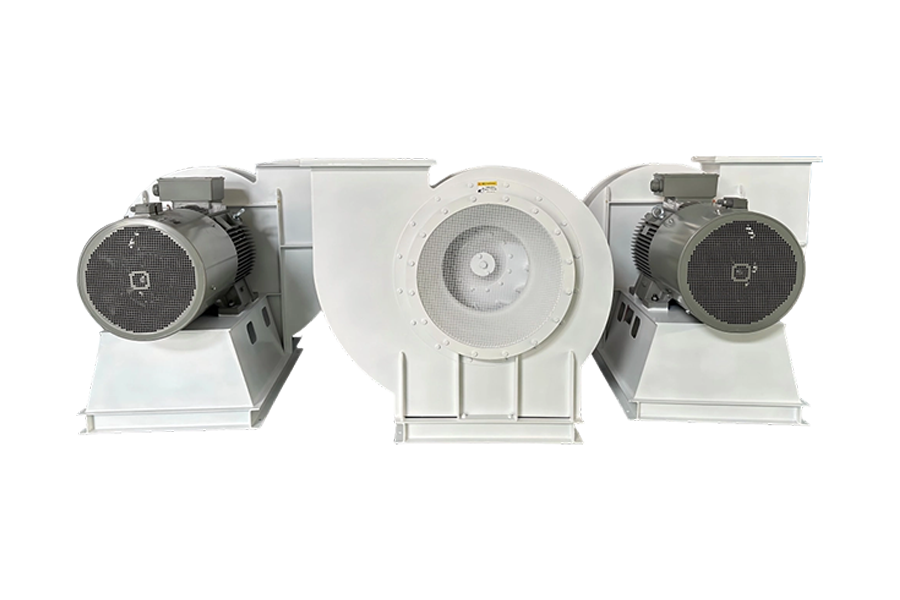
Category: Environmental Protection Industry - Centrifugal Fan for Solid and Liquid Waste Rotary Kiln...
See Details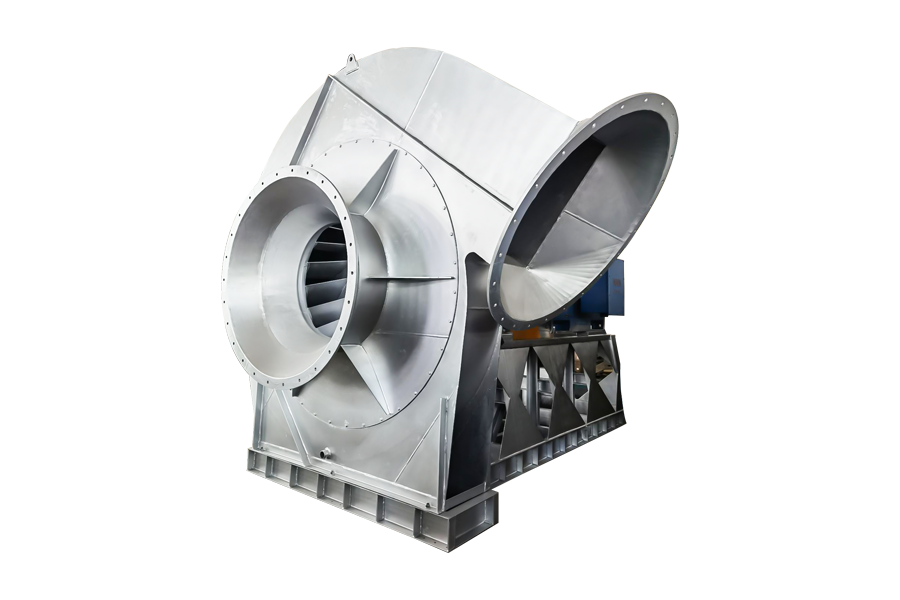
Category: Environmental Protection Industry - Centrifugal Fan for Solid and Liquid Waste Rotary Kiln...
See Details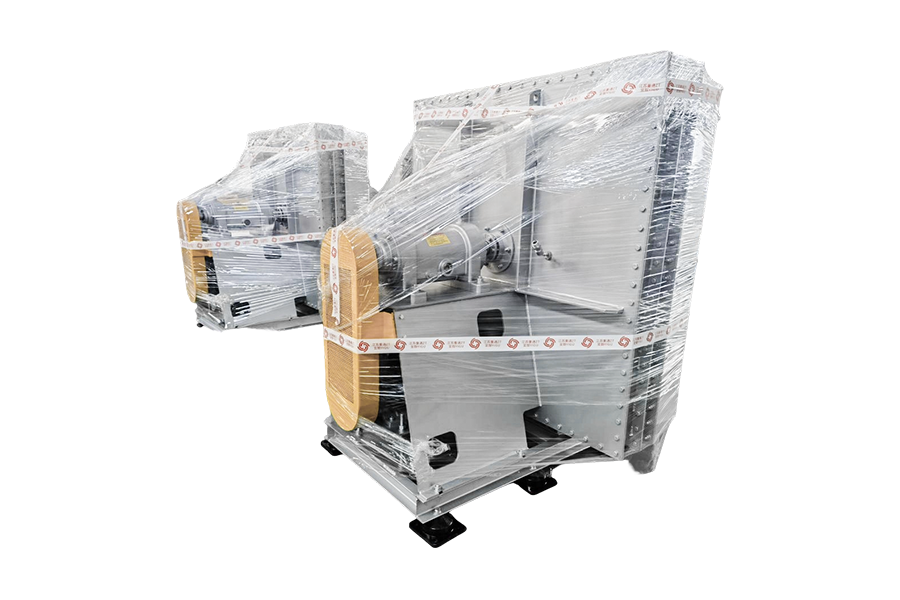
Category: Environmental Protection Industry - Centrifugal Fan for Solid and Liquid Waste Rotary Kiln...
See Details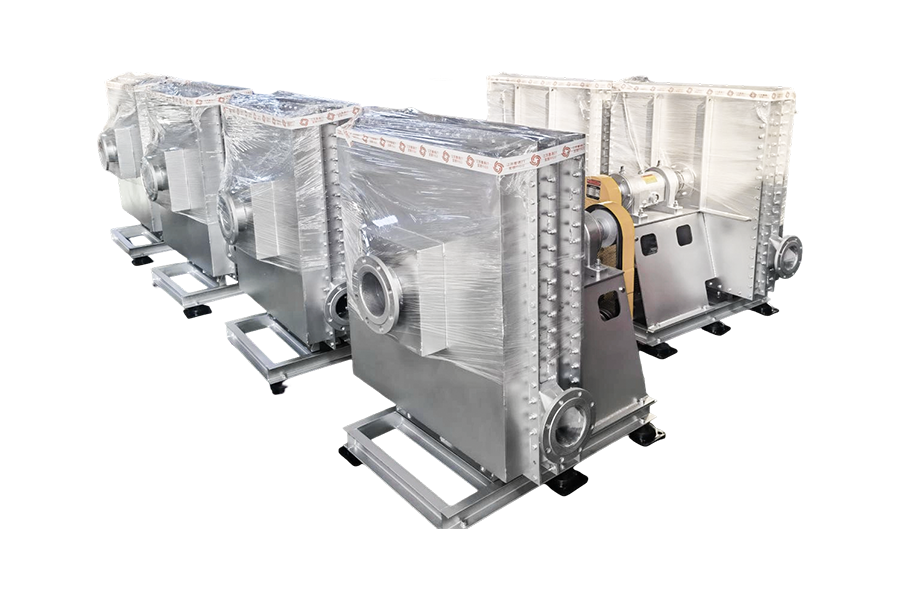
Category: Environmental Protection Industry - Centrifugal Fan for Solid and Liquid Waste Rotary Kiln...
See Details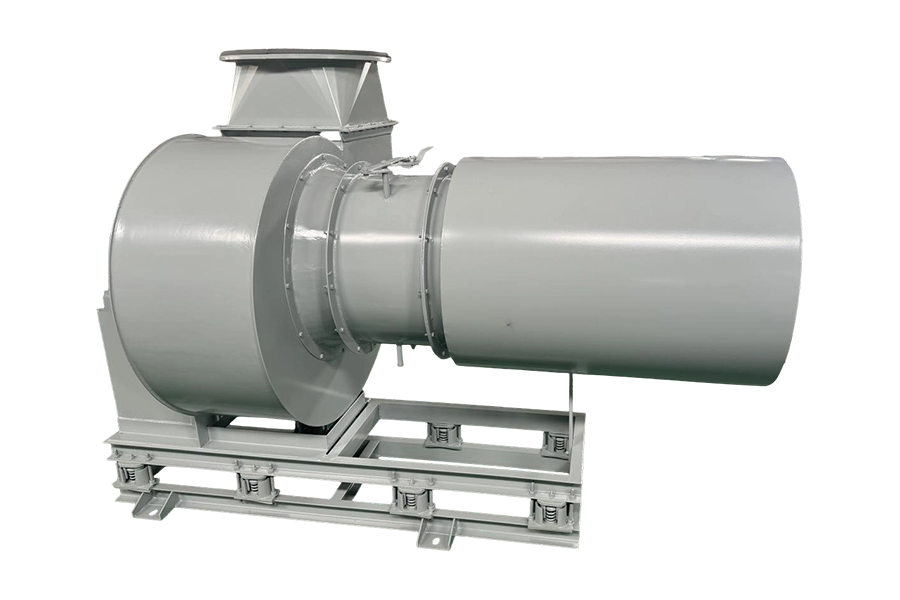
Category: Environmental Protection Industry - Centrifugal Fan for Solid and Liquid Waste Rotary Kiln...
See DetailsMobile: +86-188 6157 1101
No.58 Wendong Road, Xushe Town Industrial Zone, Yixing City, Jiangsu Province, China

Copyright © JIANGSU ZT FAN CO.,LTD. All Rights Reserved.
Stainless Steel Centrifugal Fan Manufacturers


+86-188 6157 1101


 Contact Us
 Language
 English
 русский
 Español