
 Contact Us
 Language
 English
 русский
 Español
Main fan Product Name Air volume All-in Medium temperature Conveying medium Main fan 1000-30000...
See Details
Content
A rotor that fails after a single campaign usually says more about blade geometry than about the name on the casing. Take a cement kiln exhaust fan handling raw-meal dust at 30 g/m3: a wheel with thin forward-curved blades can lose its leading edges within months, and the rotor goes out of balance long before anything else is wrong. Fit a straight radial wheel of similar diameter and the fan may run for years, while drawing 15 to 20 percentage points more shaft power for the same duty.
That trade-off is what separates the three blade families used in centrifugal fans: forward-curved, backward-curved (usually supplied as backward-inclined flat plate in industrial duty), and straight radial. Blade shape fixes four things at once: how much static pressure the wheel can build, how much air it moves at that pressure, how much dust and heat it tolerates, and what happens to motor current when system resistance changes. Settle the blade type first. Material, drive, bearings and seals are details that follow, and no upgrade in steel grade will keep the wrong wheel balanced.
The families separate cleanly on geometry, pressure capability and wear behaviour, and the figures below are the ones worth carrying into a specification review.
| Blade type | Blade geometry | Typical static pressure | Peak efficiency | Power curve behaviour | Where it earns its place |
|---|---|---|---|---|---|
| Forward-curved | 24 to 64 shallow blades curved in the direction of rotation, on a wide, small-diameter wheel | Low, roughly up to 1 kPa per wheel | 55 to 70% | Rises continuously with flow; overload risk if resistance drops | Clean or lightly filtered air, high volume, compact casings |
| Backward-curved and backward-inclined | 8 to 16 deeper blades angled away from rotation; flat plate or hollow airfoil | Medium to high, commonly 1 to 12 kPa | 80 to 86% | Non-overloading; peak power near design flow | Continuous duty where energy cost matters, moderate dust with flat-plate wheels |
| Straight radial | 8 to 16 flat blades radiating from the hub, often with replaceable wear plates | Medium to high, up to about 15 kPa in heavy-duty builds | 55 to 68% | Rises steadily; highest power demand of the three | Abrasive dust, high temperature, sticky or fibrous material, heavy exhaust |
Forward-curved impellers carry many shallow blades curved in the same direction the wheel turns, mounted on a wide, small-diameter wheel. Because the blades sweep forward, air leaves the impeller at high relative velocity, and that velocity converts into volume rather than pressure. For a given wheel diameter, a forward-curved fan moves more air than either of the other two types, but builds the least static pressure, so it suits short duct runs and low-resistance systems.
Peak efficiency sits around 55 to 70%, and power keeps climbing as flow increases. In practice that means a removed filter, an opened bypass damper or an added discharge duct can push the motor past its rating. Inlet dampers, sensible motor margin and a variable-frequency drive with a capped upper frequency are the usual safeguards. Mechanically, the heel of a forward-curved blade and the blade-to-shroud gap collect material, so the geometry belongs on clean or well-filtered air. Standard low-pressure classes such as the 468, 472, 473, 479 and 42x72 series sit in this group.
 Custom Low-Pressure Centrifugal Fans: 4-68 to 4-2x79 SeriesLow-pressure centrifugal fan series suited to clean or well-filtered air, with multiple drive and dual-impeller options for industrial ventilation.View Product →
Backward-curved wheels use fewer, deeper blades, usually 8 to 16, leaning away from the direction of rotation. Two variants dominate industrial supply. The hollow airfoil delivers the highest efficiency but is unforgiving of dust; the single-thickness flat plate, known as backward-inclined, gives up a point or two of efficiency in exchange for wider passages and better resistance to build-up. Both normally reach 80 to 86% peak efficiency, which is why they dominate fans running 8,000 hours a year or more.
The second advantage is the power curve. Backward-curved fans peak in power near design flow and then flatten or fall away, so a fan pushed past its duty point does not overload the motor. That property protects drives and motors when a damper sticks open or a filter is left out. Medium and high pressure duty, including the Y547, Y548 and G-Y651 medium-pressure classes and the 809, 912, 919 and 926 high-pressure series, is normally handled by this geometry.
Two limits are worth knowing before specifying one. Leading edges erode on abrasive dust, and a hollow airfoil that fills with material becomes an unbalanced rotor, so dirty streams call for flat-plate wheels, wear strips or a different blade family altogether. Sticky or fibrous material can also bridge between closely spaced blades. Where the airstream is clean and energy cost matters, backward-curved is the default; where it is not, it is a liability.
 High-Pressure Centrifugal Blowers: 8-09, 9-12, 9-19, 9-26 SeriesHigh-pressure centrifugal blower series for cupola, furnace, forge and burner air supply, with airflow, pressure and power ranges across four models.View Product →
Straight radial wheels are the simplest of the three: 8 to 16 flat blades standing out from the hub like spokes, often fitted with replaceable wear plates and welded to a heavy back plate. Efficiency is the price, typically 55 to 68%, but the open passage between blades throws material outward instead of trapping it, so the wheel keeps working in airstreams that would destroy a curved impeller.
That makes radial blades the standard choice for abrasive dust, high-temperature flue gas, and streams carrying sticky, fibrous or condensable particles. Kiln and clinker lines, sinter and smelting exhaust, wood and food dust collection, and many solid-waste thermal processes fall into this group, often at dust loads measured in tens of grams per cubic metre. Tip speed and blade thickness can be traded against pressure and wear life, and static pressure can reach roughly 15 kPa in heavy-duty executions.
The engineering effort shifts from aerodynamics to construction: blade thickness and hard facing, hub and back-plate stiffness, a wear-resistant inlet cone, and bearings that tolerate the resulting shaft loads. A radial fan is also the honest answer when process temperature rules out aluminium or thin-gauge wheels.
 Cement Rotary Kiln Tail Exhaust Fan for Flue Gas HandlingKiln tail exhaust fan for dust-removed flue gas at 80–180°C, providing negative pressure after the kiln tail dust collector for chimney discharge.View Product →
Work through the following in order; the answer usually falls out of the first three questions.
A structured selection guide covering capacity, pressure and materials is a useful cross-check once the blade family is narrowed down.
Most selection errors are not aerodynamic; they are omissions.
Blade type is the first specification on a centrifugal fan, not the last detail. Forward-curved wheels buy airflow and compactness and demand clean gas; backward-curved and backward-inclined wheels buy efficiency and a forgiving power curve; straight radial wheels buy tolerance of dust, heat and neglect at the cost of shaft power. Around that choice sit the material grades, wear protection, sealing arrangement and drive that decide how long the rotor actually lasts — and those are worth reviewing with the same care as the airflow figure.
Your email address will not be published. Required fields are marked*
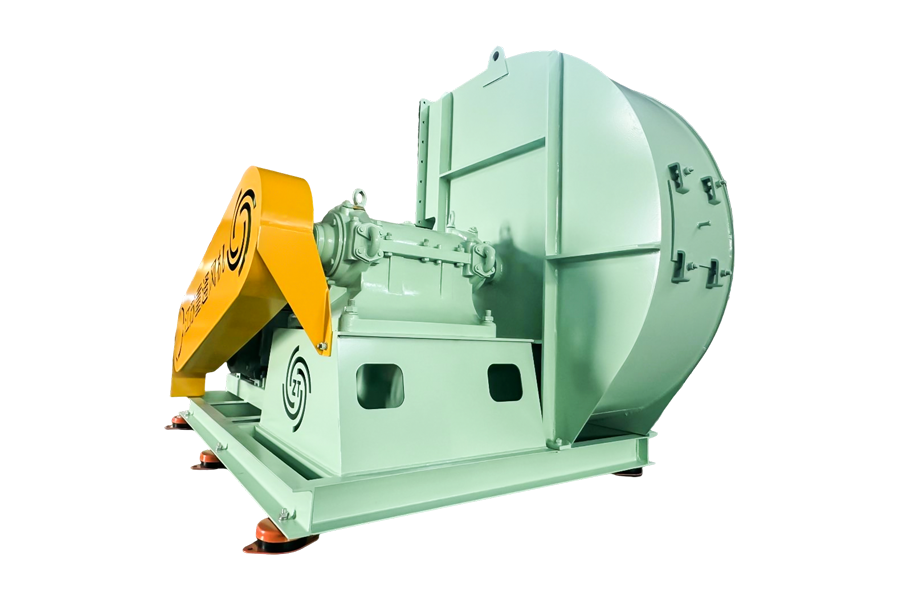
Main fan Product Name Air volume All-in Medium temperature Conveying medium Main fan 1000-30000...
See Details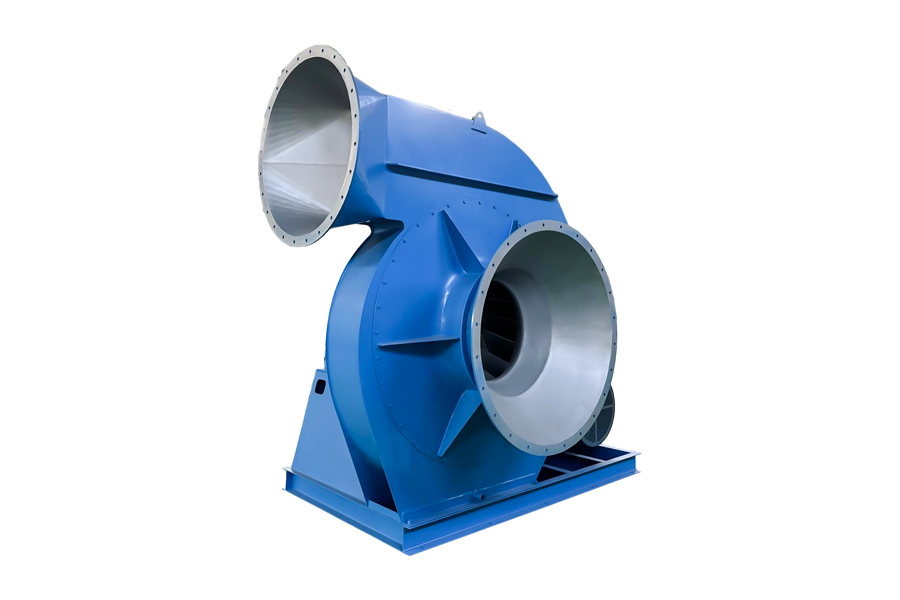
Induced draft fan Product Name Air volume All-in Medium temperature Conveying medium induced dr...
See Details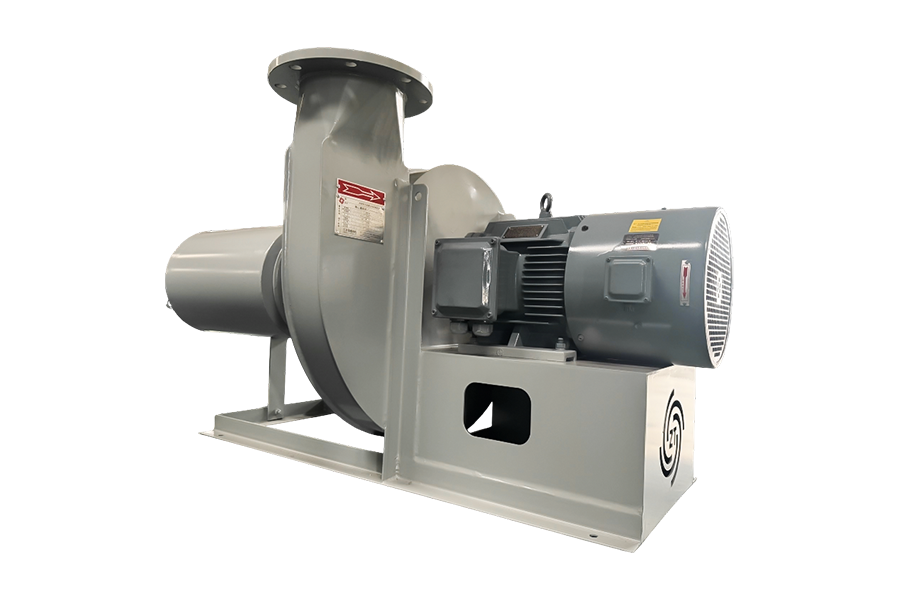
Combustion-supporting fan Product Name Air volume All-in Medium temperature Conveying medium Co...
See Details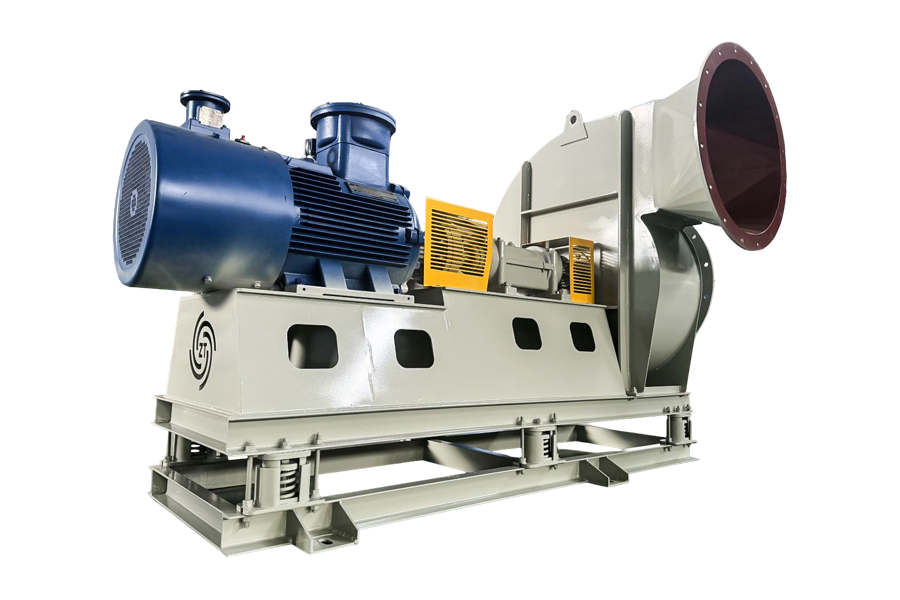
Oxygen supplement fan Product Name Air volume All-in Medium temperature Conveying medium Oxygen...
See Details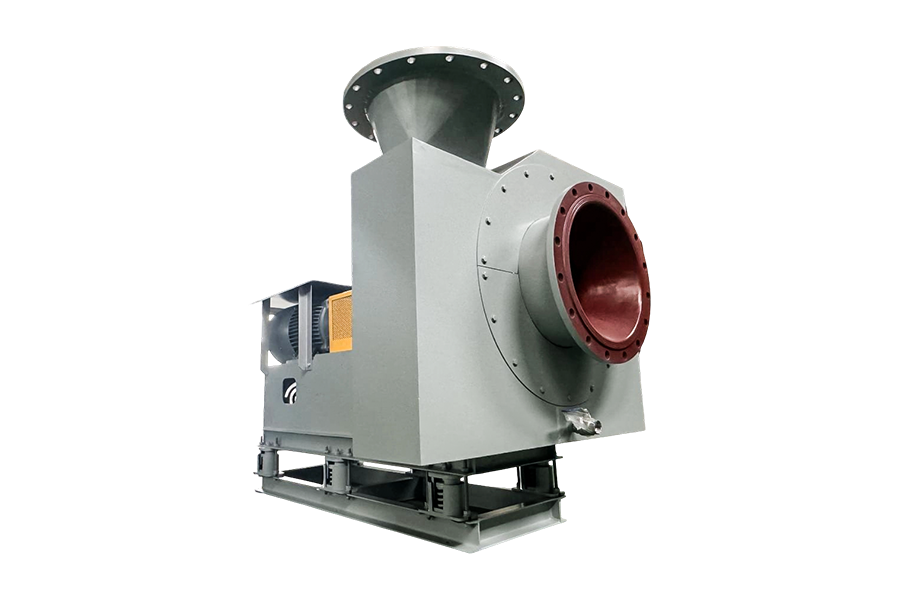
Purge fan Product Name Air volume All-in Medium temperature Conveying medium Purge fan 1000-500...
See Details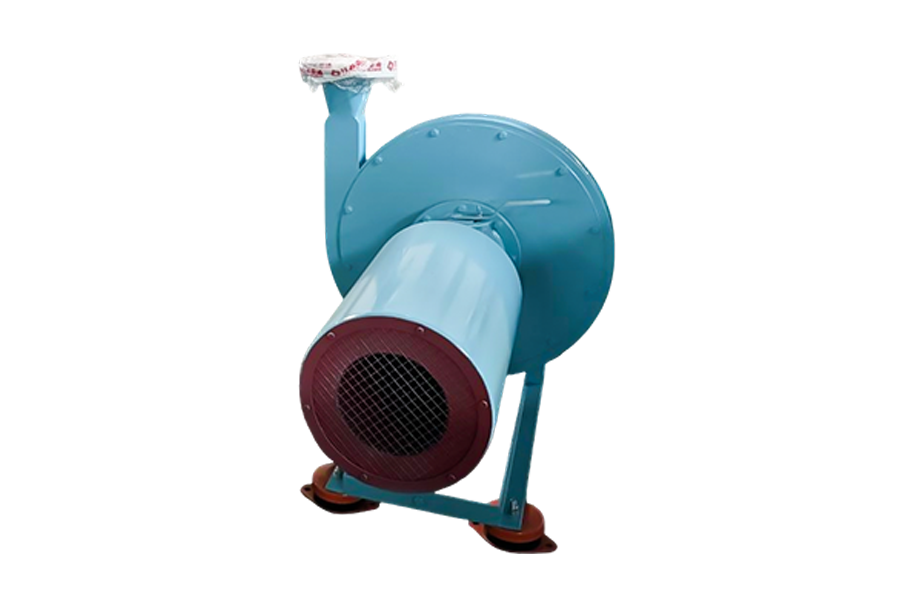
Sealed fan Product Name Air volume All-in Medium temperature Conveying medium Sealed fan 500-10...
See DetailsMobile: +86-188 6157 1101
No.58 Wendong Road, Xushe Town Industrial Zone, Yixing City, Jiangsu Province, China

Copyright © JIANGSU ZT FAN CO.,LTD. All Rights Reserved.
Stainless Steel Centrifugal Fan Manufacturers


+86-188 6157 1101
