
 Contact Us
 Language
 English
 русский
 Español
Main fan Product Name Air volume All-in Medium temperature Conveying medium Main fan 1000-30000...
See Details
Content
At a sheet-metal plant, an axial fan was fitted to pull welding fume from three workbenches through twelve meters of duct and a cartridge filter. At the bench hoods, capture velocity fell below 0.3 meters per second, smoke curled back toward the welders, and the filter loaded faster than maintenance could keep up. The axial fan moved plenty of air in open space, but duct friction and filter pressure drop together exceeded everything the impeller could generate.
The conclusion is direct: any fume extraction system with ductwork, filters, hoods, or scrubbing equipment should be built around a centrifugal fan. A centrifugal fan generates the static pressure that a real fume system consumes, and its airflow stays stable as filters load and ducts accumulate residue.
A centrifugal fan draws air axially into the impeller and discharges it radially into a scroll housing. That change in direction lets the impeller add static pressure to the stream, not just velocity. An axial fan adds velocity inline with the flow, which is efficient only when system resistance is low. In fume extraction, resistance is never low: hood entries, elbows, dampers, filter media, and scrubber packing all consume static pressure.
Three practical advantages matter to a plant engineer:
Impeller design adds another layer of choice. Forward-curved impellers deliver high airflow at moderate pressure and suit general ventilation. Backward-curved impellers are more efficient and handle moderate particulate loading, so they are a common starting point for fume service. Radial-bladed impellers resist erosion and buildup, which suits abrasive dust and high-temperature flue gas. The right choice follows the contaminant, not the airflow figure alone.
Industrial fume sources differ so much in temperature, moisture, and chemical load that the fan can rarely be selected from airflow alone. The main application groups are worth mapping before any spec is written.
| Application | Typical contaminant | Fan design priority | Common construction |
|---|---|---|---|
| Welding and laser cutting stations | Metal oxide fume, fine smoke | Stable pressure at moderate airflow | Carbon steel, backward-curved impeller |
| Paint spray booths and coating lines | VOCs, solvent vapor, overspray | Medium pressure, spark-resistance options | Carbon steel with protective coatings |
| Wet chemical and plating processes | Acid mist, caustic vapor | Corrosion resistance, leak-tight joints | FRP, stainless steel, PTFE-lined |
| Waste treatment and thermal oxidation | Hot flue gas, partially condensed tars | High temperature rating, expansion handling | Alloy or high-temperature steel |
The table is a simplification, but it captures the first decision a designer must make: is the fan moving air at ambient temperature, hot air, or chemically aggressive air? Each answer leads to a different fan series and a different component specification.
Welding fume is fine particulate. The fan does not filter it; the capture hood, duct, and filter unit do. The fan keeps face velocity at the hood above roughly 0.5 meters per second in a local exhaust layout, which requires enough static pressure to overcome filter resistance as the media loads. Shops that start with an axial fan find that pressure collapses once the filter reaches its design dust capacity.
Paint spray booths are usually cross-draft or downdraft designs. The exhaust fan must pull solvent-laden air through the booth filters and the duct run to the abatement device. When abatement is an activated carbon adsorber or a catalytic oxidizer, each element adds pressure drop. An induced draft fan placed downstream of the filters keeps the booth under negative pressure so solvent vapor cannot leak into the work area. For coating lines, dedicated paint spray booth blowers are built to handle overspray and intermittent solvent loads without stalling.
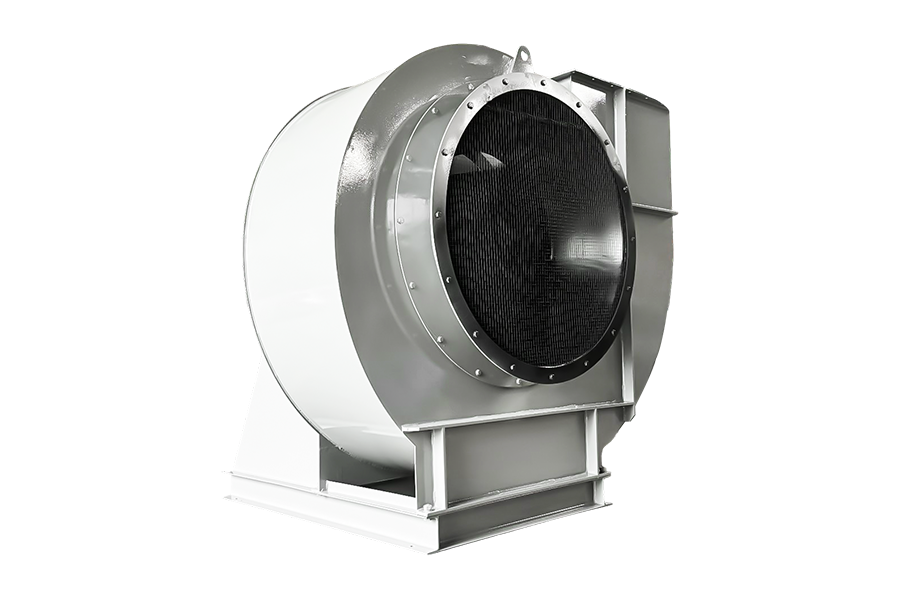 Custom Paint spray booth blowers for the coating industry Manufacturers, FactoryJiangsu ZT Fan Co., Ltd. Is China Custom Paint spray booth blowers for the coating industry Manufacturers, Factory, Company, Category: Ce...View Product →
Selection starts with the system curve, not the catalog. Required airflow is set by the capture velocity at each hood. Required static pressure is the sum of all losses along the air path:
Only after these losses are added does the design point mean anything. A common mistake is to choose a fan on airflow alone, then discover at startup that actual flow is 20 to 30 percent below the target because static pressure was underestimated. Designers typically add a 10 percent margin on pressure and a safety factor on airflow, but the margin should be declared honestly: oversizing raises motor power, operating cost, and noise. The practical path is to model the duct system, draw the system curve, and select the fan whose curve intersects it at the design point. A centrifugal fan selection guide covering capacity, pressure, and materials is a useful reference for this step.
The phrase "fume extraction centrifugal fan" tells experienced buyers one thing: the fan must be rated for static pressure, not just volume. The static pressure axis of the fan curve tells you whether the installation will actually pull fume through a loaded filter.
For streams above 80 °C, the motor is usually mounted outside the airstream or shielded from radiant heat. High-temperature operation affects bearing lubrication, shaft seal selection, and impeller thermal expansion. A standard fan should not be assumed to run at process temperature without checking these details.
Fume streams are rarely clean air. Chlorides from plating tanks, fluorides from ceramic kilns, sulfur oxides from waste incineration, and condensable tars all attack fan components. Material selection is a reliability decision, not a cost exercise.
Carbon steel is acceptable for dry, non-corrosive fume such as welding smoke. When the airstream contains acid gases, moisture, or solvent mixtures, the impeller, housing, and inlet cone should be specified in a corrosion-resistant grade. Options range from stainless steel to fiber-reinforced plastic and PTFE-lined construction. For chemical exhaust, an FRP anticorrosion centrifugal fan resists a broad range of acids and alkalis while keeping rotating weight low. Where temperatures are very high or chlorine exposure rules out composites, alloy construction is the answer; the customized centrifugal fan alloy selection for semiconductor scrubbers explains how alloy grades are matched to specific contaminants.
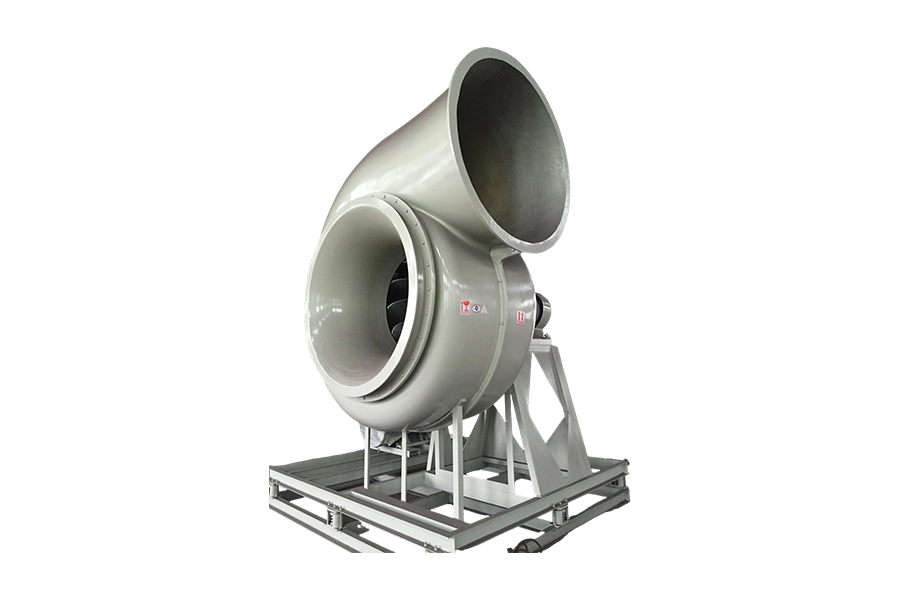 Custom FRP anti-corrosion centrifugal fan Manufacturers, Factory, CompanyJiangsu ZT Fan Co., Ltd. Is China Custom FRP anti-corrosion centrifugal fan Manufacturers, Factory, Company,View Product →
A few practical rules of thumb:
A fume extraction system is a sequence: capture hood, duct, prefilter, adsorber or oxidizer, fan, and stack. The fan position in that sequence matters.
In a push-through arrangement the fan sits upstream of the treatment unit and blows contaminated air through it. In a pull-through, or induced draft, arrangement the fan sits downstream and draws the air through the filters, keeping the entire treatment unit under negative pressure. The induced draft layout is preferred when solvent vapor or acid gas must not leak from filter housings and duct joints.
When VOC-laden fume is handled by activated carbon, regeneration and catalytic oxidation add more fans to the train. Adsorption fans, desorption fans, and combustion-assist blowers each run at different flows and temperatures. In such systems, a catalytic combustion fan must tolerate preheated air and stay stable through the oxidizer's cycling airflow, so its pressure curve and heat rating are safety matters as much as performance.
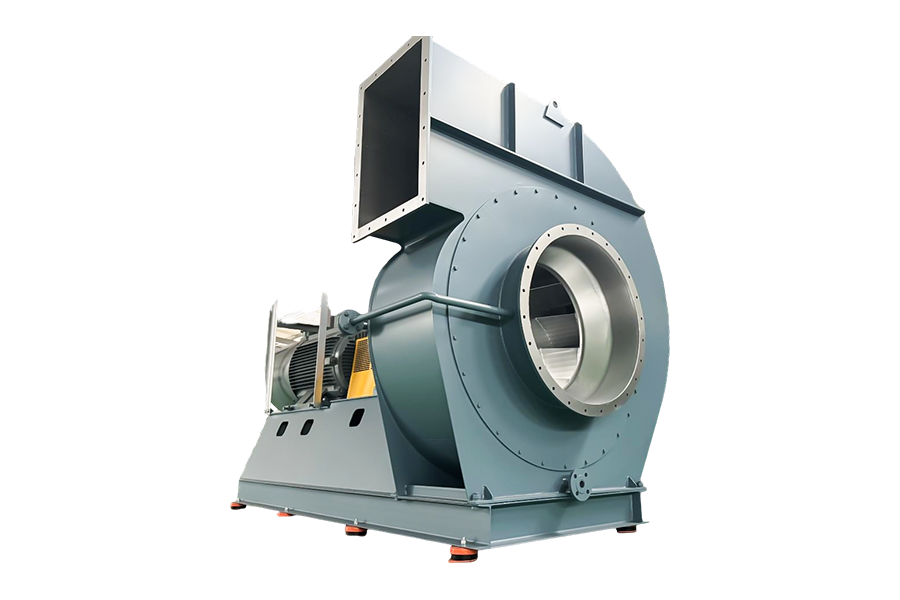 Custom Environmental Protection Industry - Exhaust Gas Treatment System CatalytiJiangsu ZT Fan Co., Ltd. Is China Custom Environmental Protection Industry - Exhaust Gas Treatment System Catalytic Combustion Fan Manufa...View Product →
The total pressure of the train is not just the sum of clean component losses. Filters load, carbon beds age, and scrubber nozzles clog. A centrifugal fan with a stable pressure curve gives operators time to react before airflow falls below the minimum capture velocity.
Fume extraction spans a wide pressure range, and manufacturers classify centrifugal fans accordingly. The pressure class determines the kind of system the fan can serve:
The same airflow can be delivered by a low-pressure fan with a larger impeller or a high-pressure fan with a smaller, faster impeller. The choice depends on where the operating point sits on the fan curve and how much system pressure changes over time.
Where noise limits are strict, a high-efficiency, low-noise series is worth evaluating. It does not change the fundamentals of fume extraction, but it can reduce the acoustic treatment needed around a fan that runs for two or three shifts.
The right fume extraction centrifugal fan is the one whose curve, materials, and temperature rating match the real operating condition of the system. Start from the hood capture velocity, add every pressure loss, declare temperature and chemical composition honestly, then pick the series and material that fit. Axial fans have their place in open ventilation, but for ducted fume extraction a centrifugal fan is the engineering baseline. When the duct layout, fume chemistry, or operating temperature falls outside standard catalogs, a customized centrifugal fan is often more reliable than forcing a standard unit into an unsuitable duty.
Your email address will not be published. Required fields are marked*
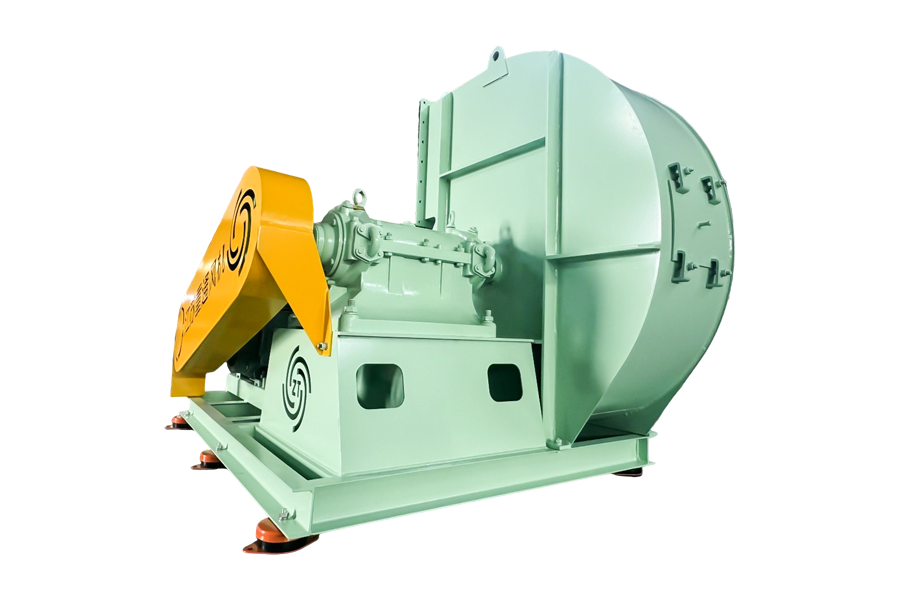
Main fan Product Name Air volume All-in Medium temperature Conveying medium Main fan 1000-30000...
See Details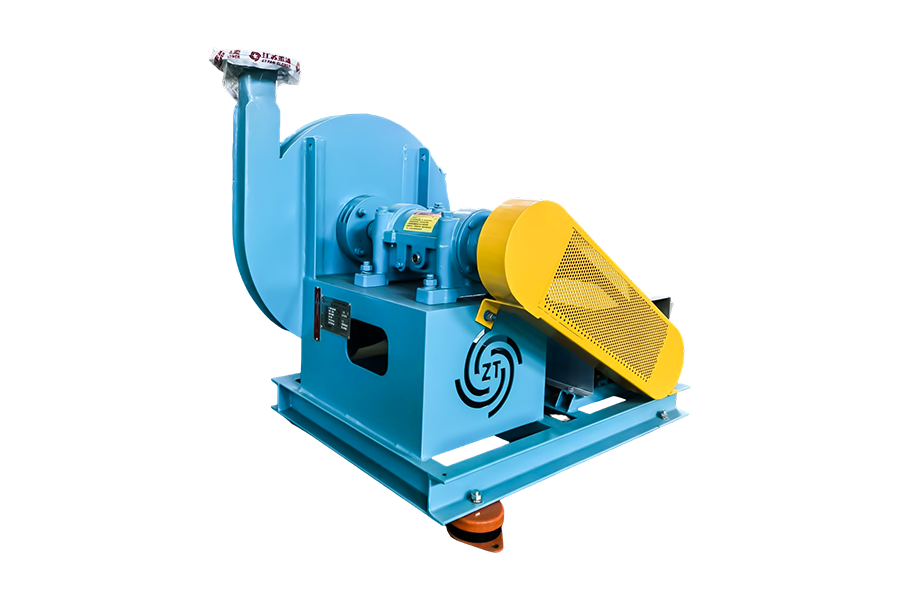
Exhaust fan Product Name Air volume All-in Medium temperature Conveying medium exhaust fan 1000...
See Details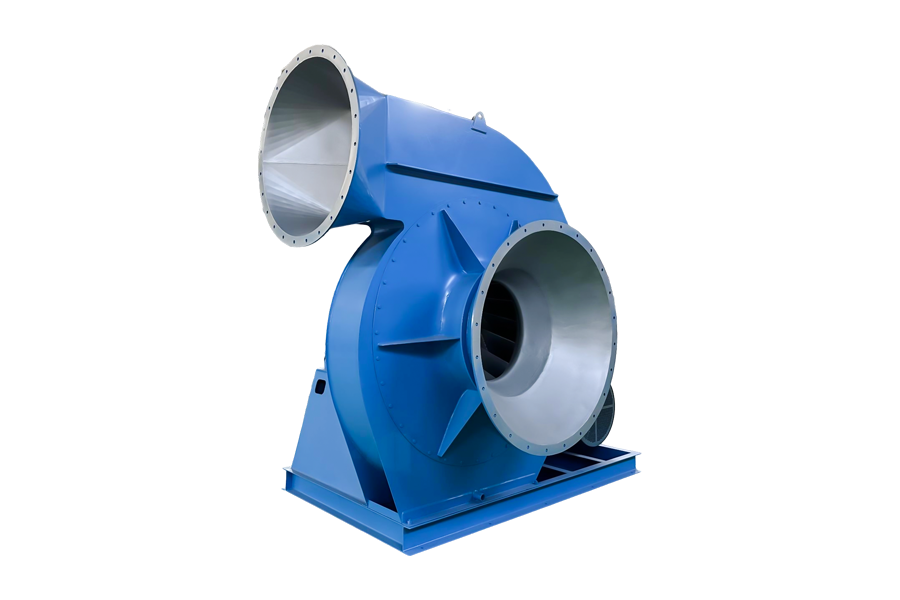
Induced draft fan Product Name Air volume All-in Medium temperature Conveying medium induced dr...
See Details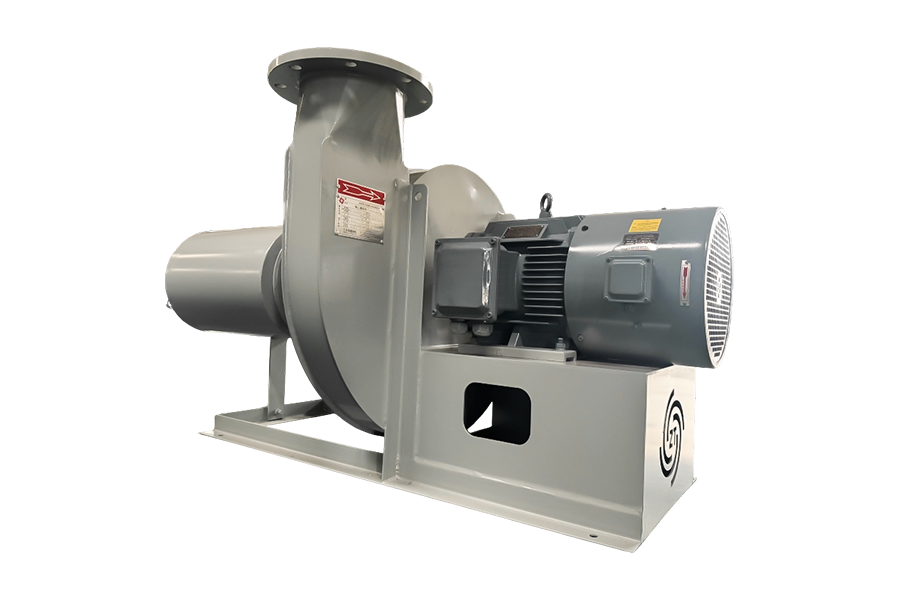
Combustion-supporting fan Product Name Air volume All-in Medium temperature Conveying medium Co...
See Details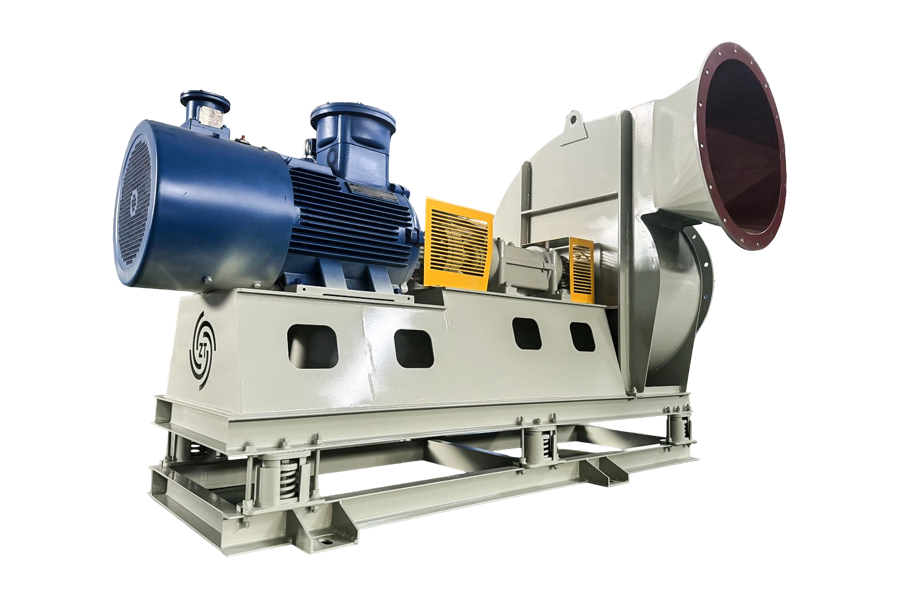
Oxygen supplement fan Product Name Air volume All-in Medium temperature Conveying medium Oxygen...
See Details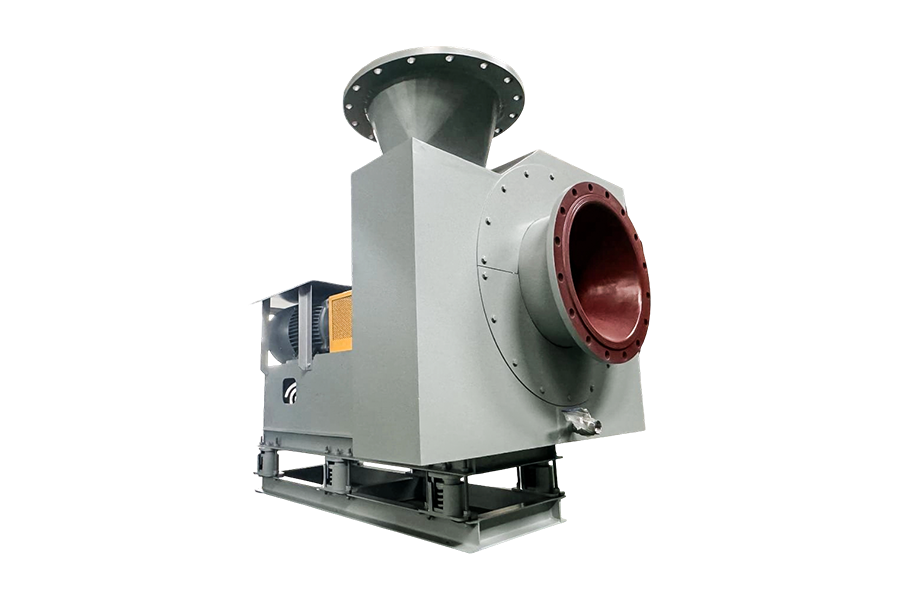
Purge fan Product Name Air volume All-in Medium temperature Conveying medium Purge fan 1000-500...
See DetailsMobile: +86-188 6157 1101
No.58 Wendong Road, Xushe Town Industrial Zone, Yixing City, Jiangsu Province, China

Copyright © JIANGSU ZT FAN CO.,LTD. All Rights Reserved.
Stainless Steel Centrifugal Fan Manufacturers


+86-188 6157 1101
