
 Contact Us
 Language
 English
 русский
 Español
Main fan Product Name Air volume All-in Medium temperature Conveying medium Main fan 1000-30000...
See Details
Content
A maintenance engineer at a chemical plant recently called to ask why a newly installed centrifugal fan had to be pulled from service after just two weeks of operation. The fan was selected by matching the airflow shown on an old nameplate, but nobody had verified that the existing duct network had been extended by thirty meters. The result was a system resistance far above what the fan could deliver, causing the motor to overheat and the impeller to stall. This is the most common reason fan projects fail early: the selection method is too simple for the system it serves.
Centrifugal fan selection is not a single calculation. It is a set of decisions that combine the process requirement, the duct and equipment layout, the gas properties, the operating temperature, and the electrical supply available in the plant. Getting these decisions right at the outset avoids the costly route of installing a fan, measuring the actual system curve, and discovering that the fan is running too close to its surge line or too far from its best efficiency point.
The first step in any selection is to establish two values: the required volume flow rate and the required total pressure. Both must describe the same point on the system curve, and both must be expressed at the actual operating condition, not at standard conditions if the gas is hot or laden with solids.
Critical rule: The operating point must be defined at actual gas conditions, not standard air. Hot gas expands and reduces density, which changes both the mass flow requirement and the pressure the fan can generate. A fan selected on cold air ratings will be undersized when installed on a hot process.
Volume flow rate is usually given in cubic meters per hour (m³/h) or cubic feet per minute (CFM). It comes from the process itself: how much air needs to be moved to support combustion, dilute a VOC stream, cool a clinker, or convey a powder. The trick is not to use the theoretical flow alone. Add the leakage factors, the safety margin for future throughput, and the correction for density if the gas contains moisture or dust.
Total pressure is the sum of static pressure and velocity pressure. For most industrial duct systems, static pressure dominates. It must account for every bend, damper, filter, heat exchanger, duct section, and process vessel between the fan inlet and the outlet. Neglecting a single baghouse filter or a stack exhaust point can push the actual resistance 30 to 40 percent above the calculated value.
When both values are known, you plot them on a fan performance curve. The intersection of the system resistance curve and the fan curve at the desired speed is the operating point. That point should sit within the manufacturer's recommended range, ideally in the middle third of the fan's efficiency island.
Centrifugal fans are typically grouped by the static pressure they can generate. The boundaries between low, medium, and high pressure are not standardized across every manufacturer, but the practical ranges used in industrial fan practice follow a familiar pattern:
| Pressure class | Typical total pressure range | Common applications |
| Low pressure | Up to about 1,000 Pa | General ventilation, dust extraction at source, air circulation in rooms, agricultural drying |
| Medium pressure | About 1,000 to 4,000 Pa | Exhaust gas treatment, catalytic combustion systems, boiler forced draft, paint booth exhaust |
| High pressure | Above 4,000 Pa, often 8,000 to 20,000 Pa | Cement kiln tail exhaust, pneumatic conveying, high-temperature furnace exhaust, long duct runs |
If you are selecting a fan for a waste gas treatment system with long horizontal runs and multiple activated carbon beds, a medium pressure fan will usually be the correct starting point. The Y547 and Y548 series are commonly used in this position because they combine a stable performance curve with a shape that tolerates mild dust loading.
 Medium-Pressure Centrifugal Fans for Waste Gas TreatmentThese Y547, Y548, and G/Y6-51 series fans handle moderate dust and provide stable performance for gas treatment systems with long duct runs and carbon beds, making them a suitable starting point for such applications.View Product →
Once the operating point is fixed, the next question is what the gas contains and how hot it is. Temperature affects the permissible motor power, the bearing cooling method, the impeller material, and the shaft seal design. A fan moving 200 degree Celsius flue gas from a rotary kiln is a fundamentally different machine from the same frame moving ambient air.
Material selection rule: For clean air up to 120°C, carbon steel with standard weld is sufficient. For gas above 250°C, a high-temperature fan with heat-resistant steel is required. Above 400°C, thermal expansion and bearing cooling become critical design constraints.
For clean air up to about 120 degree Celsius, carbon steel with a standard weld construction is sufficient. Above that, the metal expands, and the weld quality and blade attachment method become critical. For gas above 250 degree Celsius, a high-temperature fan with a specially shaped impeller and heat-resistant steel is required. If the process has to keep running during a thermal cycle, the fan also needs to be able to idle safely when the duct is hot but the fan is not spinning.
Wet scrubbers, chemical exhaust systems, and waste incineration plants often carry acid vapors that attack ordinary steel. For these applications, a glass-reinforced plastic (FRP) fan, a stainless-steel fan, or a fan lined with Teflon will outlast a carbon steel fan many times over. The trade-off is in the maximum temperature. FRP is generally limited to about 80 degree Celsius, while Teflon coating can handle more aggressive media at higher temperatures if the fan is designed correctly.
When a process involves both high temperature and corrosive agents, you cannot simply take a standard fan and paint it. You need a customized centrifugal fan with corrosion-resistant cladding in contact with the gas stream and a high-temperature-capable bearing assembly on the shaft. This is exactly the situation where a high-temperature centrifugal fan is specified instead of a general-purpose model.
 High-Temperature Centrifugal Fan for Corrosive and Hot Gas ProcessesThis fan is designed for extreme temperatures up to 800°C and includes corrosion-resistant cladding and thermal insulation, making it essential for processes involving both heat and corrosive agents.View Product →
Efficiency may not be the first number you look at, but it drives the life-cycle cost. A fan running at 58 percent efficiency will consume roughly 28 percent more power than a fan running at 74 percent efficiency for the same duty point. Over a 10-year service life with a 75 kW motor, that difference can represent hundreds of thousands of yuan in electricity.
Noise is another factor that often gets decided too late. Indoor installations with workers present usually have a practical limit around 85 dB(A), while residential boundary limits can be as low as 60 dB(A). The sound power level of a centrifugal fan is strongly influenced by the tip speed and the blade shape. Choosing a quieter series at the design stage is far cheaper than adding a silencer afterward.
When the process allows, selecting a fan with a broader efficiency island is a better strategy than selecting a peak-efficiency point that happens to match the design case but leaves no room for system variance. The operating point will move as filters load and ducts degrade, so the fan should remain efficient across a wider band of flow.
Standard centrifugal fans are attractive because they are available quickly and provide a well-understood performance envelope. They work best when the airflow, pressure, and gas composition are close to a normal industrial condition and when the system design leaves a reasonable margin.
Customization becomes necessary when the standard frame cannot meet one of a few hard constraints. It could be the temperature, as discussed above. It could be a space constraint where the fan must fit into an existing duct arrangement. It could be the need for a zero-leakage shaft seal in a system handling toxic gases. It could be a special anti-corrosion requirement, such as a semiconductor scrubber where chloride ions attack even stainless steel.
Customization triggers: Temperature above 250°C | Corrosive gas stream | Space or footprint constraint | Zero-leakage shaft seal required | Retrofit with fixed foundation and bolt pattern | Special anti-corrosion alloy needed
For an existing plant where the fan is being replaced, the physical envelope and bolt pattern of the original equipment may force a custom solution. The 809, 912, 919, and 926 series offer a range of high-pressure impeller designs that can be adapted to a specific speed and shaft arrangement without requesting a completely new tooling setup. This is important for replacement projects where the foundation, inlet box, and outlet flange are already fixed.
 High-Pressure Centrifugal Blowers for Replacement and Custom FitThe 809, 912, 919, and 926 series offer adaptable high-pressure impellers, allowing customization to match existing shaft speeds and mounting dimensions—ideal for retrofit projects with fixed foundations and flanges.View Product →
Before you send a request for quotation, confirm that the following items are written down. They are not optional details; they determine whether the delivered fan will perform as intended.
Some of these inputs will change after the fan is installed. How the fan behaves off-design is just as important as how it behaves at design. That is why it is worth reading through the manufacturer's selection guide for the specific pressure class you are using. A faster route is to check the guide on centrifugal fan selection that covers capacity, pressure, and materials in one place, and then narrow the search to your industry.
In the end, a properly selected centrifugal fan is one that runs near its best efficiency point, survives the gas chemistry, fits the physical space, and remains stable when the system resistance changes. Every other consideration, from noise to maintenance access, is secondary to those four conditions.
Your email address will not be published. Required fields are marked*
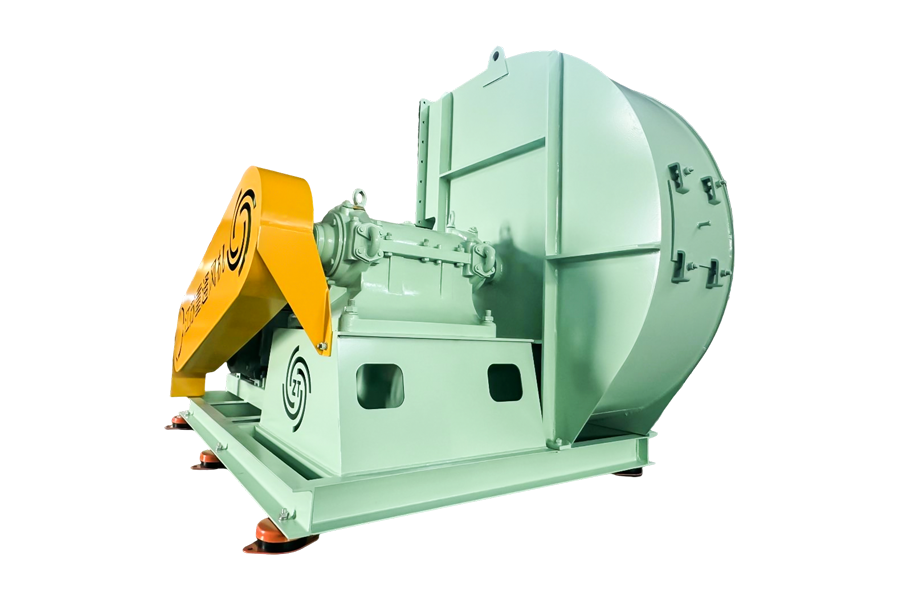
Main fan Product Name Air volume All-in Medium temperature Conveying medium Main fan 1000-30000...
See Details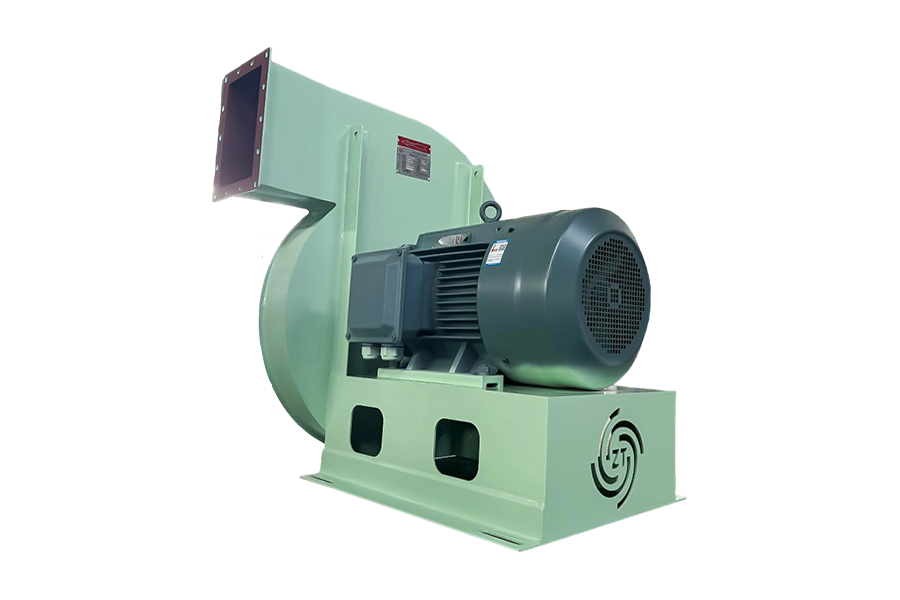
Category: Environmental Protection Industry - Centrifugal Fan for Solid and Liquid Waste Rotary Kiln...
See Details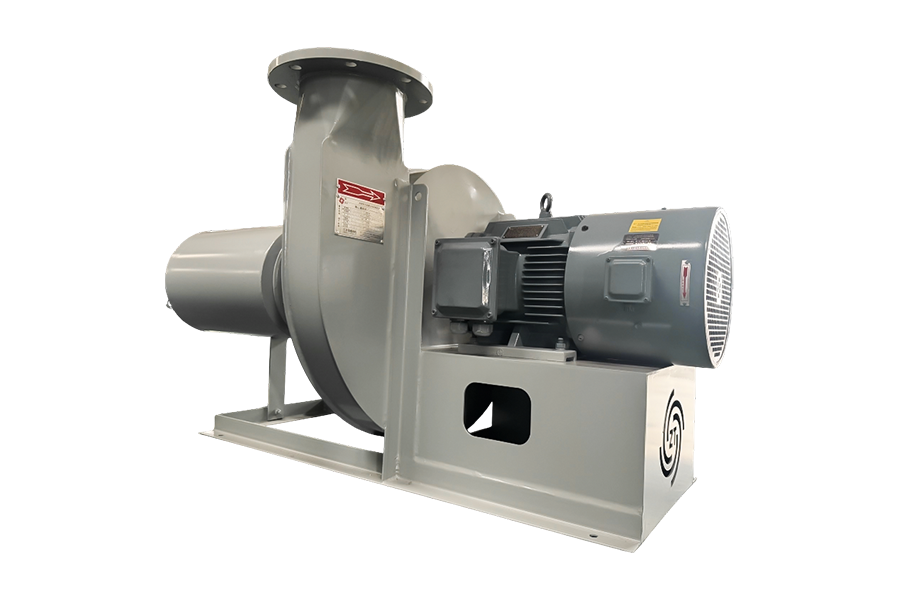
Combustion-supporting fan Product Name Air volume All-in Medium temperature Conveying medium Co...
See Details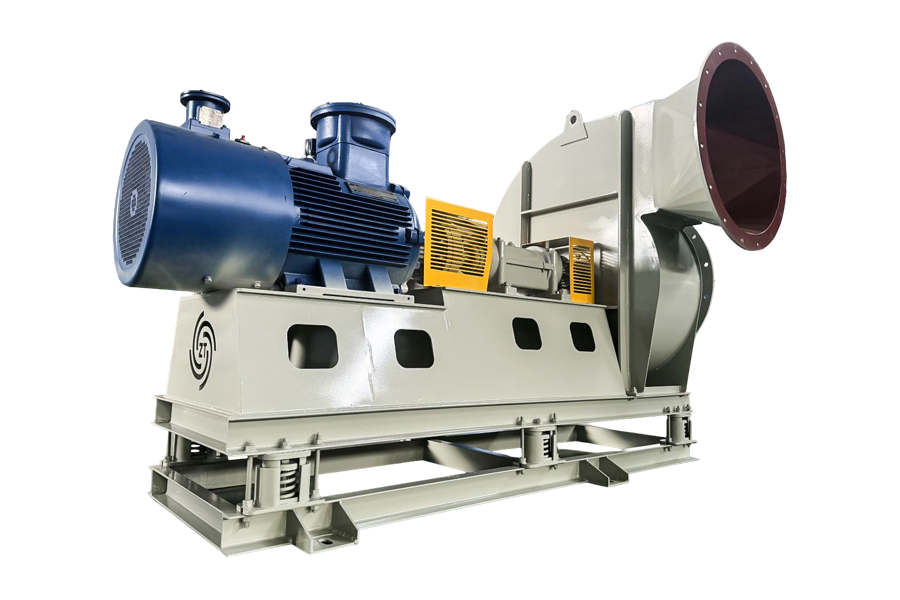
Oxygen supplement fan Product Name Air volume All-in Medium temperature Conveying medium Oxygen...
See Details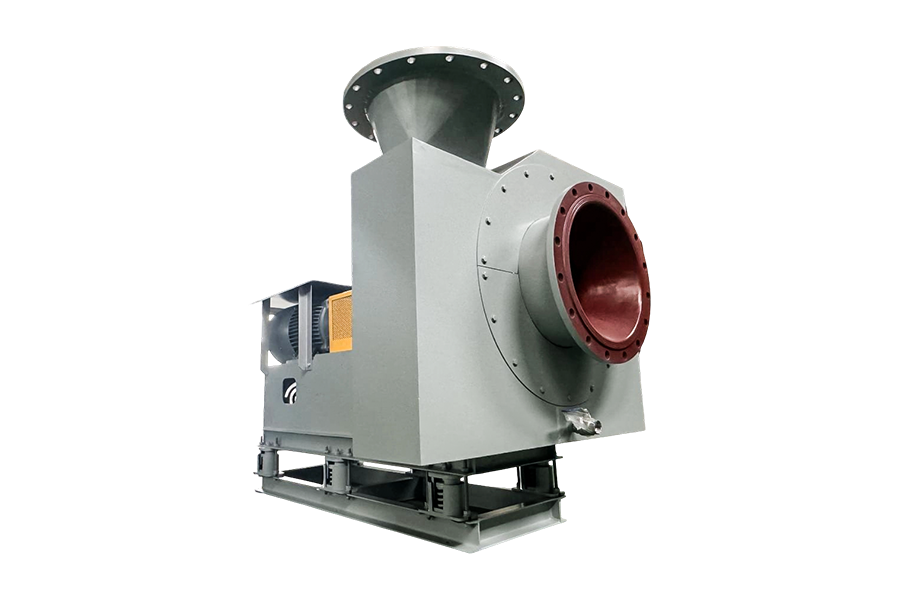
Purge fan Product Name Air volume All-in Medium temperature Conveying medium Purge fan 1000-500...
See Details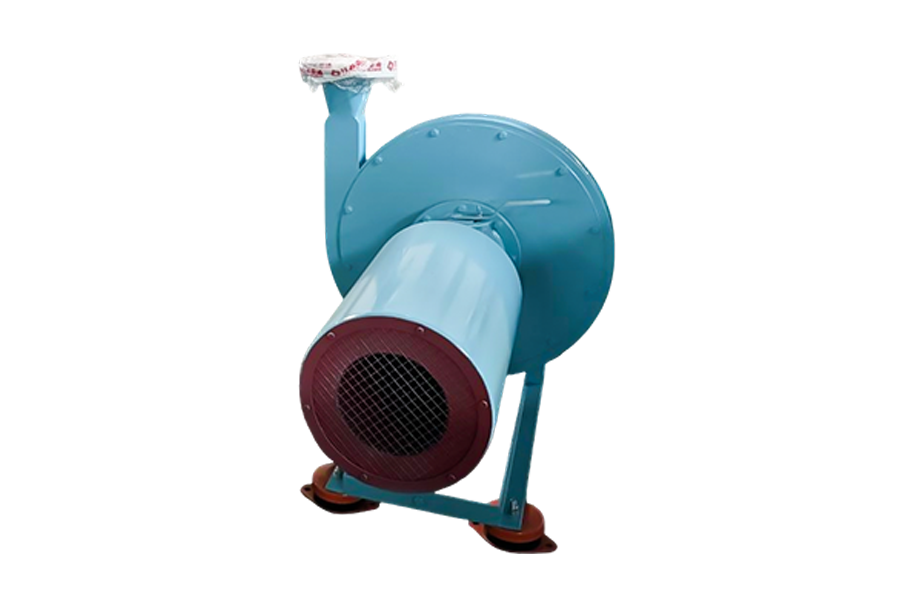
Sealed fan Product Name Air volume All-in Medium temperature Conveying medium Sealed fan 500-10...
See DetailsMobile: +86-188 6157 1101
No.58 Wendong Road, Xushe Town Industrial Zone, Yixing City, Jiangsu Province, China

Copyright © JIANGSU ZT FAN CO.,LTD. All Rights Reserved.
Stainless Steel Centrifugal Fan Manufacturers


+86-188 6157 1101
