
 Contact Us
 Language
 English
 русский
 Español
Category: Boiler System Centrifugal Fan Air blower Product Name Air volume Total pressure ...
See Details
Content
Before you specify a centrifugal fan, the first decision is not airflow. It is the resistance your system will create against that airflow. Fans are selected against a system curve, not against a catalog number. If you ignore static pressure, a fan that delivers perfect volume on paper can stall, overheat, and wear out a motor in weeks.
A centrifugal fan always works against a duct, filter, kiln, scrubber, or burner system. The fan does not see its own rating table; it sees the static pressure produced by that system. As the system becomes clogged, the required pressure rises, and the fan operating point moves along its performance curve. The correct selection therefore requires a system curve that covers both clean and worst-case conditions.
Critical principle: A fan is selected against a system curve, not a catalog number. The operating point is the intersection of the fan performance curve and the system resistance curve. Change the system, and the operating point moves.
Gather the following data before any fan is quoted:
A frame of reference helps. A centrifugal fan selection guide can show you how capacity and pressure values are adjusted when the gas density differs from ambient air. Do not apply a standard air motor sizing to a 300°C flue gas stream.
The core calculation is simple: the fan must produce enough static pressure to move the required volume through the entire system. Pressure losses are not uniform. A baghouse, a long duct run, a burner, and a cyclone each have different resistances. You need the total resistance at the rated flow, not at zero flow.
Use the fan laws when testing or predicting a performance change. For a fixed fan speed and diameter, volume flow is proportional to speed, static pressure is proportional to speed squared, and absorbed power is proportional to speed cubed. A 10% speed increase creates about 21% more pressure and 33% more power. This is why oversizing a motor without verifying the drive train often leads to overheating.
| Application | Gas temperature | Dust load | Corrosive components |
| Cement kiln tail | 300-400°C | High | Alkali and sulfur compounds |
| Painting booth | 20-60°C | Low to moderate | VOC solvents |
| Smelting furnace | 200-700°C | High | Acid gases and metallic fumes |
| Waste gases with FRP housing | 30-80°C | Low | Strong acid or alkaline agents |
When the gas temperature is above 100°C, air density drops and the fan must be sized for the actual volumetric flow at that temperature. The mass flow is what matters for process performance, but the fan moves volume. A fan selected using cold air ratings will be undersized at hot conditions.
Centrifugal fans can be classified by the pressure they develop. Low pressure fans move large volumes with relatively little resistance, such as in general ventilation or circulation duty. Medium pressure fans handle longer duct runs and typical industrial exhaust systems. High pressure fans serve burner combustion, pneumatic conveying, and forced draft applications with tight resistance.
Each pressure class has a different impeller shape and scroll width. Selecting the wrong class results in either a fan that cannot reach the pressure point or a fan that runs far from its best efficiency point. You can read more about the differences in a general industrial centrifugal fan selection guide. For many processes, the same site will combine low, medium, and high pressure fans in one system, each matched to its own duty.
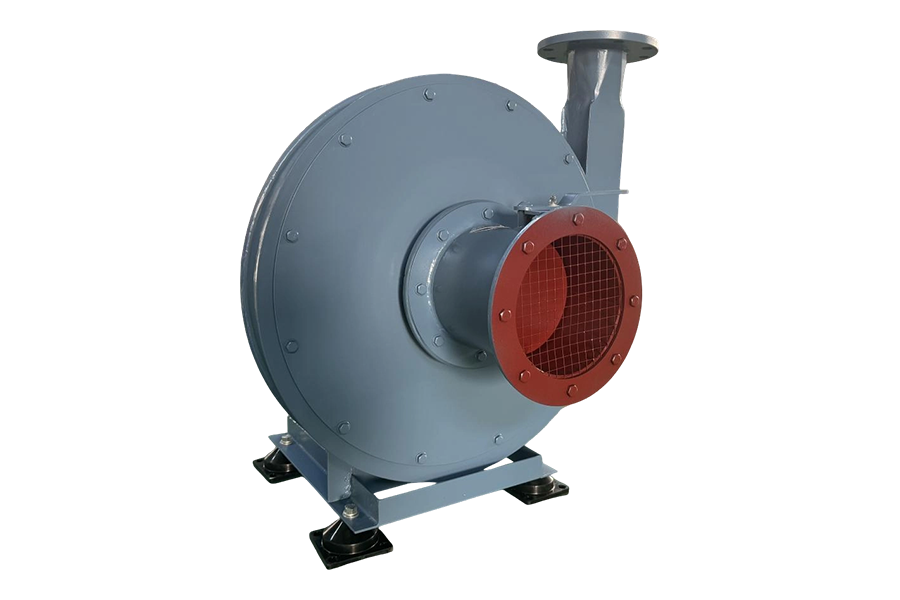 High Pressure Centrifugal Fan for Industrial Boilers and Dust CollectionThis high-pressure blower series handles pressures up to 20,000 Pa, making it suitable for boiler draft, dust collectors, and cement grinding systems. Selecting the correct pressure class ensures the fan operates near its best efficiency point.View Product →
A fan performance curve shows pressure, flow, and power. The operating point is the intersection of the fan curve and the system curve. If the system resistance is underestimated, the fan will deliver less flow than expected. A common mitigation is to select a fan with a 5 to 10% margin in pressure and a corresponding margin in motor power.
Do not confuse a volume control damper with a pressure margin. A damper adds resistance and moves the operating point, but it does not make the fan capable of producing more pressure. If the fan is already at its max speed, a damper can only reduce flow. Always verify that the selected fan speed has enough headroom to reach the required pressure at the system's most severe condition.
Operating point rule: The fan must run between 70% and 90% of its wide-open pressure at the design flow. If it runs closer to shutoff, it is oversized. If it runs near the end of the curve, it has no margin for system changes.
The manufacturer should provide a performance table with absorbed power at the operating point. Check the peak static efficiency and the point at which the fan will be running. A fan that runs close to its stall or surge zone cannot be used with a conventional damper without risking vibration and noise.
Most fan failures are not mechanical. They are material failures. The impeller and housing must tolerate the gas chemistry as well as the temperature. For clean warm air, carbon steel with a standard paint finish is enough. For hot flue gases, you need an alloy with enough high-temperature strength. For acid or alkaline streams, a glass-reinforced plastic (FRP), stainless steel, or fluoropolymer lining is often required.
Dust is an additional dimension. Abrasive particles erode the leading edge of the blades and the cut-off plate. Heavy dust loads benefit from thicker blade profiles, wear liners, or a design that prevents accumulation. If you have a chemical plant or a scrubber circuit, an anticorrosion construction can prevent downtime from pitting and scaling. For applications where maximum corrosion resistance is required, FRP or Teflon-coated fans are often specified instead of painted steel.
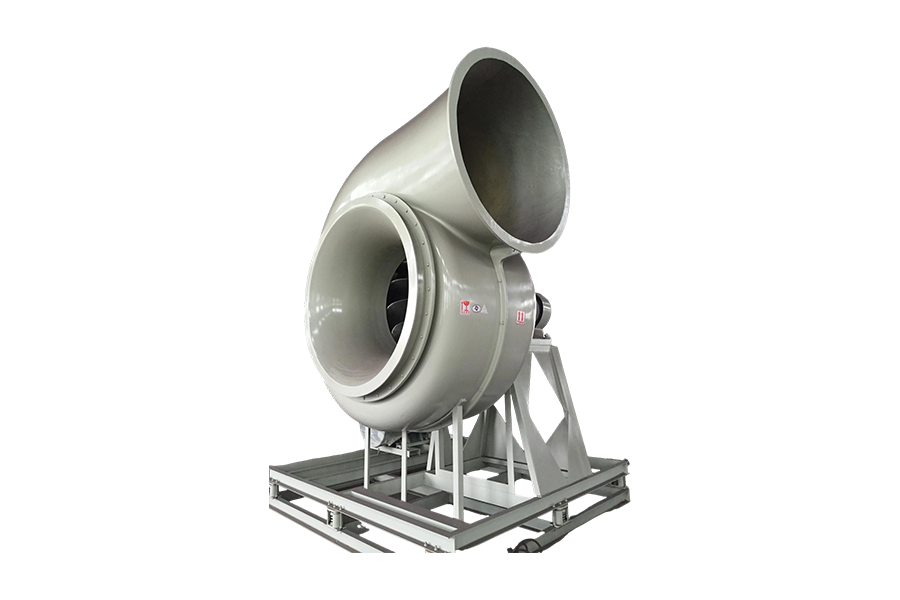 FRP Anti-Corrosion Centrifugal Fan for Chemical and Acidic EnvironmentsMade from fiberglass, this fan resists acids, alkalis, and salts, ideal for chemical plants and electroplating workshops. Its lightweight construction and smooth surface reduce vibration and noise, offering durability where steel fans would corrode quickly.View Product →
Fan efficiency determines long-term energy cost. A small improvement in fan efficiency can save thousands of dollars over a five-year operating period, especially for continuous duty. To evaluate efficiency, check the fan curve at the design operating point and the peak static efficiency. A fan that has been oversized to cover unknown pressure demands can operate far from the peak, causing unnecessary power draw and noise.
Noise comes from aerodynamics and from mechanical vibration. High tip speeds and turbulent discharge may require a silencer or a slower rotating wheel. If your plant has a sound limit near the fan location, consider a high-efficiency silent design that reduces noise at the source rather than adding a silencer downstream.
The drive arrangement also matters. A direct drive is simpler and more suitable for clean, small-to-medium systems. A belt drive gives the flexibility to change fan speed by changing the pulley, which is valuable when capacity may change. The motor must be selected using the fan absorbed power at the operating point, with at least the standard service factor for starting torque.
If your process will experience partial load conditions, variable speed control can reduce energy consumption compared with a damper. However, the motor and drive must be rated for the full speed range. At low speeds, bearing lubrication and impeller clearance become more critical. Confirm the minimum speed and the required cooling airflow through the motor before adopting a VFD.
 ESCF High Efficiency Silent Centrifugal Fan with Variable Speed CapabilityThis fan delivers 3,500–20,000 m³/h at 550–1,600 Pa, with power from 1.5 to 11 kW. Its high efficiency and low noise make it suitable for partial load operations when paired with a VFD, helping lower total ownership costs.View Product →
Drive selection summary: Direct drive = simpler, cleaner, lower maintenance | Belt drive = flexible speed, easier to change | VFD = best for variable loads, but requires motor cooling and bearing verification at low speeds
The total cost of ownership is more than the purchase price. Consider the cost of unplanned downtime, spare parts, energy, and maintenance labor. A fan that requires a five-day shutdown every six months is expensive no matter how low the initial cost. Verified component quality and a proven track record in similar installations should be part of the selection criteria.
Ask the supplier for the fan performance test report, the material warranty, and the recommended maintenance schedule. Inquire about rotor balancing, bearing type, and how the impeller is attached to the shaft. A robust design with a documented operating history from a manufacturer with decades of experience gives you confidence in the product.
During commissioning, measure the actual current and compare it with the motor nameplate. Also record the inlet and outlet pressure and temperature. These baseline values become the reference for future maintenance.
Before you issue a purchase order, confirm the following points:
By following this process, you can avoid the most common pitfalls in how to select a centrifugal fan: choosing by volume alone, ignoring system resistance, and underestimating the effect of temperature and corrosives.
Your email address will not be published. Required fields are marked*
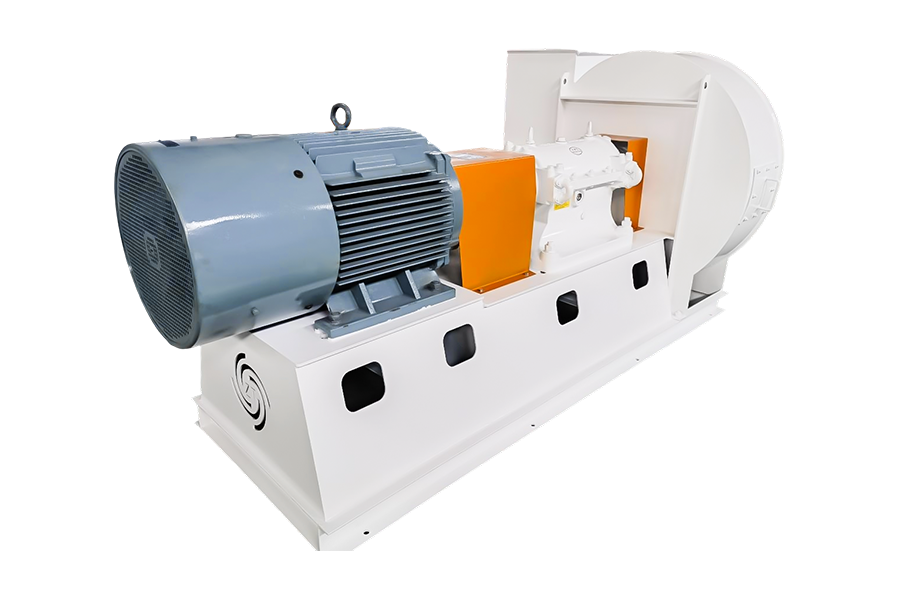
Category: Boiler System Centrifugal Fan Air blower Product Name Air volume Total pressure ...
See Details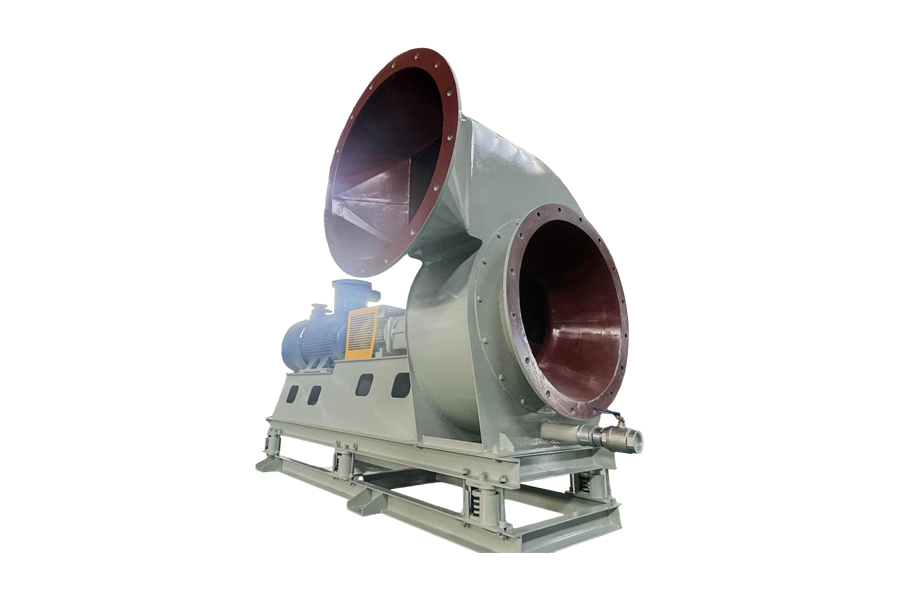
Adsorption fan Product Name Air volume All-in Medium temperature Conveying medium Adsorption fa...
See Details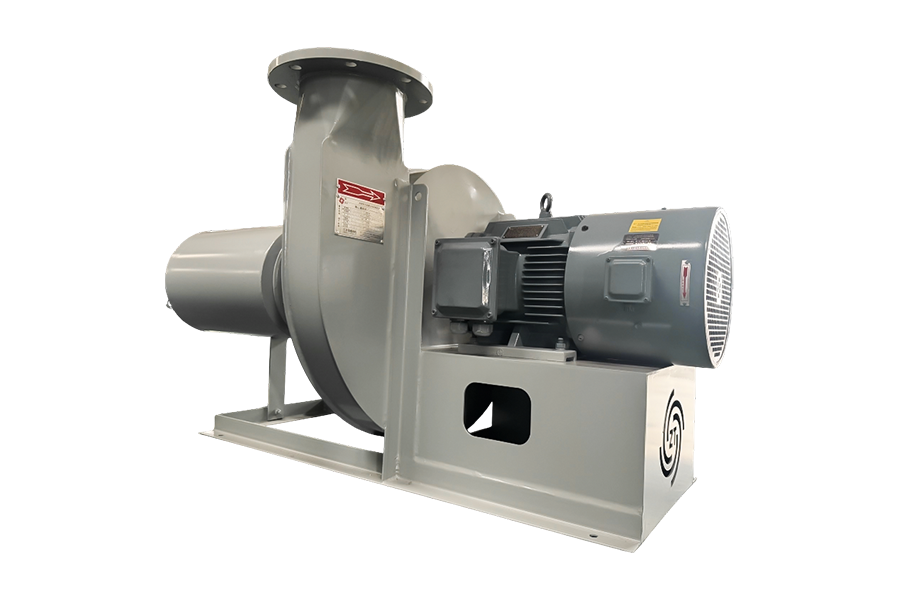
Combustion-supporting fan Product Name Air volume All-in Medium temperature Conveying medium Co...
See Details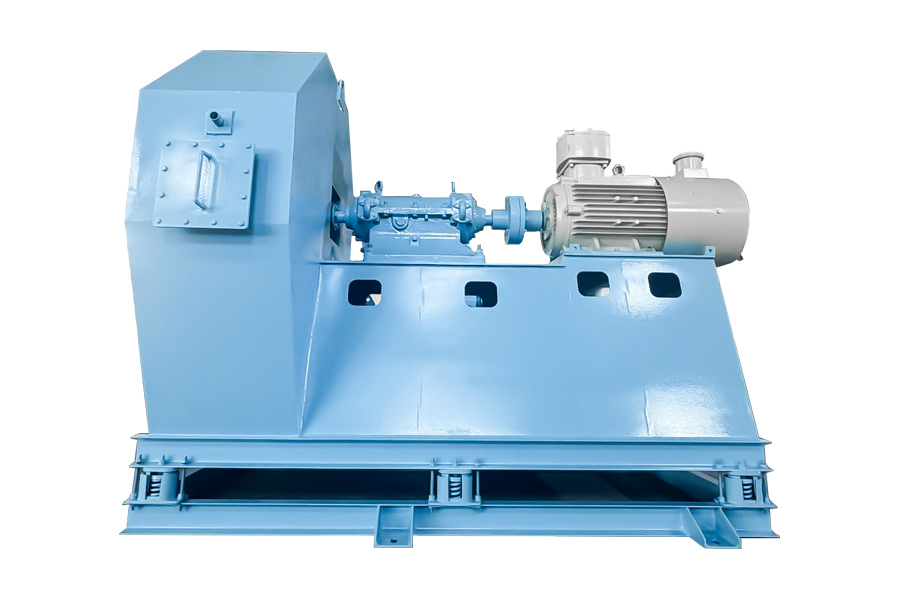
Category: Boiler System Centrifugal Fan Induced draft fan (suction fan) Product Name Air volum...
See Details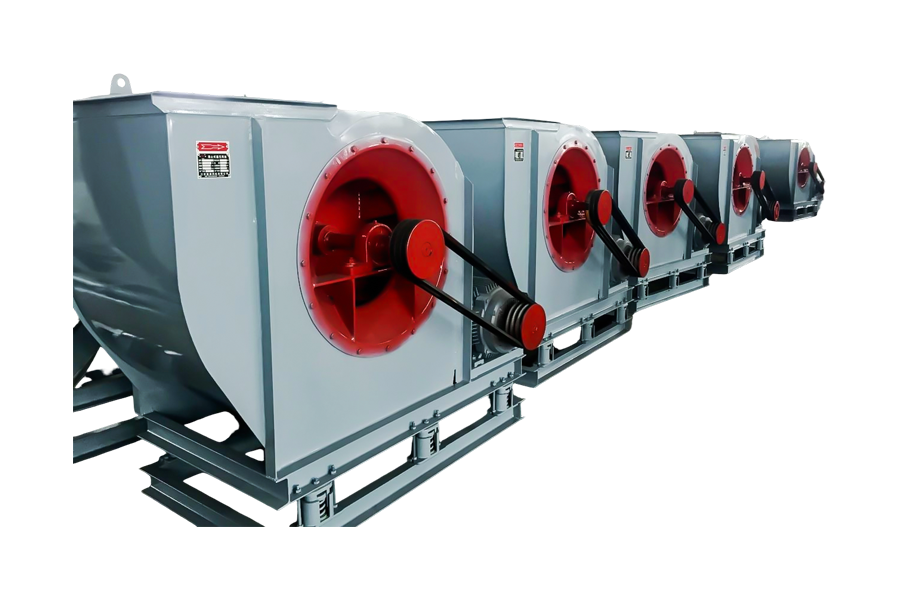
Category: Centrifugal fans for the coating industry Blower for paint spray booth Product Name Air...
See Details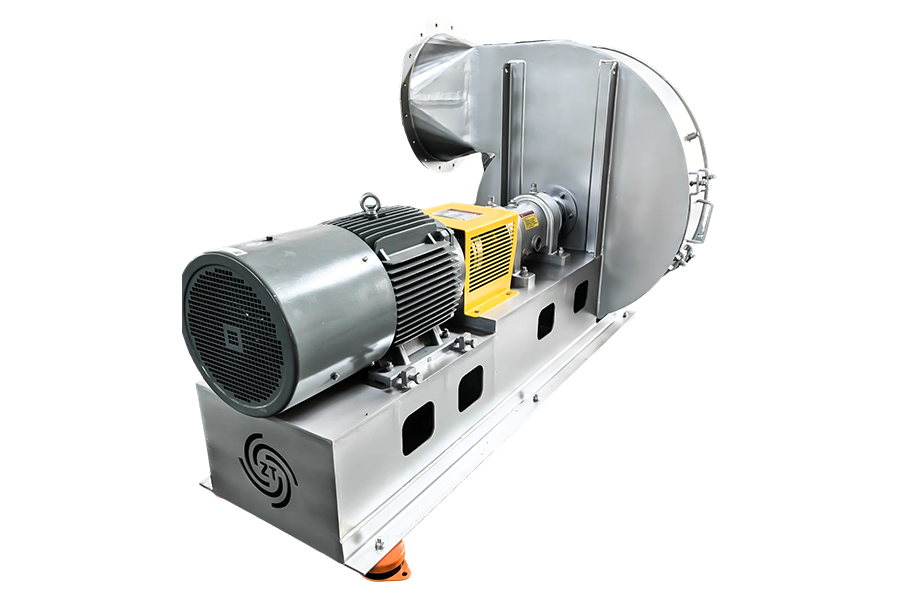
Desorption fan Product Name Air volume All-in Medium temperature Conveying medium Desorption fa...
See DetailsMobile: +86-188 6157 1101
No.58 Wendong Road, Xushe Town Industrial Zone, Yixing City, Jiangsu Province, China

Copyright © JIANGSU ZT FAN CO.,LTD. All Rights Reserved.
Stainless Steel Centrifugal Fan Manufacturers


+86-188 6157 1101
