
 Contact Us
 Language
 English
 русский
 Español
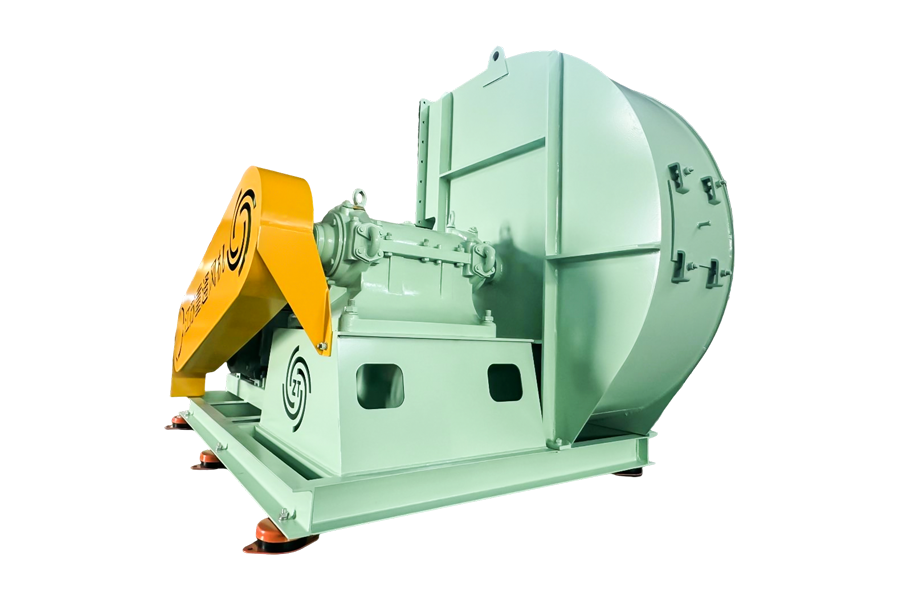
Main fan Product Name Air volume All-in Medium temperature Conveying medium Main fan 1000-30000...
See Details
Content
A retrofit project at a cement plant stopped moving when the new tail exhaust fan failed to reach the rated static pressure during commissioning. The fan had been specified based on airflow alone, and the ducting had more resistance than expected. This is the most common way a centrifugal fan selection goes wrong: it happens when the system is not defined before the fan is chosen. Here is a practical guide to avoid that mistake and specify a fan that matches the process.
The starting point is always the system. Record the required airflow in cubic metres per hour (m³/h) and the static pressure in Pascals (Pa). Airflow is usually given by the process: for a cement rotary kiln, the tail exhaust fan must handle the flue gas volume from the kiln; for a spray paint booth, the fan must provide the number of air changes per hour required by the local regulation. Static pressure, on the other hand, is not printed on a nameplate. It must be calculated from the duct system, including friction losses in the ducting, pressure drop across the filter or heat exchanger, and losses at elbows and dampers.
Critical rule: Never size a fan by airflow alone. The fan must produce enough static pressure to overcome the total system resistance at the required flow. Airflow without pressure is just a number on a catalogue.
A common rule of thumb is to add 10 to 15 percent margin to the calculated airflow and 15 to 20 percent margin to the static pressure. This covers measurement uncertainty and system degradation over time. It also protects the fan from running into the stall region, which is the point on the performance curve where pressure rise drops rapidly and the fan becomes mechanically unstable. For more detail on capacity, pressure, and material interaction, see our technical guide to capacity, pressure, and materials.
Centrifugal fans are grouped by the static pressure they can produce at the specified flow. Using the wrong class is the reason behind most underperforming installations. The following represents a common classification used by manufacturers, though exact values vary by design:
| Class | Typical static pressure range | Common applications |
| Low pressure | Up to 1,000 Pa | General ventilation, air circulation, spray paint booth exhaust |
| Medium pressure | 1,000 to 3,000 Pa | Dust removal, material conveying, forced draft |
| High pressure | Above 3,000 Pa | Boiler forced and induced draft, pneumatic conveying, kiln systems |
The table is a reference, not a substitute for a performance curve. The real boundary between classes is defined by the pressure rise the impeller can create at the required flow, not by a fixed number. When a system shows high resistance at the required volume, a high pressure centrifugal fan is the right choice. When the resistance is low and the main challenge is moving a large volume, a low pressure fan will be more efficient and quieter.
 High-Pressure Centrifugal Blowers for High Static Resistance SystemsThe 8-09, 9-12, 9-19, and 9-26 series offer air volumes from 600 to 120,000 m³/h and pressures up to 20,000 Pa, suitable for applications requiring high pressure at moderate flow, such as cupolas and forging furnaces.View Product →
Our high pressure centrifugal fans cover the 809, 912, 919, and 926 series and are designed for systems with high static resistance and moderate airflow.
Temperature is the second critical factor. A fan that handles hot flue gas from a cement kiln or a metallurgical furnace must be constructed with materials that retain strength at operating temperature. Carbon steel can handle gas up to roughly 250°C in many designs. Above that, a high temperature centrifugal fan built with alloy steel or a specially designed cooling system is required. The bearing arrangement is also affected: at high temperatures, cooling fans or insulated shafts become essential to prevent bearing failure.
 High-Temperature Centrifugal Fan for Extreme Heat EnvironmentsBuilt for continuous operation at temperatures from 350°C to 800°C, with thermal insulation and material options for corrosion resistance, ideal for furnaces, boilers, and metallurgical processes.View Product →
Corrosive media change the rules entirely. In exhaust gas treatment systems dealing with VOC or acid fumes, the fan may need an anti-corrosion lining. Manufacturers offer FRP (fibreglass reinforced plastic), stainless steel, and Teflon (PTFE) anti-corrosion options. For a zero-leakage requirement, for example in systems handling hazardous gases, a sealed fan design prevents gas escape through the shaft opening. A fan is not just a piece of steel; it is a system component that must survive the process medium for the whole duty cycle.
Material selection rule: Carbon steel up to 250°C | Alloy steel for 250–350°C | High-temperature design with cooling for 350–800°C | FRP / Teflon coating for corrosive gas | Stainless steel for both heat and corrosion.
Different industries have different selection priorities.
The tail exhaust fan handles hot, dust-laden gas with a high static pressure demand. The grate cooler cooling fan moves a large volume at low pressure. These are two different fan types even within the same plant. Choose a high temperature exhaust fan for the kiln tail. For the grate cooler, a high pressure fan may be needed for the cooling air supply.
Forced draft fans supply combustion air, while induced draft fans pull flue gas through the boiler and out the stack. The FD fan works with ambient air, so material selection is simple. The ID fan handles hot, corrosive flue gas and may need an impeller with a stronger material or an anti-corrosion treatment. The efficiency and reliability of these fans directly affect boiler performance.
The system has a high airflow requirement at low to medium pressure. A medium pressure fan is often the most suitable choice. For catalytic combustion, the fan must handle both the process air and high temperature at medium pressure.
The spray booth exhaust fan must handle solvent-laden air at moderate pressure. A low pressure fan is usually sufficient, but the fan must be configured to avoid the accumulation of paint particles, which can cause imbalance.
Fan efficiency is becoming a procurement criterion in many industrial projects. A high efficiency fan can reduce energy consumption by 5 to 15 percent compared with a generic design, and make a difference in running cost during a 10-year service life. The specific fan efficiency is a key parameter: look for a fan that operates near its peak efficiency at the duty point, and avoid selecting a fan that runs far from its best efficiency point.
 Efficient Silent Centrifugal Fan for Low-Pressure ApplicationsThe ESCF series covers air volumes of 3,500–20,000 m³/h with pressures up to 1,600 Pa, offering high efficiency and low noise for ventilation systems in factories and waste treatment.View Product →
Noise is a secondary but practical concern. In the workplace, the noise level at the fan outlet may need to be limited. A forward-curved or aerofoil impeller can reduce noise, and a silencer might be required where the fan is close to an occupied area. The ESCF series addresses efficiency and noise together with a specially designed impeller and housing.
Drive arrangement also matters. A belt drive allows for speed adjustment during commissioning and is more forgiving for changing system conditions. A direct drive eliminates belt loss and reduces maintenance, but fixes the fan speed to the motor speed. For a system that will be tuned later, a belt drive is often the safer choice.
Drive selection: Belt drive = adjustable speed, forgiving, easier to tune | Direct drive = simpler, lower maintenance, fixed speed | VFD = best for variable load, requires motor cooling check.
Follow these steps to select a centrifugal fan that fits the system.
For a deeper look at how airflow and static pressure interact in fan systems, read our guide on industrial centrifugal fans, airflow, and pressure.
The right centrifugal fan is chosen by understanding the system first, then the fan. Define airflow, static pressure, gas temperature, and gas composition, add a sensible margin, and verify the duty point on the performance curve. With the correct pressure class, material, and drive arrangement, the fan will run efficiently, reliably, and safely for years. Share your process parameters with the manufacturer early, and let the engineering data, not the catalogue, guide the selection.
Your email address will not be published. Required fields are marked*
Main fan Product Name Air volume All-in Medium temperature Conveying medium Main fan 1000-30000...
See Details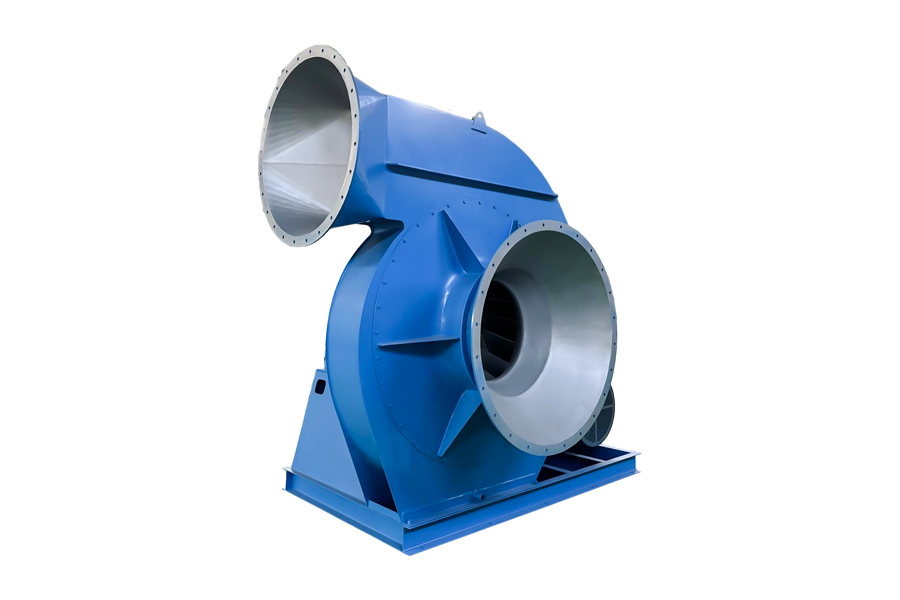
Induced draft fan Product Name Air volume All-in Medium temperature Conveying medium induced dr...
See Details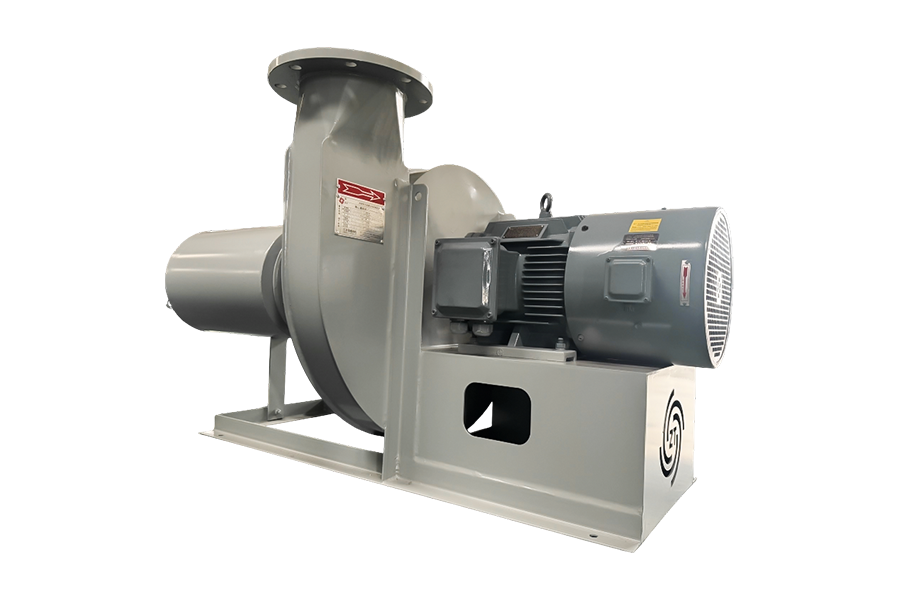
Combustion-supporting fan Product Name Air volume All-in Medium temperature Conveying medium Co...
See Details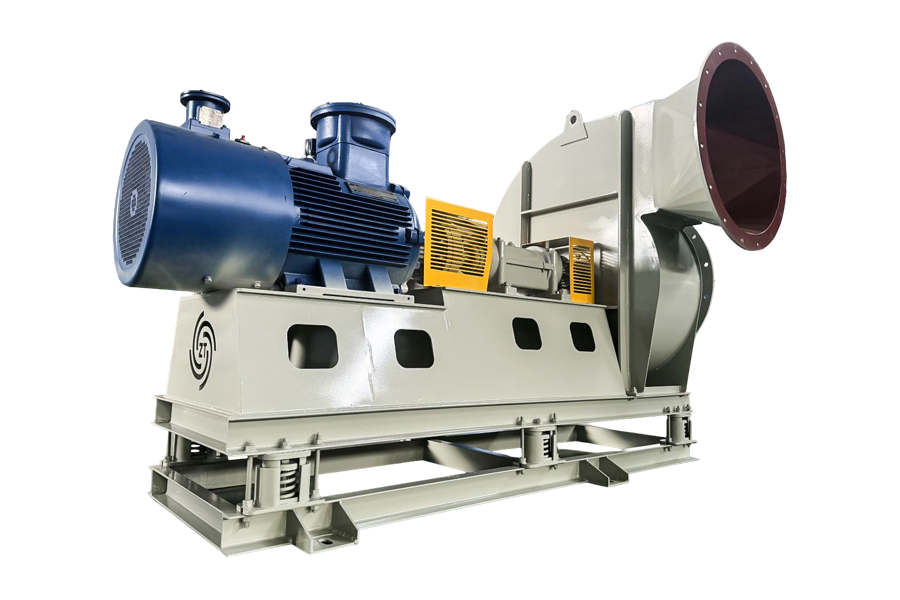
Oxygen supplement fan Product Name Air volume All-in Medium temperature Conveying medium Oxygen...
See Details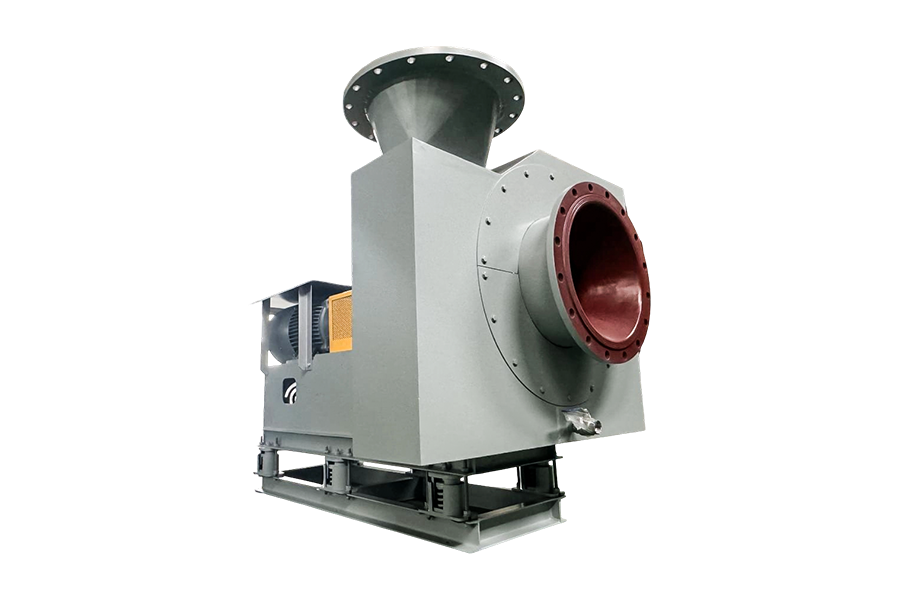
Purge fan Product Name Air volume All-in Medium temperature Conveying medium Purge fan 1000-500...
See Details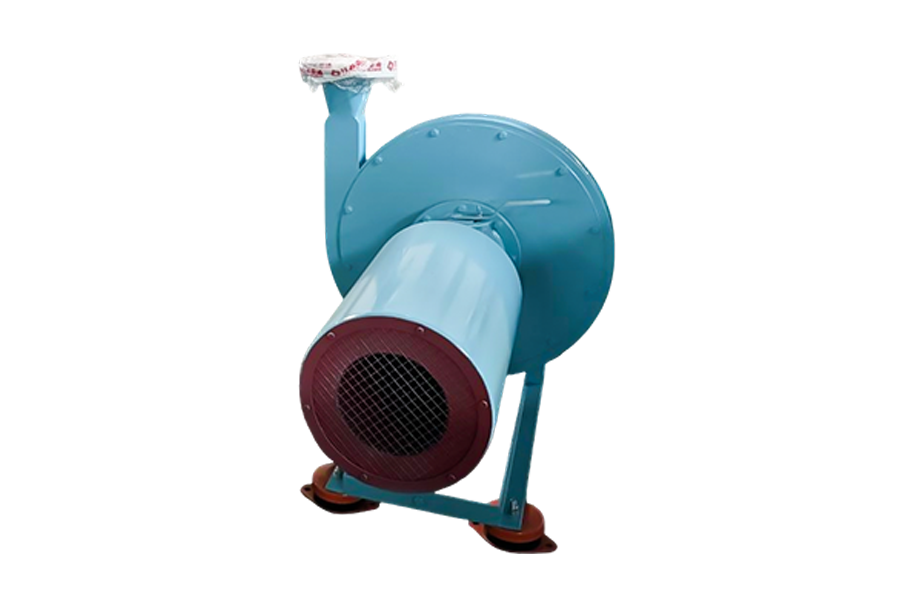
Sealed fan Product Name Air volume All-in Medium temperature Conveying medium Sealed fan 500-10...
See DetailsMobile: +86-188 6157 1101
No.58 Wendong Road, Xushe Town Industrial Zone, Yixing City, Jiangsu Province, China

Copyright © JIANGSU ZT FAN CO.,LTD. All Rights Reserved.
Stainless Steel Centrifugal Fan Manufacturers


+86-188 6157 1101
