
 Contact Us
 Language
 English
 русский
 Español
Main fan Product Name Air volume All-in Medium temperature Conveying medium Main fan 1000-30000...
See Details
Content
When a food processing plant in Jiangsu replaced its old 15 kW centrifugal fan, the noise level in the packing hall dropped from 88 dB(A) to 79 dB(A). The maintenance team did not install a silencer or an acoustic enclosure. They changed the impeller profile and reduced the operating speed. That result is typical: a quiet centrifugal fan is designed from the first drawing, not added on later. If you are specifying a fan for industrial ventilation, dust removal, or process gas systems, the acoustic performance depends on three decisions: impeller geometry, duty point selection, and how the fan is installed in the ductwork.
Before you compare catalog sound levels, separate the noise sources. A centrifugal fan produces aerodynamic noise, mechanical noise, and sometimes electromagnetic noise. Each has a different frequency signature, and each responds to different fixes.
| Noise source | Typical frequency | What it sounds like | Practical response |
|---|---|---|---|
| Aerodynamic turbulence | Broadband, 500–8,000 Hz | Rushing air, hiss | Improve impeller profile; reduce tip speed; smooth inlet |
| Blade passing tone | Low frequency, equal to blades × RPM | Deep hum or buzz | Change blade number; avoid duct resonance; use uneven spacing |
| Mechanical imbalance | 1× RPM and harmonics | Vibration, rumble | Balance impeller to G2.5 or better; inspect bearings and shaft |
| Electromagnetic | 2× line frequency | Electrical whine | Use inverter-duty motor; tune VFD carrier frequency |
Aerodynamic noise usually dominates in clean-air fans. Mechanical noise becomes important after years of service or when the fan runs above its first critical speed. If a fan is noisy only at certain damper positions, the problem may be system stall rather than the fan itself.
A quiet centrifugal fan starts with a lower tip speed. According to the fan laws, sound power varies roughly with the fifth power of rotational speed. Reducing speed by 20% can cut sound power by more than half. The catch is that lower speed also reduces pressure and airflow. That is why quiet fans often use a larger impeller running slower rather than a small impeller running fast.
Backward-curved impellers generally operate more quietly than forward-curved impellers at the same duty point. They also have a non-overloading power curve, which protects the motor if the system resistance drops. Blade shape matters too: airfoil or backward-inclined blades reduce separation and turbulence. For a given airflow, more blades can lower the blade-passing tone but may increase broadband noise. The optimum is found by testing, not by rule of thumb.
Suppose a fan must deliver 20,000 m³/h at 2,500 Pa. A 1,000 mm impeller at 1,800 RPM may produce 86 dB(A). A 1,250 mm impeller at 1,200 RPM can deliver the same duty at about 78 dB(A). The larger fan costs more and takes more space, but it may remove the need for an acoustic enclosure. This trade-off is central to quiet fan selection.
 ESCF Series High-Efficiency Silent Centrifugal FanCustomizable industrial centrifugal fan with 3,500–20,000 m³/h airflow, suited to quiet selection in factory exhaust, dust collection, and VOC treatment.View Product →
For projects where noise is a primary constraint, high-efficiency silent centrifugal fan series such as the ESCF line combine backward-curved impellers with close-tolerance housings and optimized inlet cones. They are used in food drying, pharmaceutical waste gas treatment, and other plants where the fan sits near a work area.
The quietest fan on a test stand can become noisy in a real system. The duty point must sit on a stable part of the fan curve, away from stall and surge. If the system resistance is higher than expected, the fan may operate at a lower flow and higher pressure, which often increases noise and vibration. If resistance is lower, the fan may run out to the right of the curve, increasing power and airflow noise.
Variable frequency drives help, but they must be set up correctly. A drive can avoid noisy damper control, yet a poorly tuned VFD may excite motor whine or structural resonance. Set the minimum speed to avoid stall, and use a skip frequency if a specific RPM produces a tone.
For a step-by-step method covering capacity, pressure, and material selection, see this centrifugal fan selection guide. It explains how to plot system curves and choose a fan with a comfortable margin.
Even a well-designed fan can transmit noise through the ductwork. Use these practices to keep the installation quiet:
These measures are not substitutes for a quiet fan. They prevent a good fan from becoming a bad installation.
Industrial exhaust streams are rarely clean or cool. Corrosive vapors, high temperatures, and toxic gases change the materials and seals you need. A standard carbon steel fan may be quiet when new, but corrosion can change clearances and balance over time, increasing noise and vibration.
For chemical and pharmaceutical waste gas systems, a stainless steel anti-corrosion centrifugal fan provides a durable impeller and housing that resist acids and solvents. The smoother surfaces also reduce buildup, which helps maintain the original acoustic performance.
 Stainless Steel Anti-Corrosion Centrifugal FanCustomized blower using 304, 316L, 2205, or 2507 stainless steel for corrosive gases, wastewater treatment, electroplating, metallurgy, and hygienic ventilation duties.View Product →
When the gas is toxic or flammable, leakage becomes a safety issue as well as a noise issue. A zero-leakage centrifugal fan uses improved shaft seals and a gas-tight housing to prevent fugitive emissions. This design is common in solid and liquid waste rotary kiln treatment, where the fan handles hazardous vapors.
 Zero-Leakage Centrifugal Fan for Hazardous Gas HandlingCustomized fan with magnetic end face, carbon ring, or negative pressure seals for flammable, explosive, toxic, or corrosive gases in chemical, lab, and high-purity applications.View Product →
High-temperature processes, such as cement kiln tail gas or ceramic furnace exhaust, require fans that tolerate 400°C or more. In these cases, the impeller material, bearing cooling, and thermal expansion gaps all affect both reliability and noise. A high-temperature centrifugal fan with a cooled bearing housing and heat-resistant alloy impeller keeps vibration low as the gas temperature changes.
When you request quotations, ask for data that lets you compare fans on equal terms. A single dB(A) number without a distance, measurement standard, or operating point is not enough.
Also ask whether the quoted sound level includes the motor and drive. Sometimes the fan is quiet but the motor whine dominates. A complete acoustic specification covers the whole assembly.
A quiet centrifugal fan is not a luxury item. It is a system component that protects workers, reduces vibration, and often lowers maintenance cost. Start by choosing the right impeller and duty point, then verify the installation and the motor. If the process involves corrosive, hot, or toxic gas, plan the materials and seals early. The fan that runs quietly for ten years is the one that was selected for the real operating conditions, not the one with the lowest list price.
Your email address will not be published. Required fields are marked*
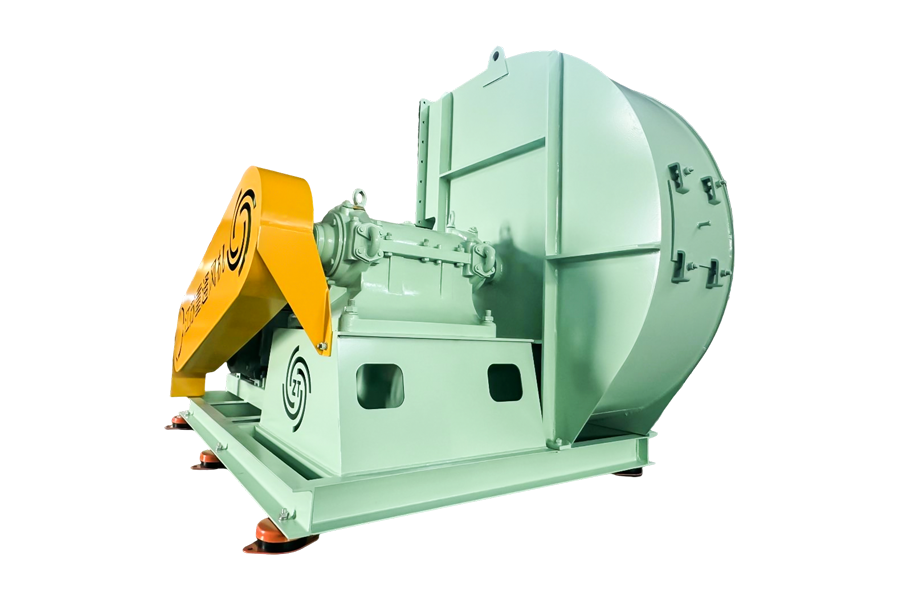
Main fan Product Name Air volume All-in Medium temperature Conveying medium Main fan 1000-30000...
See Details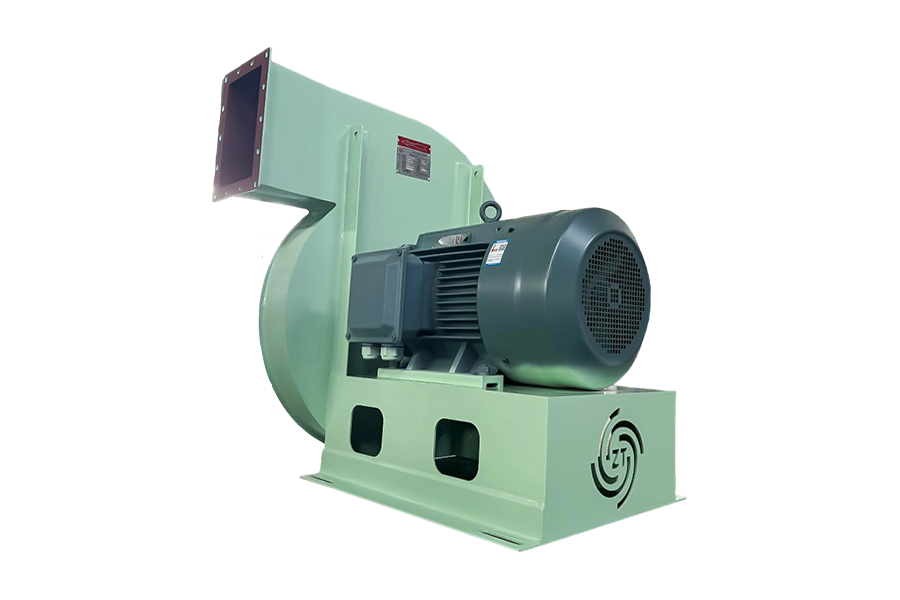
Category: Environmental Protection Industry - Centrifugal Fan for Solid and Liquid Waste Rotary Kiln...
See Details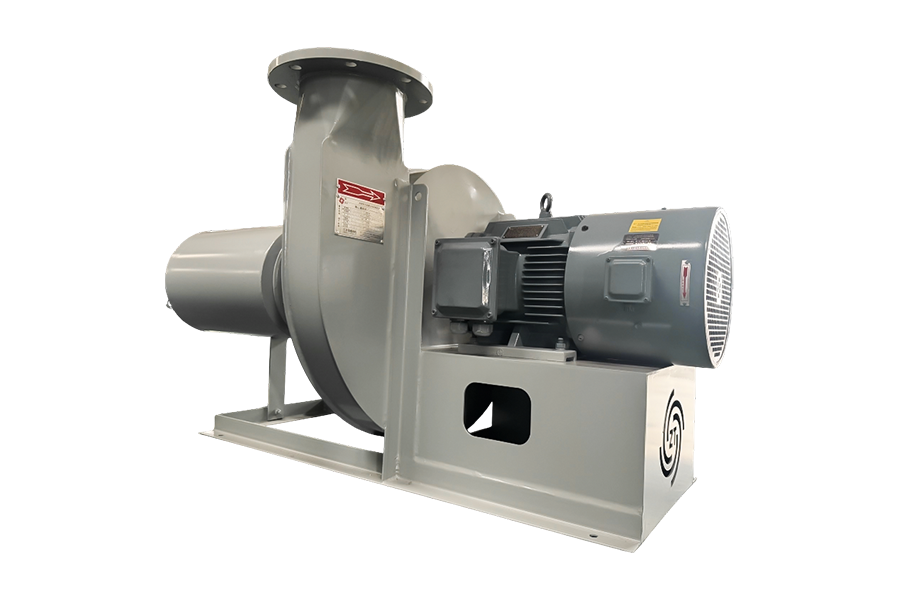
Combustion-supporting fan Product Name Air volume All-in Medium temperature Conveying medium Co...
See Details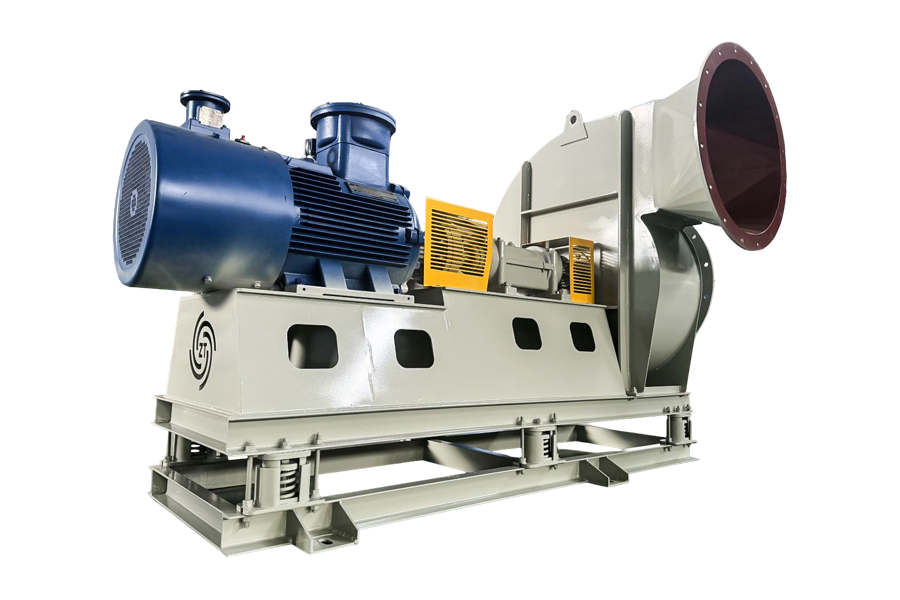
Oxygen supplement fan Product Name Air volume All-in Medium temperature Conveying medium Oxygen...
See Details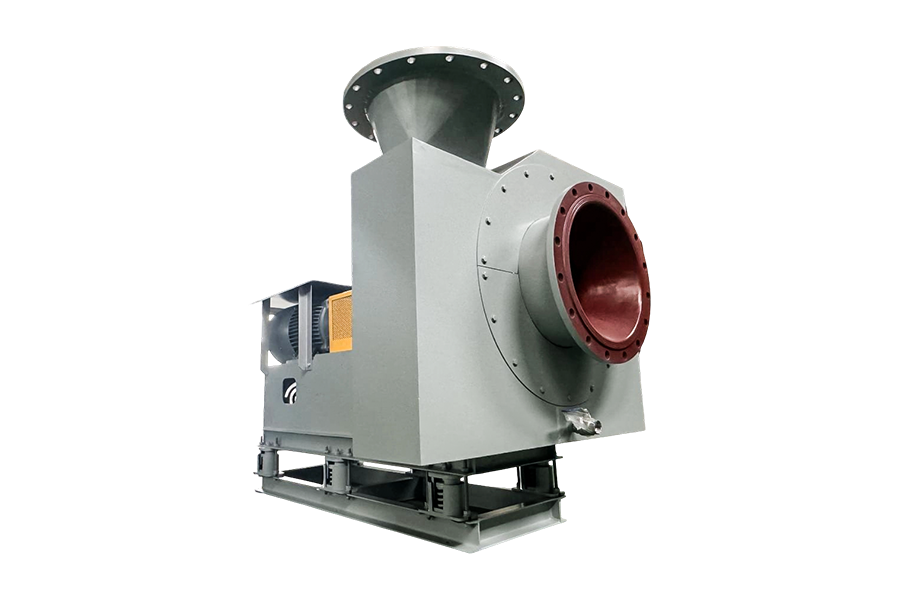
Purge fan Product Name Air volume All-in Medium temperature Conveying medium Purge fan 1000-500...
See Details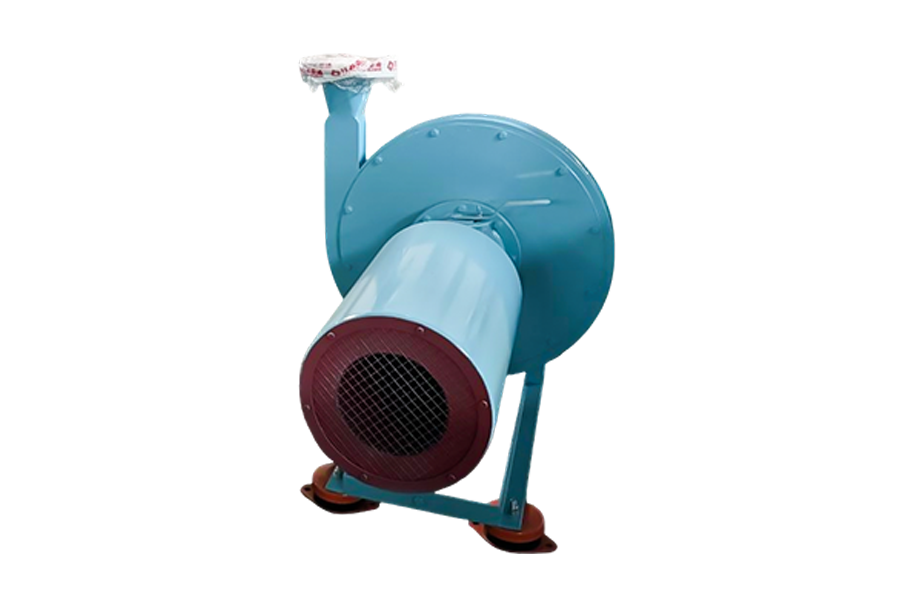
Sealed fan Product Name Air volume All-in Medium temperature Conveying medium Sealed fan 500-10...
See DetailsMobile: +86-188 6157 1101
No.58 Wendong Road, Xushe Town Industrial Zone, Yixing City, Jiangsu Province, China

Copyright © JIANGSU ZT FAN CO.,LTD. All Rights Reserved.
Stainless Steel Centrifugal Fan Manufacturers


+86-188 6157 1101
