
 Contact Us
 Language
 English
 русский
 Español
Category: Boiler System Centrifugal Fan Air blower Product Name Air volume Total pressure ...
See Details
Content
Two centrifugal fans on the same cement kiln tail gas line, both rated at roughly 150,000 m3/h and 350 degrees C, can end up with very different maintenance histories: one impeller is replaced after five months, the other runs for three years. The casings are similar, the bearings come from the same brand, and the motors match. The difference sits inside the wheel, in the blade profile, its thickness, the way it is welded to the hub and backplate, and the material it is made from.
That is the short answer to a question buyers ask constantly: which part of a centrifugal fan should carry the specification? Blades carry it. Casing gauge, paint system, and bearing brand are largely interchangeable between reputable suppliers. Blade geometry sets the fan curve you actually get, and blade material and thickness set how long that curve holds under dust, heat, and corrosive gas. A fan that looks correct on a datasheet can still be the wrong machine if its impeller was chosen for a different duty.
Centrifugal fan blades fall into four working families, and most selection mistakes come from mixing them up.
| Blade profile | Typical efficiency | Pressure capability | Dust tolerance | Typical duty |
|---|---|---|---|---|
| Forward-curved multi-vane | 55-65% | High at low speed | Low | Clean make-up air, compact units |
| Backward-curved, single thickness | 75-85% | Medium to high | Medium | Boiler FD and ID fans, general exhaust |
| Backward-curved airfoil | 80-88% | Medium to high | Low | Clean process air, low-noise installations |
| Radial and radial-tipped | 60-72% | Medium | High | Kiln exhaust, abrasive dust, hot gas |
When a plant needs more pressure in a dirty duty, the practical answer is usually not a different blade family but a stronger version of the same one: thicker blades, a heavier shaft, and an impeller designed from the start for the higher speed.
 Custom 8-09 9-12 9-19 9-26 High-Pressure Centrifugal BlowersFour high-pressure blower series for cupolas, furnaces, forges, and burners, with direct, pulley, or coupling drive options for customized air supply.View Product →
Abrasive wear on a blade leading edge scales roughly with the cube of particle impact velocity, and tip speed rises with impeller diameter and rotational speed. Doubling tip speed multiplies erosion by roughly eight. That is why running a fan far below its design flow by throttling or deliberate oversizing is a bad habit in dust-laden service, and why impeller diameter deserves as much attention as motor power.
Material choice follows the gas, not the budget line:
Thermal growth is the detail that catches people out. A blade that is dimensionally perfect at 20 degrees C can foul the inlet cone at 450 degrees C if impeller and casing were designed with the same clearance assumption. High-temperature impellers need clearances calculated at operating temperature, and the shaft and bearing arrangement has to absorb the same expansion.
 Custom High-Temperature Centrifugal Fan for 350°C to 800°CIndustrial ventilation fan for 350°C to 800°C service; insulated housing suits furnaces, drying equipment, boilers, metallurgy, and chemical industries.View Product →
Blades fail at their joints more often than in the middle of the plate. A continuous fillet weld at the blade-to-backplate junction, applied in a controlled sequence to limit distortion, outlasts a tack-welded or riveted assembly in cyclic thermal service. On heavy-duty impellers the backplate is usually thickened locally under each blade root, because that is where the bending moment concentrates.
Balance follows attachment. An impeller balanced to ISO 1940 grade G6.3 is acceptable for ordinary industrial duty; high-speed or high-temperature impellers are commonly specified at G2.5, and the balance is verified after the wear protection is fitted, not before. Tip clearance is the other quiet variable. Too tight and the blade rubs the inlet cone during thermal transients; too loose and recirculation costs several points of efficiency. One to one and a half percent of impeller diameter is a workable range for general duty, tightened or opened according to temperature and abrasiveness.
For plant engineers, the practical step is to request inspection access: a bolted inspection door on the casing and, where geometry allows, marked thickness measurement points on the blade leading edge. Erosion is rarely uniform, and knowing which region wears fastest turns a surprise failure into a planned impeller change.
The same plant can need two completely different impellers on one system. A boiler has a forced draft fan handling clean ambient air and an induced draft fan handling hot, dust-laden flue gas at similar flow. The FD fan benefits from an efficient backward-curved impeller; the ID fan is better served by a radial-tipped wheel with a wear allowance, even though its efficiency figure is lower. Suppliers that publish a full industrial centrifugal fan range usually group impellers by industry duty as well as by pressure class, which makes that comparison easier to run.
For streams carrying acidic or chloride-bearing gas, corrosion rather than abrasion is the limiting factor, and a fibre-reinforced plastic impeller often outlasts a coated steel one at lower weight.
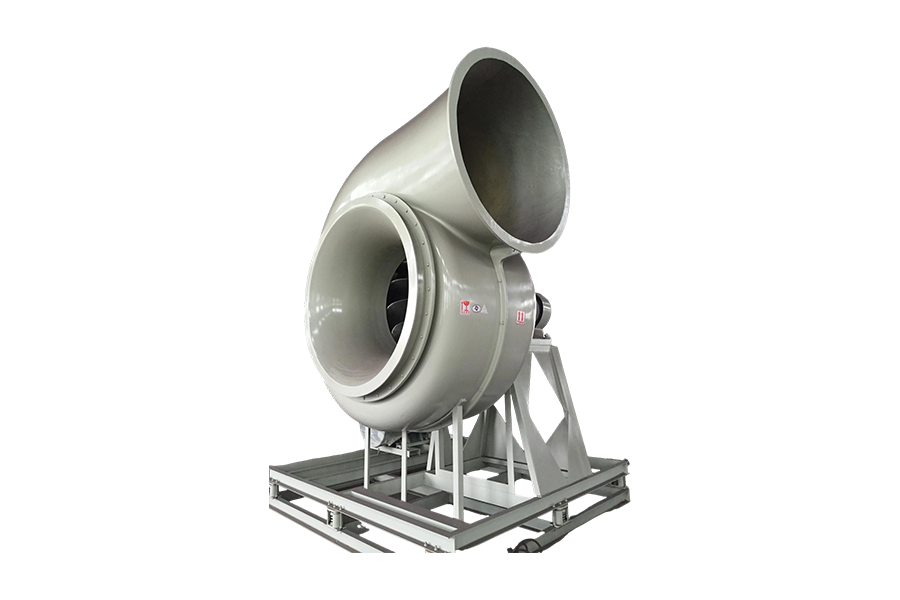 Custom FRP Anti-Corrosion Fiberglass Centrifugal FanCorrosion-resistant fiberglass fan for acidic or chloride-bearing gas streams, with low weight for chemical, electroplating, pharmaceutical, and waste-gas treatment duty.View Product →
A quotation for a centrifugal fan is only as good as the process data behind it. Before asking for a price, assemble the following:
The most common specification gap is quoting flow and pressure alone. That omits the two variables that decide blade life, temperature and particle loading, and it is the reason two fans with the same nameplate rating behave differently in service. A structured review of how capacity, pressure, and material choices interact for your duty point is a better starting place than a catalogue page. Get the blade right and the rest of the fan usually follows.
Your email address will not be published. Required fields are marked*
Category: Boiler System Centrifugal Fan Air blower Product Name Air volume Total pressure ...
See Details
Category: Environmental Protection Industry - Centrifugal Fan for Solid and Liquid Waste Rotary Kiln...
See Details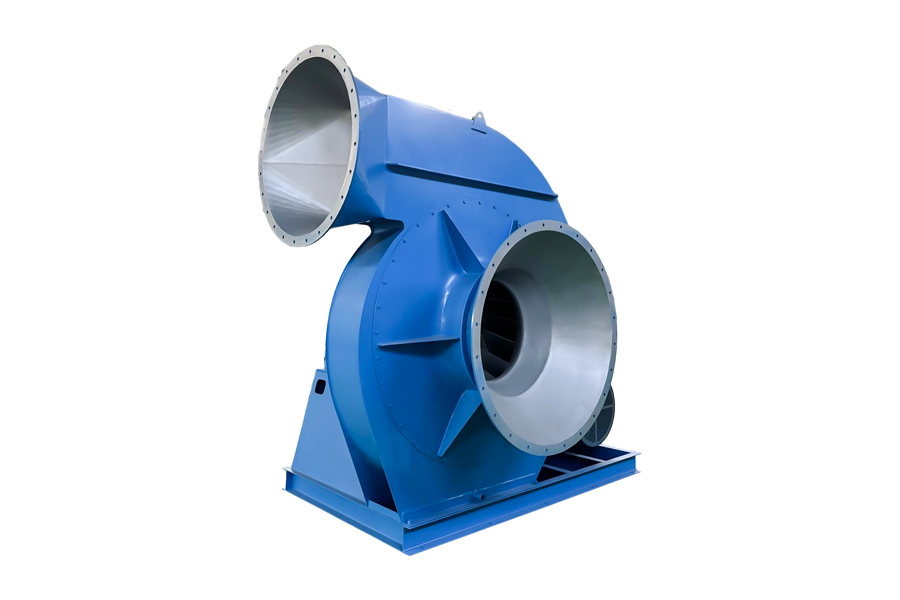
Induced draft fan Product Name Air volume All-in Medium temperature Conveying medium induced dr...
See Details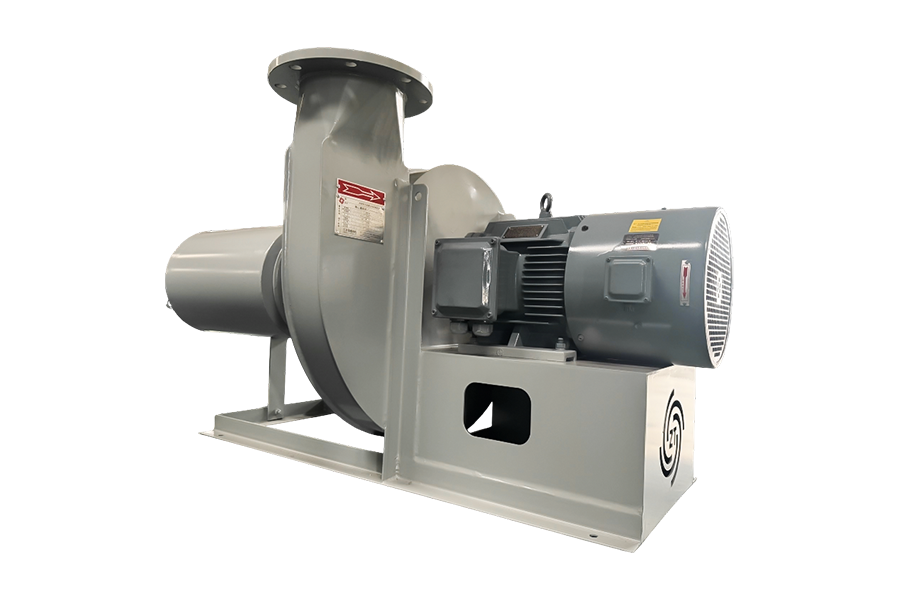
Combustion-supporting fan Product Name Air volume All-in Medium temperature Conveying medium Co...
See Details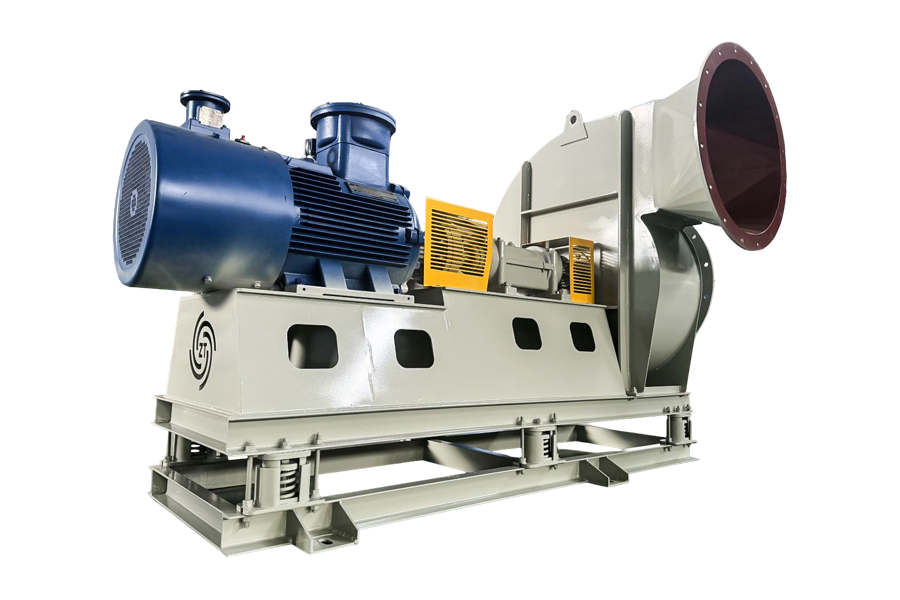
Oxygen supplement fan Product Name Air volume All-in Medium temperature Conveying medium Oxygen...
See Details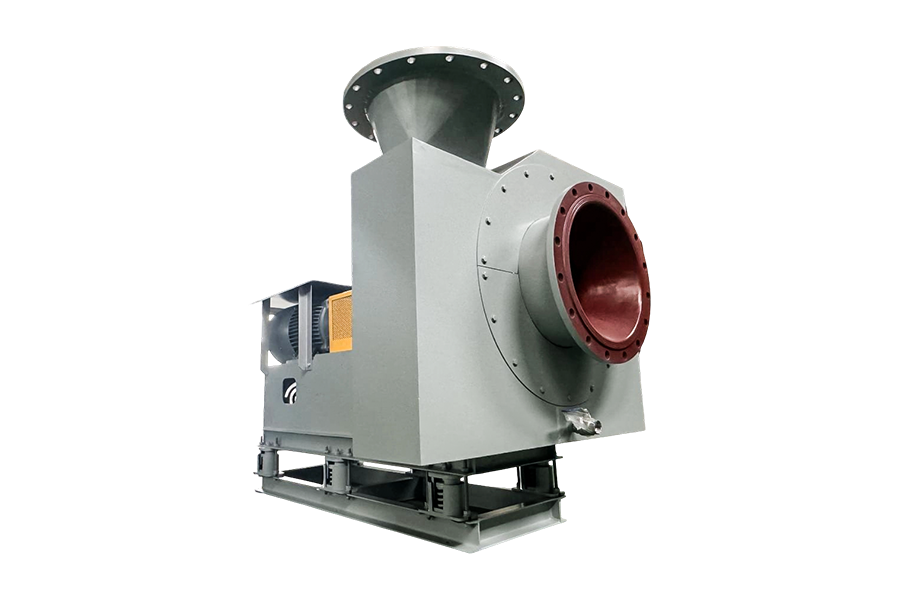
Purge fan Product Name Air volume All-in Medium temperature Conveying medium Purge fan 1000-500...
See DetailsMobile: +86-188 6157 1101
No.58 Wendong Road, Xushe Town Industrial Zone, Yixing City, Jiangsu Province, China

Copyright © JIANGSU ZT FAN CO.,LTD. All Rights Reserved.
Stainless Steel Centrifugal Fan Manufacturers


+86-188 6157 1101
