Content
Selecting the correct air movement device is a critical engineering decision that impacts process efficiency, energy consumption, and system reliability. For plant engineers and procurement specialists, understanding the nuances of General used centrifugal fans is essential for specifying the right equipment for exhaust treatment, material handling, or HVAC applications. This guide provides a detailed, engineer-level analysis of fan types, performance characteristics, and selection criteria.
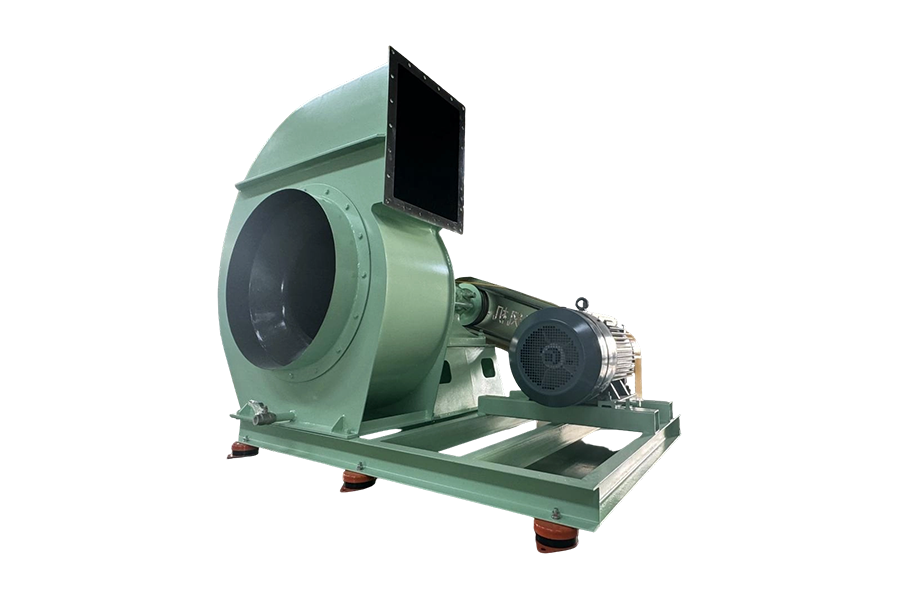
A centrifugal fan increases the pressure of an air stream by using a rotating impeller to accelerate the air outward by centrifugal force. The air enters the fan axially at the eye of the impeller, is caught by the rotating blades, and is expelled radially into the fan casing. The casing then converts the high-velocity air into pressure energy through diffusion. This fundamental principle allows General used centrifugal fans to generate higher static pressures than axial fans, making them suitable for ducted systems and processes requiring air movement against resistance.
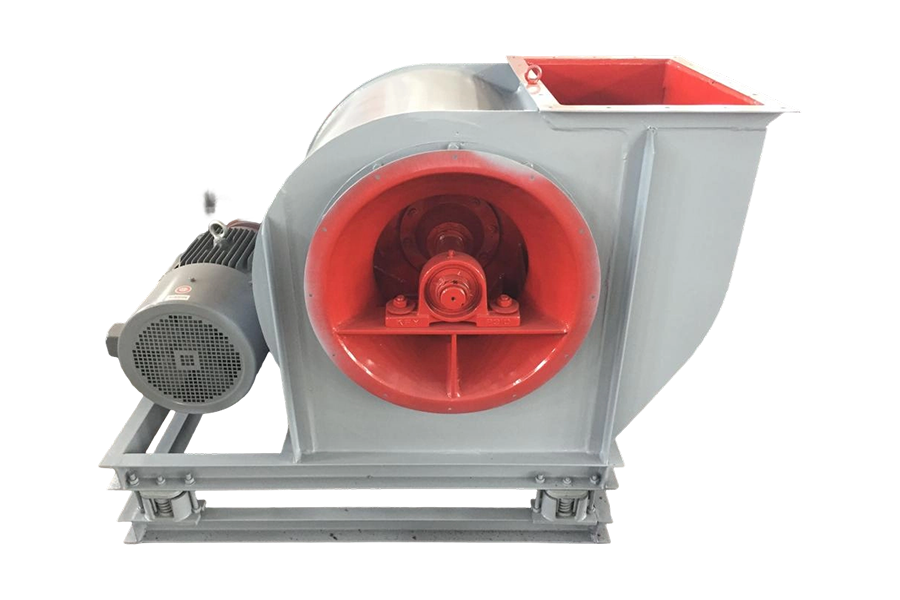
The design of the impeller blades is the primary factor determining a fan's performance characteristics. Three main configurations dominate industrial applications.
Centrifugal fans are the preferred choice when the system requires movement of air against significant resistance. They excel in applications with extensive ductwork, filters, coils, or other pressure-generating components.
Axial fans move air parallel to the fan's axis, similar to a propeller. They are best suited for moving large volumes of air against very low resistance.
| Parameter | Centrifugal Fan | Axial Fan |
|---|---|---|
| Pressure Capability | High static pressure (up to several thousand Pa) | Low static pressure (typically under 500 Pa) |
| Airflow Direction | Air enters axially, exits radially (90-degree turn) | Air enters and exits axially (straight-through flow) |
| Efficiency at High Pressure | High, especially with backward curved designs | Low; efficiency drops sharply with added resistance |
| Typical HVAC Application | Air handling units with ducts, VAV systems, exhaust with scrubbers | Condenser cooling, general hall ventilation, roof exhausters |
| Noise Characteristics | Broadband noise, often lower frequency | Higher frequency, potentially more noticeable |
When evaluating centrifugal fan vs axial fan for hvac applications, the decision hinges on the system's pressure requirements. For ducted systems, centrifugal fans are the engineering standard.
Forward curved fans have numerous shallow blades that are closely spaced. They operate at lower tip speeds and are often found in packaged equipment.
Backward curved fans have blades that are shaped more like airfoils or simple plates angled away from the rotation. They are the standard for high-efficiency industrial applications.
| Parameter | Forward Curved | Backward Curved |
|---|---|---|
| Peak Efficiency | Moderate (55-65%) | High (75-85%) |
| Pressure Curve Shape | Steep, can be unstable at low flow | Stable, gradually rising to shutoff |
| Power Characteristic | Overloading (power increases as pressure drops) | Non-overloading (power peaks near BEP) |
| Tip Speed | Lower for given pressure | Higher for given pressure |
| Typical Application | HVAC units, low-pressure ventilation, furnace blowers | Industrial process, high-pressure systems, clean air handling |
Understanding the distinction between centrifugal fan forward curved vs backward curved is fundamental. The choice impacts energy costs, operational stability, and motor protection.
Fan efficiency is a measure of how effectively the fan converts mechanical input power into useful air power. Engineers must differentiate between static efficiency and total efficiency.
The superior backward curved centrifugal fan efficiency is due to better airflow management. The blade shape allows air to exit the impeller with less turbulence and more gradually decelerates in the casing. This aerodynamic refinement results in lower internal losses. Additionally, the non-overloading power characteristic means the fan operates near its peak efficiency across a wider range of system conditions, preventing energy waste.
A fan performance curve is a graphical representation of a fan's operational characteristics. It is the primary tool engineers use to select a fan for a specific system. Understanding a centrifugal fan performance curve explained in detail allows for proper matching and avoidance of operational issues like surge or stall.
A complete performance curve includes several key relationships plotted against flow rate.
The system curve (resistance of the ductwork) must intersect the fan's P-Q curve at a stable point. If the intersection falls to the left of the curve's peak pressure point, the fan may operate in an unstable region known as stall, causing vibration and noise. Proper selection ensures the operating point is in the stable, high-efficiency region of the curve.
Regular maintenance is essential for maximizing the lifespan of General used centrifugal fans. A proactive schedule prevents unplanned downtime and maintains efficiency. Below is a technical industrial centrifugal fan maintenance checklist structured by frequency.
Industrial processes vary widely, from clean air handling to corrosive fume extraction. An experienced manufacturer brings knowledge of material selection (e.g., stainless steel for corrosive gases), spark-resistant construction for explosive environments, and special coatings for abrasive particles. This expertise ensures the fan is not just a generic component but an engineered solution for the specific process.
Jiangsu ZT Fan Co., Ltd. established in 1990, is a specialized centrifugal fan manufacturing company that integrates research and development, design, production, sales and after-sales services. We are China Stainless Steel Centrifugal Fan, Centrifugal Industrial Blower Manufacturers, Suppliers. Our General used centrifugal fans are widely used in factory exhaust treatment systems, dust collectors, VOC treatment in paint booth or coating line, waste liquid incineration systems, solid waste incineration systems, lithium battery negative electrode material production lines, pharmaceutical companies' waste disposal systems, chemical enterprises' pollutant emission treatment systems, as well as power plants, steel mills, and metal smelting industries. This depth of application experience allows us to provide fans that deliver reliable performance in the most demanding environments.
Choosing the right General used centrifugal fans requires a systematic evaluation. Engineers must analyze the system pressure, compare centrifugal fan vs axial fan for hvac requirements, understand the trade-offs in centrifugal fan forward curved vs backward curved designs, prioritize backward curved centrifugal fan efficiency for energy savings, and correctly interpret a centrifugal fan performance curve explained by the manufacturer. Once installed, following a rigorous industrial centrifugal fan maintenance checklist ensures long-term reliability.
For your next airflow project, partner with a manufacturer that combines decades of experience with comprehensive engineering support. Contact Jiangsu ZT Fan Co., Ltd. to discuss your specific requirements and benefit from our engineered airflow solutions.
With proper installation and adherence to a regular industrial centrifugal fan maintenance checklist, a quality centrifugal fan can operate for 20 to 30 years or more. Major components like bearings may require periodic replacement, but the housing and impeller are designed for decades of service.
It is not recommended. Forward curved fans have closely spaced blades that can become clogged with dust and debris. For dust-laden air, a radial bladed or backward curved fan with wider blade passages is the correct engineering choice to prevent build-up and imbalance.
You must measure the system's static pressure and airflow. Then, plot this point on the fan's published performance curve. If the point aligns with the peak of the efficiency vs. flow curve, the fan is operating at its best efficiency point. If not, you may need to adjust the system resistance or consider a different fan.
Vibration is commonly caused by an unbalanced impeller (due to dust accumulation or erosion), worn bearings, loose foundation bolts, or misalignment between the fan and motor shaft. Drives with belts can also vibrate due to worn or mismatched belts.
The terms are often used interchangeably in industry, but technically, a blower is a type of fan. According to standards like AMCA, a fan is a device that moves air or gas, and a "centrifugal blower" specifically refers to a fan that uses a rotating impeller to increase pressure. In many industrial contexts, General used centrifugal fans are referred to as centrifugal blowers, especially in higher pressure applications.
Your email address will not be published. Required fields are marked*
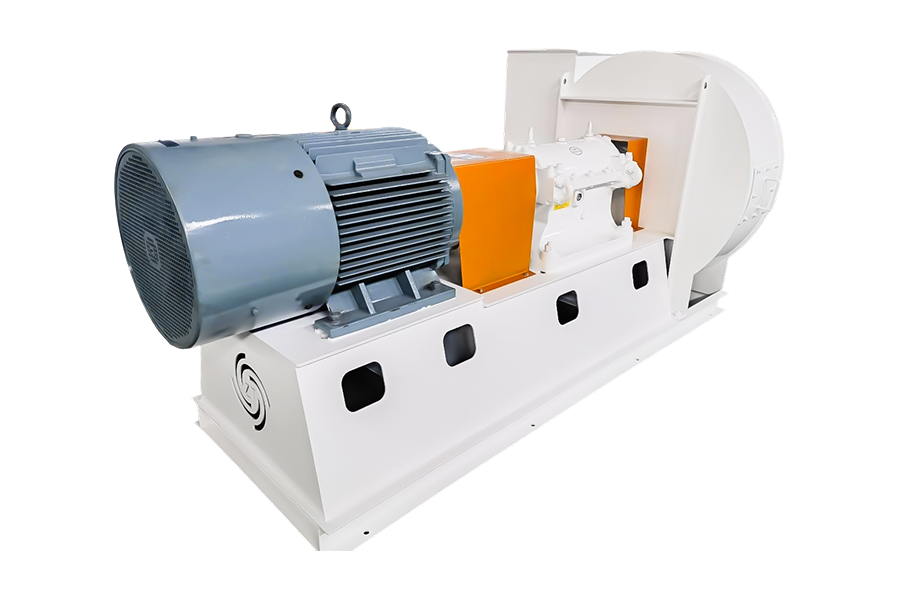
Category: Boiler System Centrifugal Fan Air blower Product Name Air volume Total pressure ...
See Details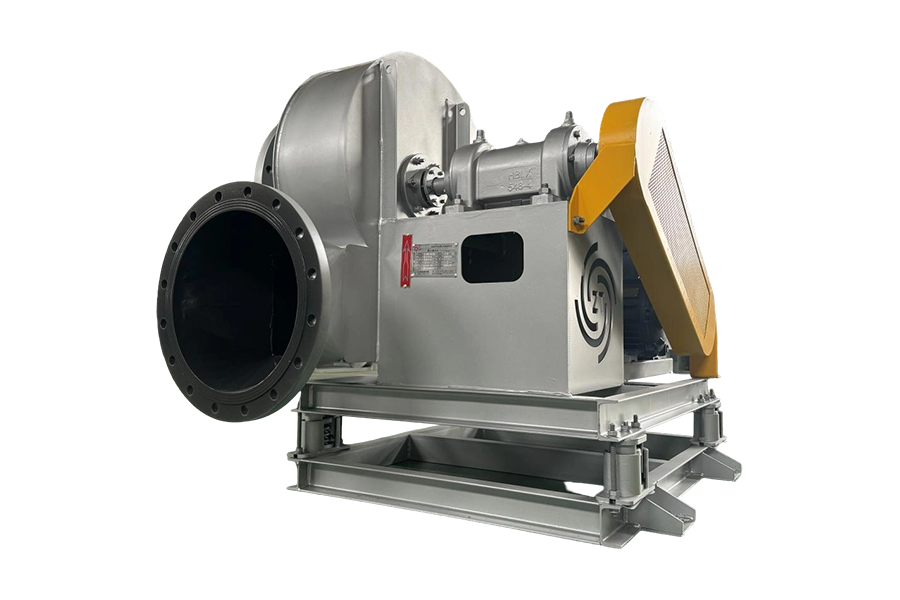
Category: Food Industry Centrifugal Fan Drying fan Product Name Air volume All-in Medium temperat...
See Details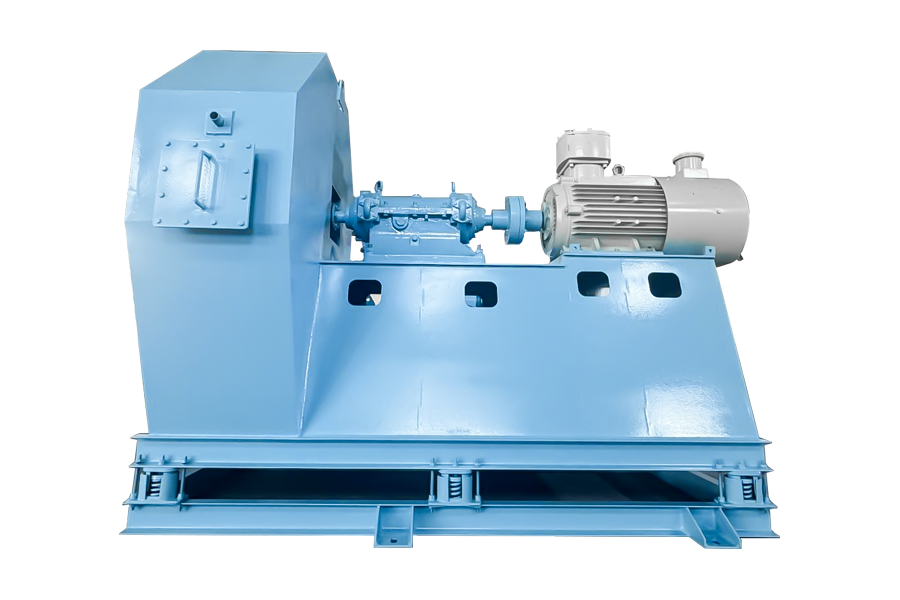
Category: Boiler System Centrifugal Fan Induced draft fan (suction fan) Product Name Air volum...
See DetailsMobile: +86-188 6157 1101
No.58 Wendong Road, Xushe Town Industrial Zone, Yixing City, Jiangsu Province, China

Copyright © JIANGSU ZT FAN CO.,LTD. All Rights Reserved.
Stainless Steel Centrifugal Fan Manufacturers


+86-188 6157 1101


 Contact Us
 Language
 English
 русский
 Español