How is a low-pressure centrifugal fan different from an axial fan?
Introduction to airflow equipment in industrial and commercial systems
In modern ventilation, process air handling, and environmental control systems, the selection of the correct fan type is a critical engineering decision. Fans are not interchangeable components. Their aerodynamic principles, pressure capabilities, installation constraints, and operational characteristics directly affect system stability, energy use, and long-term reliability. Among the most widely used solutions are centrifugal fans and axial fans, each designed around different airflow and pressure behaviors.
This article focuses on the practical and technical differences between axial fans and the low-pressure centrifugal fan, with specific attention to how low-pressure centrifugal designs support industrial, agricultural, and civil ventilation requirements. Based on the application scope you provided, this discussion emphasizes real-world system integration, typical performance expectations, and operational suitability rather than theoretical calculations.
In industrial fields such as building ventilation, mine ventilation, smoke exhaust, drying, clinker cooling, gas transportation, light material conveying, boiler draft systems, furnace draft systems, incinerator systems, air purification equipment, and industrial dust collector systems, airflow systems are rarely simple. They include long duct runs, filters, heat exchangers, bends, and process equipment that introduce resistance. These conditions strongly influence whether an axial fan or a centrifugal fan is the appropriate choice.
Fundamental design principles of axial and centrifugal fans
The most basic distinction between axial fans and centrifugal fans lies in how air moves through the impeller. Axial fans move air parallel to the fan shaft. Air enters and exits in a straight line, similar to a propeller. This configuration makes axial fans mechanically simple and well suited for high-volume airflow at very low system resistance.
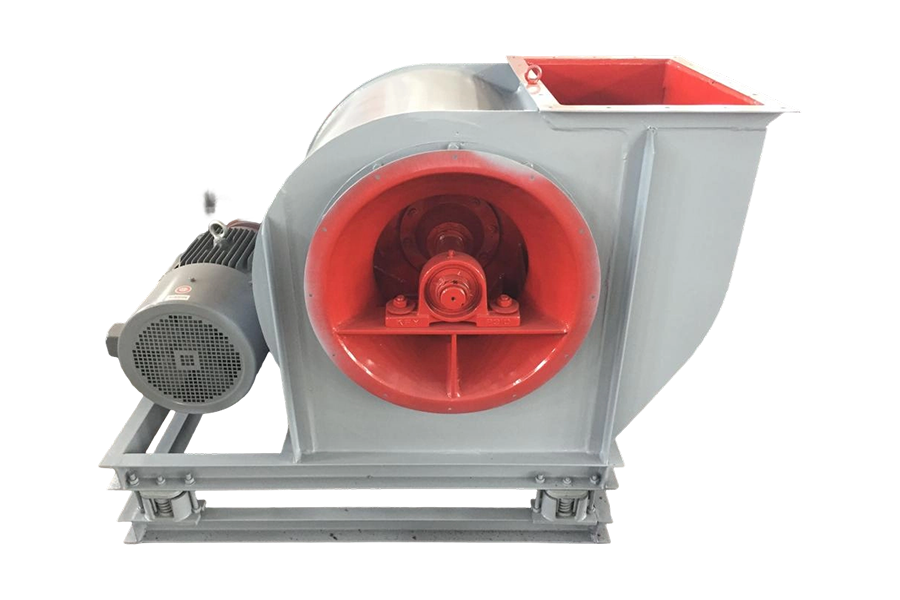
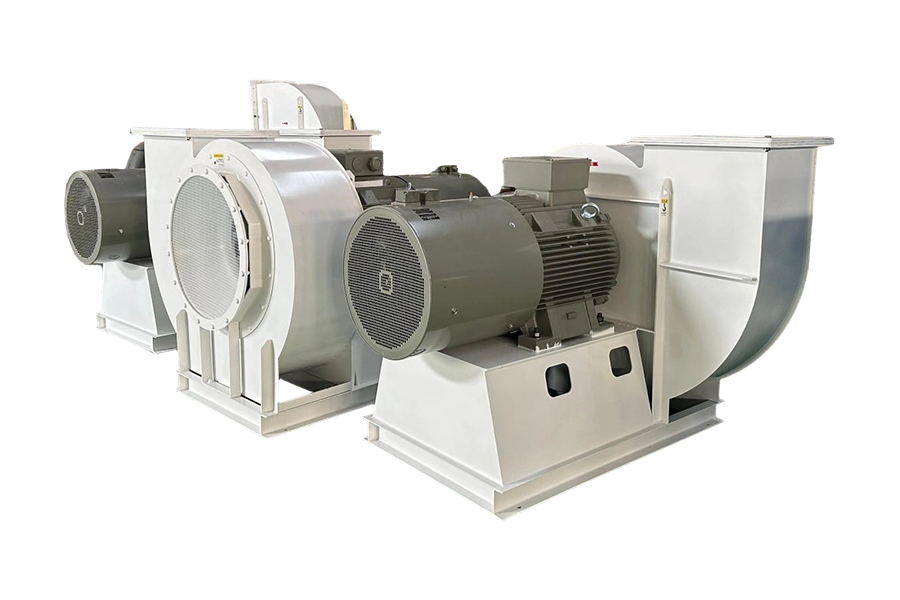
Centrifugal fans, including the low-pressure centrifugal fan, operate on a different principle. Air enters the impeller axially but is redirected radially outward by centrifugal force before leaving the fan housing. This change in airflow direction allows the fan to convert rotational energy into static pressure more effectively, even in low-pressure designs.
This difference in airflow path has several practical consequences:
- Axial fans perform best in free-air or low-resistance systems.
- Centrifugal fans maintain airflow more consistently as system resistance increases.
- Centrifugal housings allow better control of discharge direction and duct integration.
From a system engineering perspective, this means that centrifugal fans provide greater flexibility when ducting, filtration, or process equipment is present. Even when classified as low-pressure, a centrifugal design is better equipped to handle variable system conditions compared to a purely axial configuration.
In industrial environments, airflow paths rarely remain straight and unobstructed. Bends, transitions, silencers, and equipment connections are common. Under these conditions, axial fans often experience a sharper drop in delivered airflow, while centrifugal designs maintain more stable performance. This fundamental aerodynamic difference is one of the main reasons centrifugal fans are widely used in industrial ventilation systems.
Pressure capability and system resistance behavior
Pressure capability is one of the most important technical factors distinguishing axial fans from the low-pressure centrifugal fan. While both may operate in low-pressure ranges, their response to system resistance differs significantly.
Axial fans generate relatively low static pressure. Their performance is highly sensitive to downstream resistance. As duct length increases or filters become loaded, airflow from an axial fan can decrease rapidly. This makes axial fans best suited for applications such as wall-mounted ventilation, cooling of open spaces, or short, straight duct runs with minimal accessories.
Low-pressure centrifugal fans are specifically designed to handle higher system resistance while still operating within a low-pressure classification. The provided reference indicates flow rates of up to 200 cubic meters per second, which is significant for large-scale ventilation and process air systems. In applications such as mine ventilation, smoke exhaust, drying systems, and industrial dust collectors, airflow must overcome multiple resistance elements. Even at low pressure, centrifugal designs provide better control and stability.
The following table summarizes typical pressure and system behavior differences:
| Characteristic |
Axial fan |
Low-pressure centrifugal fan |
| Airflow direction |
Parallel to shaft |
Radial discharge |
| Response to resistance |
Strong airflow drop |
More stable airflow |
| Duct system suitability |
Limited |
Well suited |
| Integration with filters and equipment |
Less effective |
More effective |
This behavior explains why low-pressure centrifugal fans are widely used in air purification equipment, industrial dust collector systems, and process ventilation. These systems inherently involve resistance, and stable airflow is essential for performance and compliance.
Application scope and operational flexibility
One of the most practical differences between axial fans and the low-pressure centrifugal fan is the range of applications they can support. Axial fans are commonly used in localized ventilation, cooling towers, and general air movement where space is limited and ducting is minimal. Their compact axial footprint makes them attractive for certain mechanical layouts.
In contrast, low-pressure centrifugal fans are used across a much wider range of industrial, agricultural, and civil applications. According to the provided reference, typical uses include:
- Building ventilation systems
- Mine ventilation
- Smoke exhaust systems
- Drying processes
- Clinker cooling
- Gas transportation
- Light material conveying
- Industrial boiler draft systems
- Furnace and incinerator draft systems
- Air purification equipment
- Industrial dust collector systems
These applications share common system characteristics. They require ducted airflow, consistent volume delivery, and compatibility with process equipment. The centrifugal fan's ability to discharge air in a controlled direction and integrate with duct networks makes it suitable for these complex environments.
In agricultural and civil fields, centrifugal fans are also selected where airflow must be distributed evenly across larger spaces or through duct systems. Examples include grain drying, livestock ventilation, and centralized building ventilation. Axial fans may still be used in these fields, but their role is often limited to simpler air movement tasks.
This broad application range is a defining characteristic of the low-pressure centrifugal fan series. Even when pressure requirements are modest, the system-level demands often favor centrifugal designs over axial alternatives.
Installation, ducting, and system integration differences
Installation conditions further highlight how axial and centrifugal fans differ in practice. Axial fans are typically installed directly in walls, roofs, or short duct sections. Their straight-through airflow path means they require careful alignment to avoid turbulence and performance losses. Any upstream or downstream disturbances can significantly affect efficiency and noise.
Centrifugal fans, including the low-pressure centrifugal fan, are better suited for integration into complex duct systems. Their housings are designed to accept duct connections and direct airflow at specific angles. This allows engineers to design layouts that fit within mechanical rooms, rooftop units, or process enclosures.
Key installation and integration considerations include:
- Better tolerance of duct bends and transitions
- More predictable airflow distribution
- Easier connection to filtration and air treatment equipment
- Improved adaptability to space constraints
From a system design standpoint, this flexibility reduces the risk of performance shortfalls after installation. In many industrial projects, duct routing is constrained by building structure, equipment placement, and safety requirements. A centrifugal fan can accommodate these constraints more effectively than an axial fan.
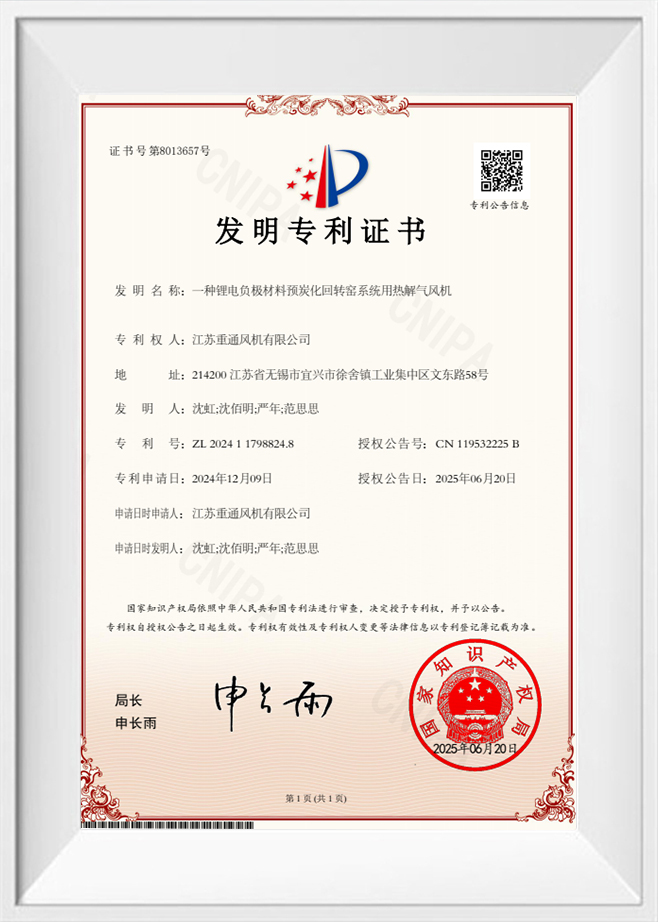
This is also where manufacturing quality and customization become important. Companies such as JIANGSU ZT FAN CO.,LTD. focus on integrating research and development, design, manufacturing, and service to ensure centrifugal fans are matched precisely to user equipment. In systems where airflow stability and integration with dust collectors, waste treatment, or process ventilation are required, tailored fan configurations can significantly improve overall system performance.
Noise, vibration, and operational stability
Noise and vibration behavior differ noticeably between axial fans and centrifugal fans. Axial fans often produce tonal noise related to blade passing frequency. In free-air conditions, this may be acceptable, but in ducted systems, reflected noise and turbulence can increase sound levels.
Low-pressure centrifugal fans typically generate a different noise profile. The enclosed housing and radial discharge can help contain and manage airflow noise, especially when paired with appropriate duct silencers. While centrifugal fans are not inherently silent, their noise behavior is often easier to control in industrial installations.
Operational stability is another important factor. Axial fans are more sensitive to changes in system resistance. As filters load or ducts become partially obstructed, airflow fluctuations can increase, leading to unstable operation. Centrifugal fans maintain more consistent airflow under similar conditions.
For industrial environments where continuous operation is required, stability is a key reliability factor. JIANGSU ZT FAN CO.,LTD. emphasizes robust design, high-quality components, and rigorous inspection standards to ensure stable operation and low failure rates. In applications such as waste incineration systems, pharmaceutical waste disposal, and chemical pollutant emission treatment, stable airflow is directly linked to process safety and compliance.
Maintenance and lifecycle considerations
Maintenance requirements also differ between axial fans and centrifugal fans. Axial fans are mechanically simple, but their exposure to contaminants can be higher, especially in industrial environments. Dust, fumes, and particulates can accumulate on blades, affecting balance and performance.
Centrifugal fans, particularly low-pressure centrifugal designs used in dust collection and air purification, are often built with heavier housings and impellers designed to handle contaminated air streams. This allows for more predictable maintenance schedules and better long-term durability.
Lifecycle considerations include:
- Resistance to dust and particulate buildup
- Structural robustness of impellers and housings
- Ease of inspection and access
- Compatibility with industrial maintenance practices
JIANGSU ZT FAN CO.,LTD. integrates component selection from well-known domestic and international sources and applies advanced sheet metal craftsmanship to ensure durability. This approach supports extended service life and reduced unplanned downtime, which is especially important in continuous industrial processes such as clinker cooling, boiler draft systems, and furnace ventilation.
Over more than three decades of specialization in centrifugal fan manufacturing, the company has refined its ability to deliver fans that are not only functionally appropriate but also mechanically robust for demanding environments. This long-term perspective aligns well with the lifecycle expectations of industrial users.
Energy use and operational efficiency in low-pressure systems
Low-pressure centrifugal fans are designed to operate efficiently within ducted systems that include resistance elements. Even though they may appear more complex, their ability to maintain airflow against resistance often results in more predictable energy performance at the system level.
In applications such as industrial dust collector systems, air purification equipment, and gas transportation, energy performance must be evaluated based on delivered airflow and system stability, not just fan nameplate characteristics. The centrifugal design supports this system-oriented evaluation.
By providing customized fan solutions, JIANGSU ZT FAN CO.,LTD. helps users match fan characteristics to real operating conditions. This reduces the risk of oversizing, undersizing, or operating fans outside their optimal range. Tailored solutions also support long-term energy management strategies in environmental management, waste incineration, and energy-related sectors.
Industrial reliability and customization advantages
A key differentiator of the low-pressure centrifugal fan is its adaptability to specialized industrial requirements. Axial fans are typically standardized products with limited customization. While this is suitable for general ventilation, it can be a limitation in complex process environments.
Centrifugal fans can be engineered with different impeller designs, housing configurations, and material selections to match specific media, temperatures, and contamination levels. This adaptability supports applications such as:
- VOC treatment in coating and paint booth systems
- Waste liquid and solid waste incineration systems
- Lithium battery material production lines
- Pharmaceutical waste disposal systems
- Chemical pollutant emission treatment systems
JIANGSU ZT FAN CO.,LTD. offers customized services to ensure that centrifugal fans integrate seamlessly with user equipment and processes. This level of customization is particularly valuable when airflow systems are part of regulated environmental or safety-critical operations.
R and D and continuous innovation also play a role. By prioritizing technological development, manufacturers can improve fan performance, durability, and compatibility with modern control systems. This ensures that centrifugal fans remain aligned with evolving industrial requirements.
Summary of key differences
The differences between axial fans and low-pressure centrifugal fans are not limited to basic airflow direction. They reflect deeper system-level considerations that affect performance, reliability, and long-term value.
Key distinctions include:
- Axial fans are best for low-resistance, straight-through airflow.
- Low-pressure centrifugal fans perform better in ducted and resistant systems.
- Centrifugal designs support a broader range of industrial and process applications.
- System integration and customization are more flexible with centrifugal fans.
- Operational stability is generally higher in centrifugal fan systems.
For building ventilation, mine ventilation, smoke exhaust, drying, clinker cooling, gas transportation, and industrial dust collection, centrifugal fans provide a practical balance between airflow capacity and pressure handling. This is why the low-pressure centrifugal fan series is widely adopted across industrial, agricultural, and civil fields.
Frequently asked questions about low-pressure centrifugal fans
What is the main advantage of a low-pressure centrifugal fan over an axial fan?
The main advantage is its ability to maintain stable airflow in ducted systems with resistance, making it more suitable for industrial and process applications.
Can a low-pressure centrifugal fan be used in simple ventilation systems?
Yes. While often used in complex systems, it can also be applied in simpler ventilation where ducting and airflow control are required.
Is a low-pressure centrifugal fan suitable for dust collection?
Yes. It is widely used in industrial dust collector systems because it can handle resistance and contaminated air streams more effectively.
How does customization benefit low-pressure centrifugal fan applications?
Customization ensures that the fan matches the specific airflow, space, and process requirements of the system, improving performance and reliability.
Are low-pressure centrifugal fans used outside industrial fields?
Yes. They are also used in agricultural and civil applications where controlled, ducted airflow is required.

 Contact Us
 Language
 English
 русский
 Español