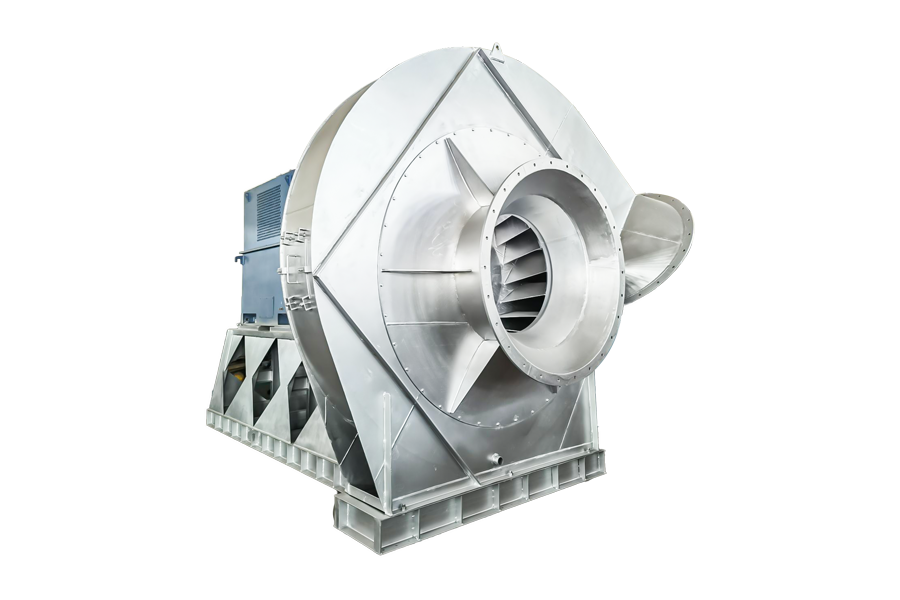
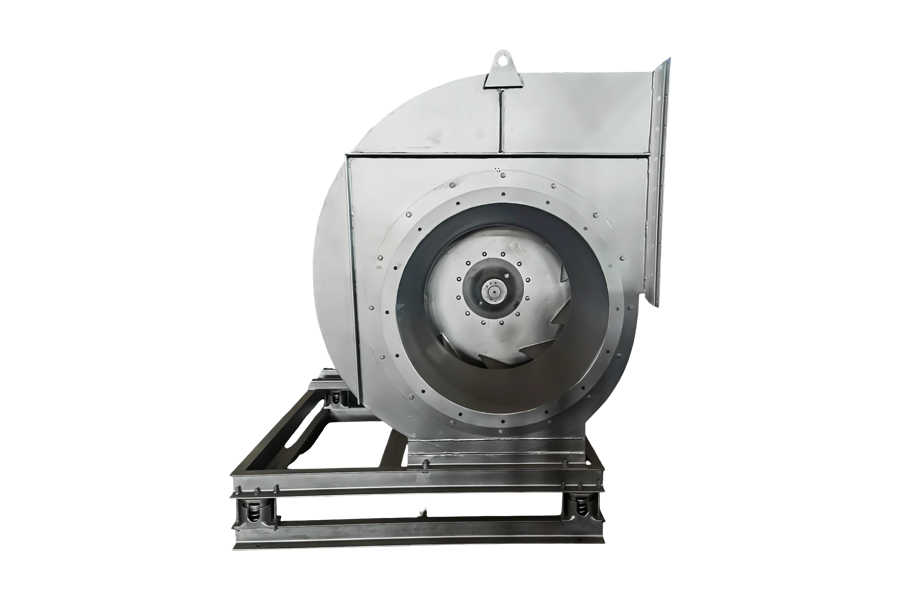
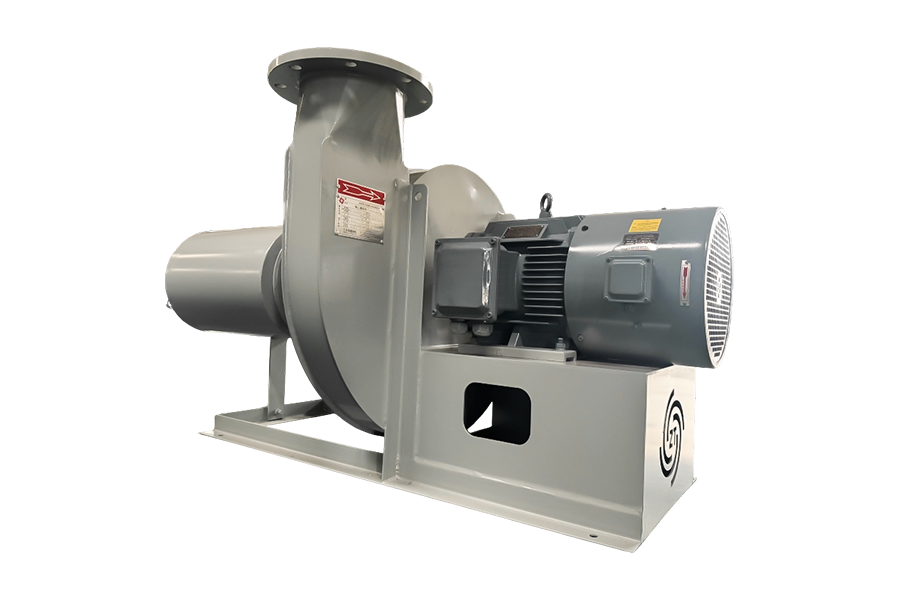
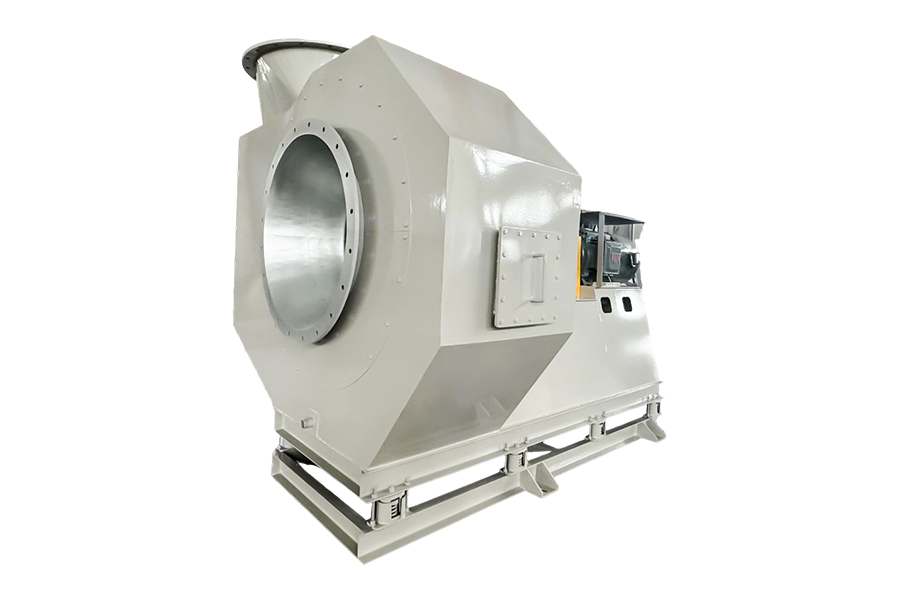
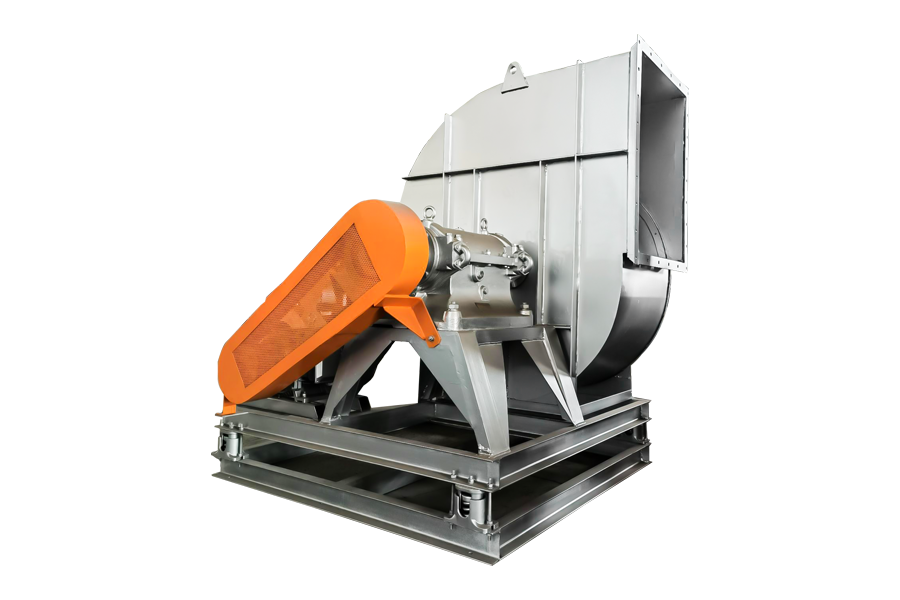
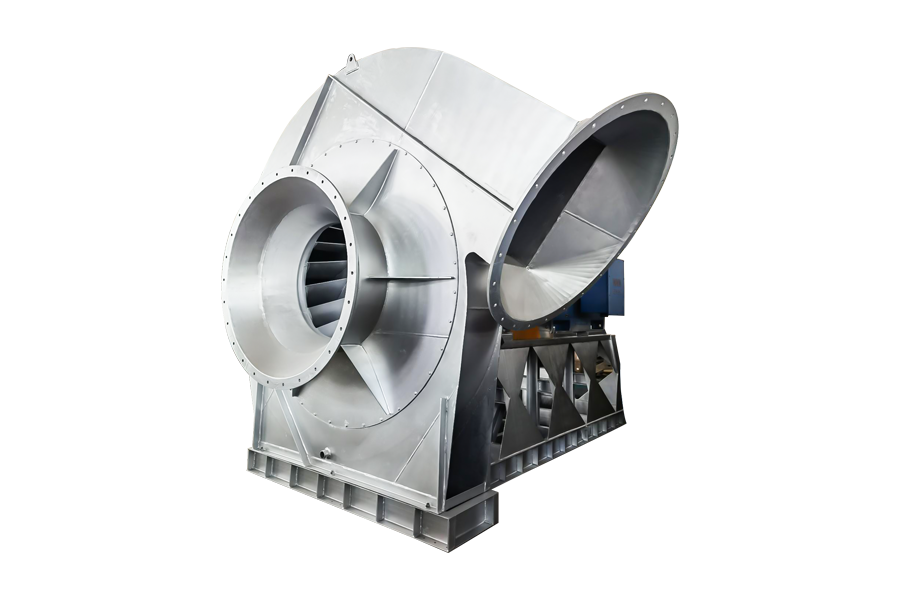
The smelting furnace combustion fan is one of the most mechanically demanding components in any metal processing facility. Unlike general-purpose industrial fans, a smelting furnace combustion fan must deliver precisely controlled airflow at sustained high static pressure — often while handling inlet air temperatures exceeding 200°C, operating in environments saturated with radiant heat, metallic dust, and corrosive combustion byproducts, and maintaining continuous duty performance across 8,000+ operating hours per year without unplanned downtime.
Whether the application is a rotary aluminum reverberatory furnace, a copper shaft furnace, a steel electric arc furnace forced draft system, or a non-ferrous induction furnace combustion air supply, the performance of the smelting furnace combustion fan directly determines burner efficiency, furnace temperature uniformity, fuel consumption rate, and ultimately the economics of the entire smelting operation. An undersized fan starves the burner of combustion air, reducing flame intensity and throughput. An oversized fan wastes electrical energy and creates combustion instability through excess air dilution. An incorrectly specified fan — wrong material grade, inadequate impeller clearance, insufficient shaft seal performance — fails prematurely and takes the furnace offline with it.
This article delivers a comprehensive, specification-grade analysis of smelting furnace combustion fan technology: aerodynamic design principles, material selection for high-temperature and corrosive service, capacity sizing methodology, mechanical reliability requirements, and OEM sourcing frameworks — designed for furnace engineers, plant maintenance managers, and procurement specialists who need technical depth to make correct equipment decisions.
What Makes a Smelting Furnace Combustion Fan Different from a Standard Industrial Fan?
The Unique Operating Environment of Smelting Applications
The operating environment of a smelting furnace combustion fan imposes stresses that standard industrial ventilation fans are not designed to handle. Understanding these stresses is the starting point for any correct equipment specification:
- High inlet air temperature: In recuperative combustion systems where combustion air is preheated by furnace exhaust gases, the fan may handle inlet air temperatures of 150–400°C. Gas density decreases proportionally with absolute temperature — air at 300°C (573 K) has density of only 0.616 kg/m³ vs. 1.204 kg/m³ at 20°C (293 K), a reduction of 49%. This density reduction directly reduces the mass flow of combustion air delivered per unit volume flow — requiring larger volumetric flow capacity to maintain equivalent mass flow for stoichiometric combustion. Fan performance curves are based on standard air density (1.2 kg/m³ at 20°C, sea level) and must be corrected for actual inlet conditions.
- High static pressure requirement: The smelting furnace combustion fan must overcome the total system resistance: burner nozzle pressure drop (typically 200–800 Pa for forced draft burners), combustion air ducting losses (50–200 Pa), control valve pressure drop (100–400 Pa at maximum flow), and furnace chamber back-pressure (0–200 Pa depending on furnace type). Total system static pressure requirement: typically 1,000–3,500 Pa for industrial smelting applications — significantly higher than general-purpose ventilation fans (typically 200–800 Pa).
- Continuous duty at elevated temperature: Smelting furnaces operate 24 hours per day, 330–350 days per year in most production schedules. The combustion fan for smelting furnace high temperature must maintain mechanical integrity across this continuous duty cycle — requiring bearing systems rated for elevated temperature and extended L10 life, shaft seals capable of sustained performance at operating temperature, and impeller balance quality (ISO 1940 Grade G2.5 or better) to prevent fatigue failure from vibration over extended service life.
- Particulate and corrosive contamination: In non-ferrous smelting (aluminum, copper, lead), combustion air picks up metallic fumes, fluoride compounds (in aluminum smelting — HF from flux), chloride compounds (in copper smelting), and sulfur dioxide from fuel combustion. These contaminants deposit on impeller surfaces, causing imbalance over time, and attack material surfaces through chemical corrosion. Fan material selection must account for the specific corrosive species present in the application.
- Radiant heat from furnace proximity: The fan body and motor are frequently installed close to the furnace structure, receiving radiant heat loads that raise ambient temperature at the fan by 30–80°C above general plant ambient. Motor and bearing specifications must account for this elevated local ambient — standard motors rated to 40°C ambient require derating above this threshold, and premium-grade motors rated to 55°C or 60°C ambient are frequently necessary in close-coupled furnace installations.
Centrifugal vs. Axial Fan Architecture for Combustion Service
The choice between centrifugal and axial fan architecture is fundamental to smelting furnace combustion fan specification — and in virtually all smelting combustion applications, centrifugal fan architecture is the correct choice:
| Parameter |
Centrifugal Fan |
Axial Fan |
Smelting Application Verdict |
| Static pressure capability |
500–15,000 Pa |
50–1,500 Pa |
Centrifugal — smelting requires 1,000–3,500 Pa |
| Pressure-flow stability |
Stable non-overloading curve |
Stall-prone at high resistance |
Centrifugal — stable across system resistance variation |
| Hot gas handling |
Excellent — radial impeller tolerates thermal expansion |
Limited — blade tip clearance critical |
Centrifugal — superior thermal tolerance |
| Particulate tolerance |
Good — backward-curved or radial blade sheds deposits |
Poor — blade deposits cause rapid imbalance |
Centrifugal — better deposit tolerance |
| Efficiency at operating point |
70–88% |
75–92% |
Centrifugal — adequate; efficiency benefit of axial outweighed by pressure limitations |
| Maintenance access |
Side/top access for impeller inspection |
In-duct inspection only |
Centrifugal — better maintenance access in hot environments |
Combustion Fan for Smelting Furnace High Temperature — Materials and Mechanical Design
Material Selection for High-Temperature Combustion Service
Material selection for a combustion fan for smelting furnace high temperature service is the most consequential design decision — determining mechanical integrity, corrosion resistance, and service life in the specific thermal and chemical environment of the application:
- Carbon steel (Q235, S235, A36): Standard material for ambient-temperature combustion air fans. Maximum continuous service temperature: 400°C (before oxidation scale formation begins to compromise surface integrity). Tensile strength reduces progressively above 300°C — Q235 retains approximately 80% of room-temperature yield strength at 300°C, dropping to 50% at 500°C. Suitable for cold forced draft fans (combustion air at ambient temperature) in coal, gas, or oil-fired furnaces where no air preheating is used. Not suitable for hot air recirculation or preheated combustion air service above 300°C inlet temperature.
- Stainless steel 304 (1.4301 / UNS S30400): The standard upgrade for moderate-temperature corrosive service. Maximum continuous temperature: 870°C (intermittent); 925°C (continuous) before sensitization and scaling. Tensile strength at 400°C: approximately 140 MPa vs. 520 MPa at room temperature — requires section size increase vs. carbon steel equivalent for equivalent mechanical performance at temperature. Superior resistance to oxidizing acids, chlorides at moderate concentration, and sulfurous combustion environments vs. carbon steel. The most common material upgrade for combustion fans for smelting furnace high temperature applications in aluminum and copper smelting where chloride and fluoride contamination is present.
- Stainless steel 316L (1.4404 / UNS S31603): Molybdenum-alloyed (2–3% Mo) austenitic stainless — provides significantly improved resistance to chloride pitting corrosion and crevice corrosion vs. 304. Critical advantage in applications where HCl, HF, or chloride-bearing combustion products contact fan surfaces. Maximum temperature: 870°C (oxidizing); lower in reducing atmospheres. Preferred for copper smelting and waste incineration combustion fan applications where chloride and sulfur species are most aggressive.
- High-temperature alloys (310S, Inconel 625, Alloy 800H): For inlet temperatures above 600°C (recuperative hot air systems, hot blast stoves): 310S (UNS S31008, 25% Cr / 20% Ni) provides excellent oxidation resistance to 1,100°C continuous. Inconel 625 (UNS N06625) offers exceptional resistance to high-temperature oxidation and carburizing atmospheres. These alloys are typically used for impeller and volute components only — with structural members in lower-grade stainless or heat-resistant steel — due to their significant cost premium (5–15× vs. 304 stainless).
- Heat-resistant cast iron (SiMo cast iron, Ni-resist): Silicon-molybdenum cast iron (4% Si, 1% Mo) provides excellent oxidation resistance to 900°C with high compressive strength and good thermal shock resistance. Used in volute casings and inlet boxes for high-temperature applications where the complex geometry of cast construction provides manufacturing advantages over fabricated steel. Ni-resist austenitic cast iron (14–36% Ni) provides better ductility and impact resistance than SiMo at equivalent temperature ratings.
Impeller Design for Smelting Combustion Service
The impeller is the most critically stressed component of the smelting furnace combustion fan — subject to centrifugal stress, thermal stress from non-uniform temperature distribution, and corrosion/erosion from particulate-laden hot air. Impeller design choices for smelting applications:
- Backward-curved (backward-inclined) impeller: The preferred blade geometry for clean-gas high-efficiency combustion air service. Non-overloading power curve (motor power peaks at maximum efficiency point and decreases at higher flow — prevents motor overload if system resistance drops below design). Efficiency: 80–88% total efficiency at design point. Suitable for combustion air service where inlet air is relatively clean (filtered or unfiltered ambient air). Blade thickness: minimum 6–10 mm for high-temperature service to prevent thermal distortion of thin leading edges.
- Radial (paddle) blade impeller: Flat radial blades with no curvature. Lower aerodynamic efficiency (65–75%) than backward-curved, but superior resistance to deposit buildup (deposits shed more readily from flat blade surfaces than curved). Used in smelting furnace combustion fan applications where combustion air carries metallic fume or particulate that would accumulate on backward-curved blade surfaces and cause progressive imbalance. Self-cleaning geometry extends intervals between impeller cleaning maintenance.
- Forward-curved impeller: High volume flow at lower pressure — not suitable for high-pressure combustion air service. Overloading power curve (power continues rising with flow increase — risk of motor overload). Not recommended for smelting furnace combustion fan applications.
- Impeller balance standard: ISO 1940-1 Grade G2.5 minimum for standard smelting combustion fans; Grade G1.0 recommended for high-speed units (above 3,000 RPM) and for units where vibration must be minimized to protect furnace structure connections. Residual unbalance at G2.5: e_per ≤ 2,500 / n (µm), where n = operating speed in RPM. At 1,450 RPM: e_per ≤ 1.72 µm — achievable with precision dynamic balancing after final assembly.
- Thermal expansion provision: For impellers operating at elevated temperatures, differential thermal expansion between impeller and shaft must be accommodated. Interference fit at ambient temperature transitions to a controlled clearance at operating temperature — requiring precise calculation of thermal expansion coefficient differential (α_stainless ≈ 17.2 × 10⁻⁶ /°C; α_steel shaft ≈ 11.7 × 10⁻⁶ /°C) and shaft-to-hub fit specification that maintains adequate driving torque capacity at all operating temperatures.
Shaft Seal and Bearing System Design
In a combustion fan for smelting furnace high temperature application, shaft seal and bearing system integrity are the primary determinants of mechanical service life and unplanned downtime risk:
- Shaft seal types: Labyrinth seals (non-contact, zero wear, suitable to 300°C shaft temperature); mechanical seals (contact type, suitable to 200°C with cooling — higher sealing integrity than labyrinth but requires cooling water for temperatures above 150°C); packing gland (braided graphite or PTFE packing, field-adjustable, suitable to 400°C — preferred for high-temperature applications where water-cooled mechanical seals are impractical). For inlet temperatures above 250°C, shaft cooling provisions (water-cooled bearing housing or extended shaft with cooling fins to reduce bearing zone temperature) are mandatory to protect bearing lubricant from thermal degradation.
- Bearing selection: Deep groove ball bearings (6200/6300 series) for light-duty low-temperature combustion fans; angular contact ball bearings in duplex back-to-back arrangement for high-thrust applications (fans with significant axial impeller thrust); spherical roller bearings for heavy-duty large-diameter impeller fans (superior radial load capacity and self-aligning capability for shaft deflection tolerance). Bearing L10 life target for smelting service: minimum 40,000 hours (approximately 5 years at continuous duty) — requiring adequate radial load margin (operating load ≤ 30% of dynamic load rating C) and temperature within bearing operating range.
- Lubrication system: Grease lubrication (NLGI Grade 2 lithium complex or polyurea high-temperature grease for bearing zone temperatures up to 150°C); circulating oil lubrication with external cooling (for bearing temperatures above 100°C or shaft speeds above 3,000 RPM in large fans); oil mist lubrication (for high-speed precision bearing systems). Re-lubrication interval for grease-lubricated bearings at 80°C bearing housing temperature: approximately 2,000 hours; at 100°C: approximately 500 hours — demanding attention for high-temperature installations.
Smelting Furnace Combustion Air Fan CFM Capacity Selection
Combustion Air Flow Calculation — Step-by-Step Engineering Method
Correct smelting furnace combustion air fan CFM capacity selection begins with the combustion engineering of the burner system, not with a catalog size selection. The fundamental calculation chain:
- Step 1 — Determine fuel consumption rate: From furnace thermal load (kW or BTU/hr) and burner thermal efficiency, calculate the fuel mass flow rate. Example: furnace thermal input = 2,000 kW; natural gas lower heating value (LHV) = 35.8 MJ/m³; burner efficiency = 95%: fuel flow = 2,000 / (35,800 × 0.95) = 0.0588 m³/s = 212 m³/hr (actual).
- Step 2 — Calculate stoichiometric combustion air requirement: For natural gas (methane dominant): stoichiometric air-to-fuel ratio = 9.55 m³ air / m³ gas (by volume at standard conditions). Stoichiometric air flow = 212 × 9.55 = 2,025 m³/hr at standard conditions (0°C, 1 atm).
- Step 3 — Apply excess air factor: Practical combustion requires excess air above stoichiometric to ensure complete combustion and compensate for mixing imperfection. Excess air factor (λ): 1.05–1.15 for natural gas forced draft burners (5–15% excess air); 1.10–1.25 for heavy fuel oil burners. Design combustion air flow = stoichiometric flow × λ. At λ = 1.10: design air flow = 2,025 × 1.10 = 2,228 m³/hr (standard conditions, 0°C).
- Step 4 — Convert to actual volumetric flow at fan inlet conditions: Q_actual = Q_standard × (T_inlet / 273.15) × (101.325 / P_inlet). At T_inlet = 200°C (473 K), P_inlet = 101.325 kPa: Q_actual = 2,228 × (473 / 273.15) × 1.0 = 3,862 m³/hr. This is the volumetric flow the fan must deliver — the fan curve must be evaluated at this actual condition, not at standard conditions.
- Step 5 — Apply system margin: Fan selection should target the design operating point at 80–90% of maximum fan efficiency (BEP — best efficiency point) on the fan performance curve, with sufficient margin to accommodate:
- System resistance uncertainty: ±15% on calculated system curve
- Future production increases: +10–20% flow margin
- Fan performance tolerance: IEC 60193 Grade 1 allows ±2% flow and ±3% pressure at guaranteed point
- Step 6 — Convert CFM for international specifications: 1 m³/hr = 0.5886 CFM (cubic feet per minute); 1 CFM = 1.699 m³/hr. For the example above: 3,862 m³/hr = 2,274 CFM at actual inlet conditions. Always confirm whether CFM specifications in procurement documents refer to actual conditions (ACFM) or standard conditions (SCFM at 68°F / 20°C, 1 atm, 0% humidity) — the distinction is critical for hot gas fan applications.
System Resistance Calculation and Fan Curve Matching
The smelting furnace combustion air fan CFM capacity selection is only complete when the fan performance curve is verified against the calculated system resistance curve at all anticipated operating conditions:
- System resistance components (total system static pressure):
- Ducting losses: calculated from Darcy-Weisbach equation (ΔP = f × L/D × ρv²/2), including bends, contractions, and expansions — typically 100–300 Pa for a well-designed compact combustion air system
- Control valve (flow control butterfly valve or globe valve) pressure drop at maximum flow: 200–500 Pa at full flow design — verify with valve Cv/Kv data from the valve manufacturer
- Burner register and nozzle pressure drop: 300–1,000 Pa at design flow — obtained from burner manufacturer's pressure curve data
- Air preheater (recuperator) pressure drop on air side: 200–600 Pa at design flow — from heat exchanger performance sheet
- Furnace chamber operating pressure: positive (pressurized furnace: +50 to +200 Pa) or negative (draft furnace: 0 Pa back-pressure on fan)
- System curve plotting: Total system pressure follows a parabolic relationship with flow: ΔP_system = ΔP_design × (Q / Q_design)². Plot this curve on the fan manufacturer's P-Q (pressure-flow) characteristic curve to identify the operating point intersection — the point where fan curve and system curve cross is the actual operating point. Verify this point falls within the fan's stable operating range (to the right of the surge/stall line) and within ±10% of the best efficiency point (BEP) for energy-efficient operation.
- Turndown ratio and control strategy: Many smelting furnaces require combustion air flow adjustment to match varying production throughput. Fan flow control options: inlet guide vanes (IGV — most efficient part-load control, typically 40–100% flow range); variable speed drive (VSD/VFD — excellent efficiency at part load, P ∝ n³ relationship; 50% speed = 12.5% power); outlet damper (simple but inefficient — throttling wastes fan head as pressure drop in the damper). For industrial smelting furnace forced draft combustion fan applications with significant load variation, VFD control is the recommended strategy — typically achieving 15–30% energy savings vs. fixed-speed damper control over a typical production cycle.
Industrial Smelting Furnace Forced Draft Combustion Fan — System Integration
Forced Draft vs. Induced Draft Combustion Systems
The industrial smelting furnace forced draft combustion fan is one half of the two possible fan configurations in a furnace combustion system:
- Forced draft (FD) system: The fan is located upstream of the burner — delivering combustion air at positive pressure to the burner register. The entire combustion system downstream (burner, furnace chamber, flue gas path) operates at or above atmospheric pressure. Advantages: handles relatively clean ambient air; lower gas temperature at fan inlet (unless air preheating is used); motor and bearing accessible at ambient temperature. Used in the majority of smelting furnace combustion fan installations as the primary combustion air supply fan.
- Induced draft (ID) system: The fan is located downstream of the furnace — drawing combustion gases and furnace atmosphere through the system at negative pressure. Fan handles hot, dirty, corrosive flue gas at 200–600°C. Higher material and mechanical specification required vs. forced draft. Used for furnace exhaust gas extraction — a separate function from combustion air supply but often operated in coordination with the FD fan to control furnace chamber pressure (balance draft systems).
- Balanced draft system: Both FD and ID fans installed, controlling furnace chamber pressure to slightly negative (−5 to −25 Pa) by coordinated speed control. Prevents furnace gas escape from door openings while minimizing cold air infiltration. The FD fan handles clean combustion air supply; the ID fan handles hot flue gas extraction — each fan specified for its specific gas conditions.
Vibration Monitoring and Condition-Based Maintenance
For industrial smelting furnace forced draft combustion fans in continuous-duty service, vibration monitoring is the most cost-effective predictive maintenance tool — detecting developing faults (impeller imbalance from deposit accumulation, bearing wear, shaft misalignment) before they cause in-service failure and unplanned outage:
- Vibration acceptance criteria (ISO 10816-3): For industrial fans with shaft heights above 315 mm and power above 15 kW: Zone A (new machine, acceptable): RMS velocity ≤ 2.3 mm/s; Zone B (acceptable for long-term operation): 2.3–4.5 mm/s; Zone C (alarm level — investigate): 4.5–7.1 mm/s; Zone D (trip level — shutdown): >7.1 mm/s. Establish baseline vibration signature at commissioning; trend monitoring detects progressive change before alarm threshold is reached.
- Impeller deposit monitoring: In applications with particulate-laden combustion air, impeller deposit accumulation causes progressive vibration increase at 1× running speed. Trending 1× vibration amplitude over time provides advance warning of deposit accumulation requiring cleaning — typically scheduling cleaning before vibration reaches Zone C rather than waiting for trip.
- Bearing temperature monitoring: Thermocouple or RTD sensors in bearing housings provide real-time temperature trending. Rate of temperature rise is more informative than absolute temperature — a 10°C increase over 24 hours at constant load indicates developing lubrication or bearing fault requiring investigation within days; a 30°C sudden increase indicates acute fault requiring immediate shutdown.
High Pressure Combustion Fan for Aluminum Copper Smelting — Application-Specific Engineering
Aluminum Smelting Combustion Air Requirements
Aluminum smelting presents specific combustion fan requirements driven by the chemistry and thermal profile of the reverberatory furnace process:
- Thermal profile: Aluminum melting point: 660°C; typical reverberatory furnace operating temperature: 800–950°C. Furnace specific heat input: 500–800 kWh per tonne of aluminum melted. Natural gas or LPG burners with forced-draft combustion air are standard. Combustion air flow per burner: 1,500–8,000 m³/hr depending on burner thermal rating (500 kW to 3,000 kW per burner).
- Fluoride contamination risk: Aluminum fluxing with chlorine/fluorine-based salts (used to remove hydrogen from molten aluminum) generates HF and AlF₃ vapor that enters the combustion air stream through furnace door leakage. HF attack on carbon steel fan components causes rapid corrosion — stainless steel 316L (molybdenum-alloyed for superior fluoride resistance) is the minimum material specification for aluminum smelting combustion fans in facilities using fluoride-containing flux.
- Required static pressure: 1,200–2,500 Pa total for typical aluminum reverberatory furnace combustion air systems — within the standard centrifugal fan capability range. For oxy-fuel burner systems (pure oxygen rather than air), combustion "air" fan is replaced by oxygen supply system — but the combustion air fan for auxiliary heating and cooling operations remains relevant.
Copper Smelting Combustion Air Requirements
Copper smelting combustion fan applications differ from aluminum primarily in their higher process temperatures and more aggressive corrosive environment:
- Thermal profile: Copper melting point: 1,085°C; shaft furnace operating temperature: 1,100–1,300°C; converter operating temperature: 1,200–1,350°C. Combustion air preheating to 300–500°C is standard in modern copper smelters to maximize thermal efficiency — creating the highest-temperature combustion air fan duty in common non-ferrous smelting applications. Hot blast stove systems (analogous to blast furnace hot blast technology) preheat combustion air to 400–600°C before delivery to the furnace burners.
- Sulfur dioxide environment: Copper concentrates contain significant sulfur — combustion of sulfur compounds generates SO₂ at concentrations of 1–15% in furnace gases. SO₂ in the presence of moisture forms H₂SO₃/H₂SO₄ — highly corrosive to carbon steel and damaging to stainless 304. Stainless 316L or higher alloy specification is required for any high pressure combustion fan for aluminum copper smelting in contact with SO₂-bearing gases or flue gas carryover in the combustion air.
- Pressure requirements: 1,500–3,500 Pa for copper shaft furnace and converter combustion air systems — at the higher end of the smelting furnace combustion fan pressure range. High-pressure backward-curved or radial blade centrifugal fans with two-stage impeller configurations may be required for the highest-pressure applications.
Smelting Furnace Combustion Fan Blower OEM Supplier — Sourcing Framework
Technical Specification Documentation for OEM Procurement
A complete technical specification for smelting furnace combustion fan OEM procurement must capture the following parameters to enable accurate engineering and pricing from the supplier:
- Gas data: Gas type (air, oxygen-enriched air, recirculated flue gas, or mixed); volumetric flow at actual inlet conditions (m³/hr or CFM, clearly stating ACFM or SCFM); inlet temperature (°C or °F); inlet pressure (absolute, kPa or bar); gas density at inlet conditions (kg/m³) or molecular weight and composition if mixed gas
- Performance data: Required flow at design point (m³/hr); required static pressure at fan outlet (Pa or mmWC); total pressure requirement (if duct velocity pressure is significant); allowable flow and pressure tolerance (IEC 60193 Grade 1: ±2% flow, ±3% pressure; Grade 2: ±3.5% flow, ±5% pressure)
- Mechanical data: Drive type (direct drive or belt drive, preferred motor speed); motor power supply (voltage, phase, frequency); site altitude above sea level (affects air density and motor cooling); maximum allowable sound pressure level at 1 m (dB(A)); vibration standard (ISO 10816-3 Zone A at commissioning)
- Material data: Gas-side materials (casing, impeller, inlet cone — specify alloy grade); shaft and bearing material; external surface treatment (paint system, hot-dip galvanizing, or stainless cladding for corrosive external environments)
- Installation data: Orientation (horizontal shaft, vertical shaft up, vertical shaft down); inlet configuration (free inlet, ducted inlet, inlet box); discharge configuration (angle of discharge, flexible connection requirements); available footprint dimensions
Jiangsu ZT Fan Co., Ltd. — OEM Manufacturing Profile
Jiangsu ZT Fan Co., Ltd., established in 1990 and headquartered in Jiangsu, China, has built more than three decades of focused expertise in centrifugal fan engineering and manufacturing — making it one of China's most experienced centrifugal fan OEM suppliers for demanding industrial applications including metal smelting, power generation, and industrial waste treatment.
The company's product scope spans stainless steel centrifugal fans and industrial blowers across a comprehensive range of application environments — from factory exhaust treatment and dust collection systems to VOC treatment in coating lines, waste liquid and solid waste incineration systems, lithium battery production line process fans, pharmaceutical and chemical waste treatment fans, and critically, power plant, steel mill, and metal smelting industry applications. This application breadth reflects deep engineering experience with the high-temperature, corrosive, and high-pressure service conditions that characterize smelting furnace combustion fan applications.

 Contact Us
 Language
 English
 русский
 Español