
 Contact Us
 Language
 English
 русский
 Español
Main fan Product Name Air volume All-in Medium temperature Conveying medium Main fan 1000-30000...
See Details
Content
Moving large volumes of air at moderate resistance is a common requirement across ventilation, drying, and exhaust systems. A low-pressure centrifugal fan is built specifically for this task, using a rotating impeller to generate airflow at lower static pressure than its high-pressure counterparts, while covering a wide range of general industrial and commercial air-handling needs.
A low-pressure centrifugal fan is a mechanical air-moving device that uses a rotating impeller housed inside a scroll-shaped casing to draw air in axially and discharge it radially. The term low-pressure refers to the fan's static pressure output, typically below 1000 Pa, which distinguishes it from medium and high-pressure centrifugal blowers designed for systems with greater resistance to airflow.
These fans are widely used where the primary requirement is air volume rather than pressure, such as general ventilation, cooling, and light material handling. Construction typically includes a steel or aluminum impeller, a welded or bolted housing, a direct-drive or belt-drive motor arrangement, and an inlet cone shaped to minimize turbulence entering the wheel.
Air enters the fan housing axially through the inlet and is drawn into the center of the rotating impeller. Centrifugal force generated by the spinning blades accelerates the air radially outward into the scroll-shaped housing, which converts velocity into a usable discharge airflow directed out through the outlet.
Because the housing geometry and blade profile are optimized for lower resistance systems, low-pressure fans generally move higher volumetric airflow at a given horsepower compared to high-pressure designs, but they are less effective when ductwork, filters, or process resistance increase system backpressure beyond their rated range.
Several impeller and housing configurations fall under the low-pressure centrifugal fan category, each suited to different airflow and space requirements.
Blades curve in the direction of rotation, producing high airflow at compact wheel sizes, commonly used in general HVAC systems.
Blades angle away from rotation direction, offering higher operating efficiency and stable performance across varying system loads.
Straight blades extending from the hub, suited to airflows carrying light particulate where a simple, robust wheel design is preferred.
Aerodynamically shaped blades that minimize turbulence, delivering quieter operation and higher efficiency in larger installations.
Evaluating a low-pressure centrifugal fan requires reviewing airflow volume, static pressure, wheel diameter, motor power, and rotational speed together, since these factors interact to determine actual system performance.
| Parameter | Typical Range |
|---|---|
| Static pressure | Up to 1000 Pa |
| Airflow volume | Several hundred to over 100,000 m³/h depending on size |
| Impeller diameter | 200 mm to 2000 mm |
| Motor power | 0.5 kW to over 100 kW |
| Rotational speed | 500 to 3000 rpm depending on design |
| Housing material | Carbon steel, galvanized steel, or stainless steel |
| Drive type | Direct drive or belt drive |
The primary distinction between low-pressure and high-pressure centrifugal blowers lies in how much system resistance they are designed to overcome while maintaining usable airflow.
Selecting between the two depends on the resistance present in the connected ductwork, filters, or process equipment. Installing a low-pressure fan into a system with high resistance results in reduced airflow and inefficient operation, while an oversized high-pressure blower in a low-resistance system wastes energy and increases noise.
| Application | Recommended Fan Characteristic |
|---|---|
| General building ventilation | Forward curved, compact housing, moderate airflow |
| Drying and curing ovens | Backward inclined, stable performance under heat |
| Dust and fume extraction | Radial blade, resistant to light particulate |
| Cooling towers and large halls | Airfoil blade, quiet high-volume operation |
| Process cooling systems | Backward inclined, consistent load handling |
Centrifugal fans, including low-pressure models, are used across a wide range of industrial and commercial sectors. Common applications include general manufacturing facilities requiring building ventilation, food processing operations needing drying and cooling airflow, chemical and material processing plants managing fume and dust extraction, power and utility facilities requiring equipment cooling, and commercial buildings relying on HVAC air handling units.
Each of these settings places different demands on fan selection, with process industries generally requiring more attention to material compatibility and contamination resistance than general ventilation applications.
Correct installation begins with ensuring the fan is mounted on a level, adequately supported base, with ductwork connections that avoid sharp bends near the inlet, since turbulent inlet airflow reduces overall efficiency. Motor and bearing alignment should be verified during commissioning, and belt tension checked before initial startup on belt-drive units.
Ongoing maintenance should include periodic inspection of the impeller for dust buildup or corrosion, bearing lubrication according to the manufacturer's schedule, belt tension and wear checks, and vibration monitoring to detect early signs of imbalance. Addressing minor buildup or wear early prevents the larger efficiency losses and bearing damage that develop when maintenance is deferred.
Low-pressure fans are not suited to systems with significant ductwork resistance, filtration, or process backpressure.
Dust or material accumulation on the impeller blades can cause vibration and accelerated bearing wear if not cleaned regularly.
Belt tension that is not periodically checked can slip or wear prematurely, reducing airflow output over time.
Forward curved designs in particular can generate more noise when operated near maximum rated speed.
A well-maintained low-pressure centrifugal fan typically provides a service life in the range of ten to fifteen years, though this varies based on duty cycle, environmental conditions, and maintenance consistency. Fans operating continuously in dusty, humid, or chemically active environments generally require more frequent bearing and impeller service than units in clean, climate-controlled installations.
Motor and bearing replacement is often required before the housing or impeller itself reaches end of life, making component-level maintenance planning more practical than full-unit replacement in many cases.
Matching fan type, pressure rating, and material construction to actual system conditions at the selection stage is what most consistently determines whether a low-pressure centrifugal fan reaches its expected service life.
Energy efficiency continues to be a primary driver in centrifugal fan design, with backward inclined and airfoil impellers increasingly specified over forward curved designs in new installations where efficiency and noise reduction are priorities. Variable frequency drive integration is also becoming more common, allowing airflow to be adjusted to actual demand rather than running fans at fixed full-speed output.
Material advances in corrosion-resistant coatings and composite impeller construction are expanding the range of environments where low-pressure fans can operate reliably without frequent component replacement, particularly in humid or chemically exposed settings.
A low-pressure centrifugal fan serves as a practical air-moving solution for ventilation, drying, and general exhaust applications where high airflow at moderate resistance is the primary requirement. Understanding impeller types, pressure ratings, and the distinction from high-pressure blower designs allows for more accurate fan selection, while consistent maintenance directly supports long-term reliability and service life.
Common types include forward curved, backward inclined, radial blade, and airfoil designs, each differing in efficiency, noise level, and suitability for specific airflow conditions.
Their main limitation is reduced performance in systems with significant resistance, along with sensitivity to impeller buildup and, in some designs, higher noise at elevated speeds.
Frequent issues include impeller imbalance from dust buildup, belt wear on belt-drive units, and reduced airflow from inlet turbulence caused by poor ductwork design.
Low-pressure fans are designed for high airflow at moderate resistance, generally under 1000 Pa, while high-pressure blowers use narrower, reinforced impellers to overcome resistance exceeding 3000 Pa.
Manufacturing, food processing, chemical and material processing, power and utility facilities, and commercial HVAC systems are among the sectors that regularly rely on centrifugal fans.
With regular maintenance, a typical service life ranges from ten to fifteen years, though this varies based on operating environment and duty cycle.
Maintenance includes regular impeller cleaning, bearing lubrication, belt tension checks on belt-drive units, and periodic vibration monitoring to catch developing issues early.
Your email address will not be published. Required fields are marked*
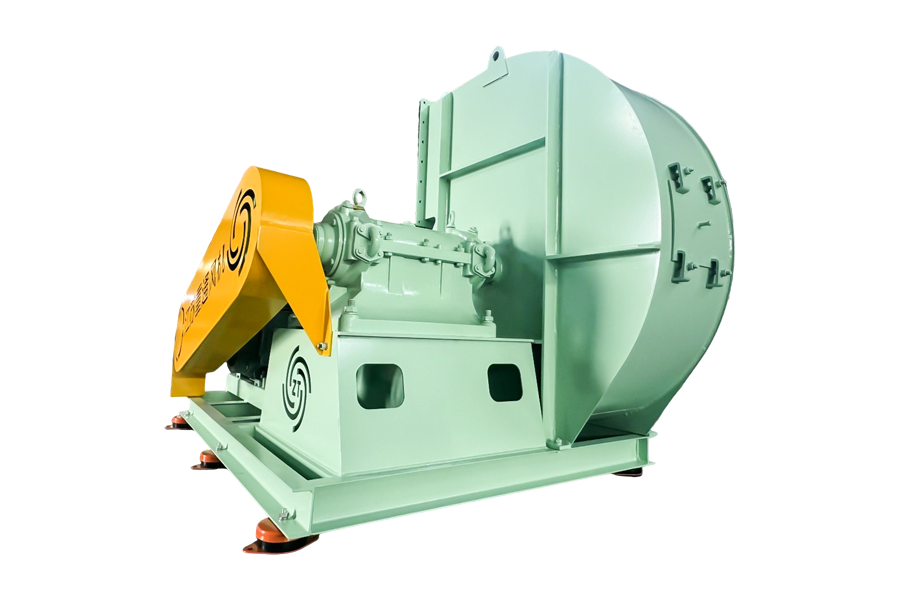
Main fan Product Name Air volume All-in Medium temperature Conveying medium Main fan 1000-30000...
See Details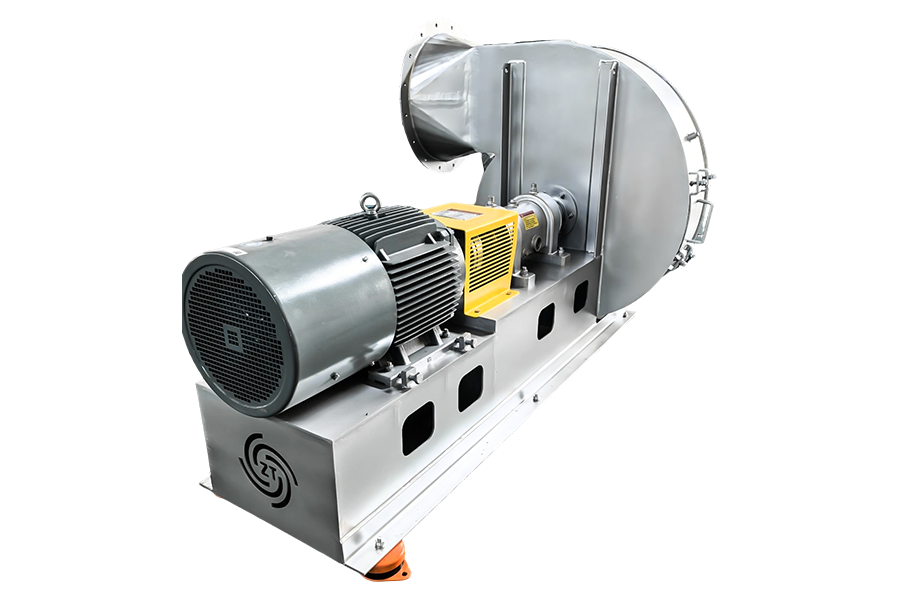
Desorption fan Product Name Air volume All-in Medium temperature Conveying medium Desorption fa...
See Details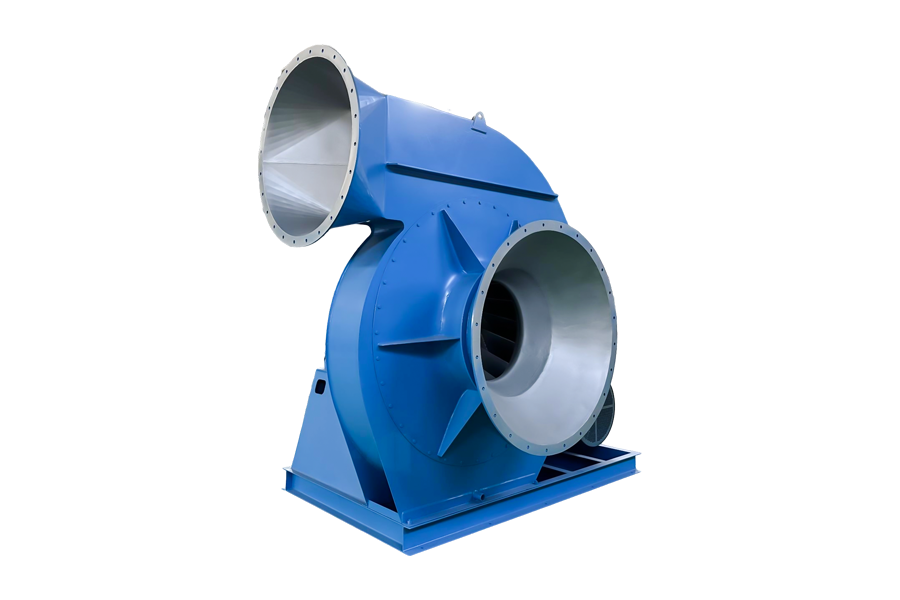
Induced draft fan Product Name Air volume All-in Medium temperature Conveying medium induced dr...
See Details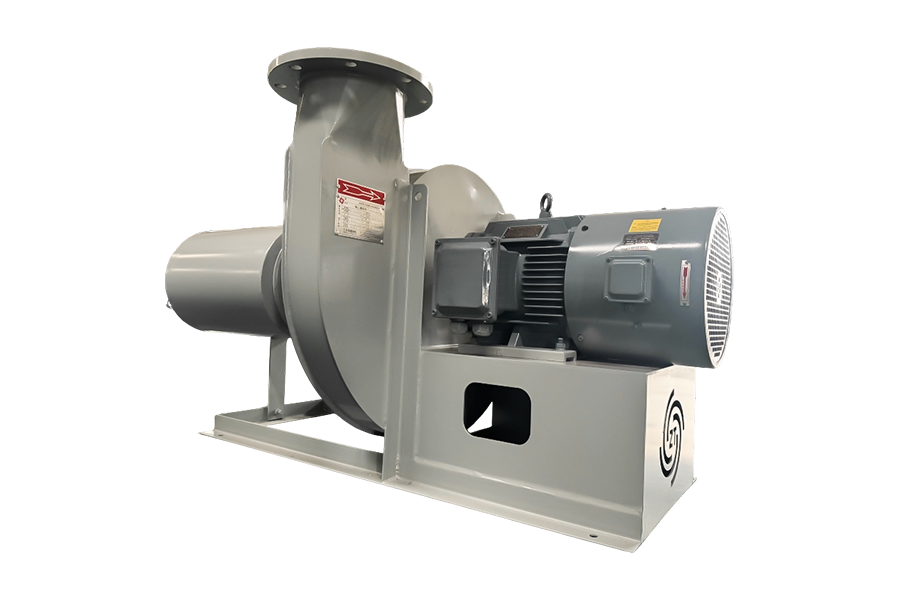
Combustion-supporting fan Product Name Air volume All-in Medium temperature Conveying medium Co...
See Details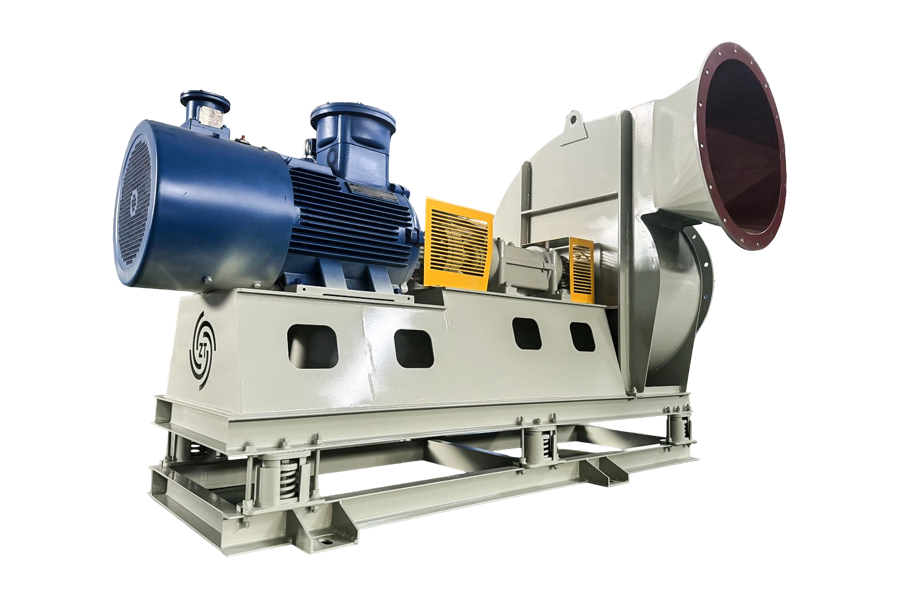
Oxygen supplement fan Product Name Air volume All-in Medium temperature Conveying medium Oxygen...
See Details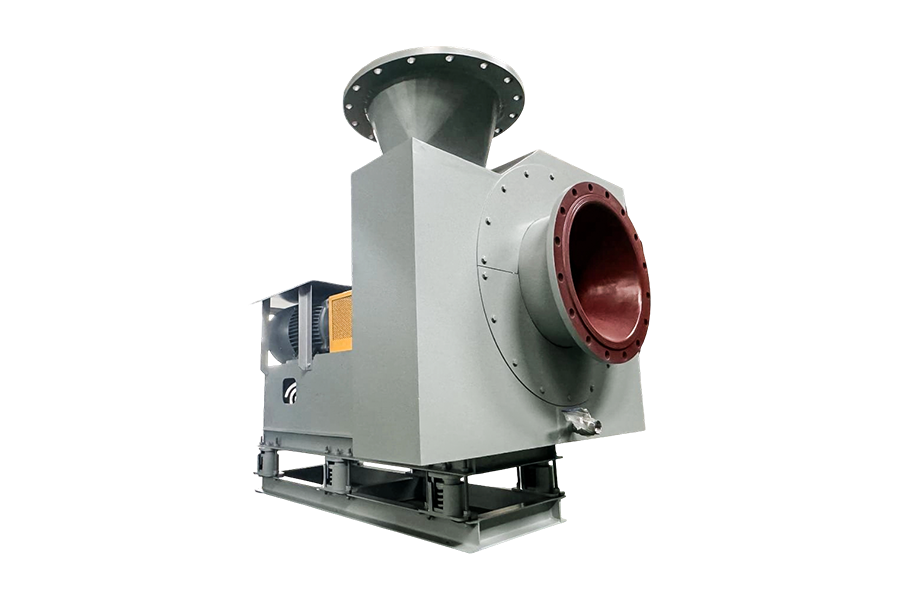
Purge fan Product Name Air volume All-in Medium temperature Conveying medium Purge fan 1000-500...
See DetailsMobile: +86-188 6157 1101
No.58 Wendong Road, Xushe Town Industrial Zone, Yixing City, Jiangsu Province, China

Copyright © JIANGSU ZT FAN CO.,LTD. All Rights Reserved.
Stainless Steel Centrifugal Fan Manufacturers


+86-188 6157 1101
