
 Contact Us
 Language
 English
 русский
 Español
Main fan Product Name Air volume All-in Medium temperature Conveying medium Main fan 1000-30000...
See Details
Content
A medium pressure fan is a centrifugal fan designed to operate within a static pressure range that sits between low-pressure and high-pressure centrifugal fan classes. It is built to move air through duct systems, filters, or process equipment that create moderate resistance to airflow, a condition common across a wide range of industrial ventilation and process air systems.
Like other centrifugal fans, a medium pressure fan moves air by drawing it into the center of a rotating impeller and accelerating it outward through curved blades using centrifugal force. The air's velocity is then converted into static pressure as it passes through the fan's volute casing before being discharged into the connected ductwork.
The distinguishing factor of a medium-pressure design lies in its blade geometry and impeller construction, which are engineered to generate a moderate rise in static pressure per stage without requiring the higher rotational speeds or reinforced housings associated with high-pressure fans. This makes the design well suited to systems with moderate ductwork length, filtration, or equipment resistance, where a low-pressure fan would struggle to maintain airflow and a high-pressure fan would be unnecessarily oversized for the task.
| Factor | Low Pressure Fan | Medium Pressure Fan | High Pressure Fan |
| Typical resistance handled | Minimal | Moderate | Significant |
| Blade design | Forward curved, lightweight | Backward curved or inclined | Radial or backward curved, reinforced |
| Casing construction | Lighter gauge | Moderate gauge, reinforced volute | Heavy gauge, reinforced throughout |
| Common use case | General ventilation, open spaces | Ducted ventilation, filtration systems | Pneumatic conveying, dense filtration |
| Relative rotational speed | Lower | Moderate | Higher |
Many industrial air handling systems fall neither into the very low resistance category nor the very high resistance category. Systems that include moderate duct runs, standard filter banks, or light process equipment typically create a resistance level that a medium pressure fan is specifically engineered to overcome efficiently. Selecting a fan class matched to actual system resistance, rather than defaulting to a higher-rated unit, supports more stable airflow delivery and more predictable operating behavior across the system's duty cycle.
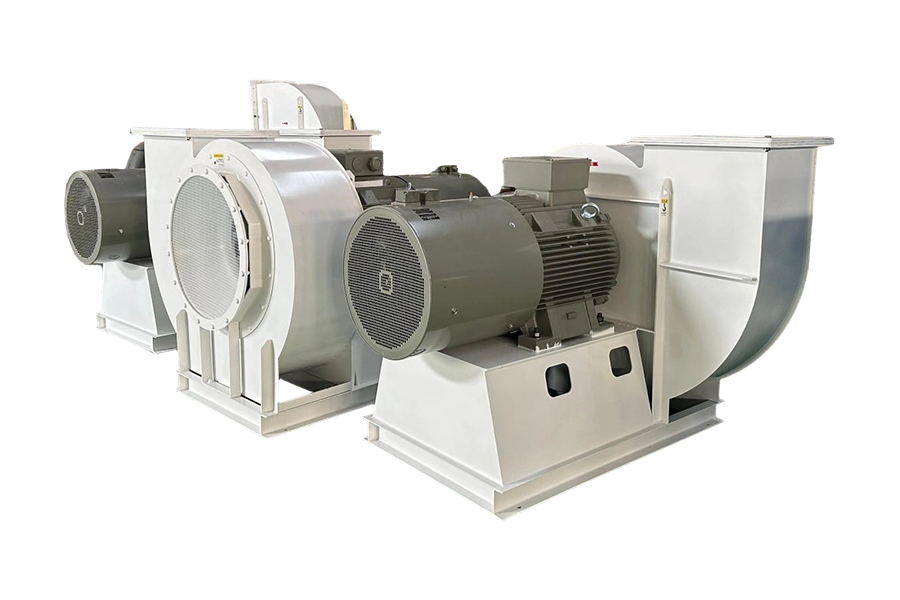
Selecting a suitable medium pressure fan involves matching the unit's operating range to the specific characteristics of the system it will serve, rather than choosing based on horsepower or size alone.
Centrifugal fan performance is typically represented as a curve plotting static pressure against airflow volume at a fixed operating speed. For a medium pressure fan, this curve generally shows a gradual decline in static pressure as airflow volume increases, with a defined region of stable, efficient operation before performance drops off sharply at either extreme of the curve.
The section of the curve where static pressure and airflow remain proportionally balanced is generally considered the fan's efficient operating region. Selecting a fan whose duty point falls within this region, rather than near either end of the curve, supports steadier performance and reduces strain on the motor and bearings over time.
Compact design suited to lower-pressure applications with higher airflow volume relative to fan size.
Commonly used in medium pressure applications, offering stable performance across a range of operating conditions.
Similar operating characteristics to backward-curved designs, often selected for moderate resistance systems requiring efficient operation.
Suited to higher resistance or particulate-laden airflow, typically associated with high-pressure applications.
Proper installation directly affects how closely a fan's real-world performance matches its rated curve. Ductwork should be connected with minimal abrupt transitions near the fan inlet and outlet, since turbulence introduced close to the fan can reduce effective performance. The fan should be mounted on a level, adequately supported base to minimize vibration transfer, and sufficient clearance should be maintained around access panels for future maintenance. Electrical and control connections should be sized according to the motor's rated load to avoid voltage drop under continuous operation.
A medium pressure fan fills the operating space between low- and high-pressure centrifugal fan designs, making it a common choice for ducted ventilation, filtration, and process air systems with moderate resistance. Matching blade type, casing construction, and performance curve to the actual system conditions, along with consistent maintenance, supports stable long-term operation across this fan class.
They are commonly used in ducted ventilation systems, dust and fume extraction, drying processes, and HVAC air handling units where moderate airflow resistance is present.
When operated within their designed pressure and airflow range, they generally perform efficiently, since the fan's blade and casing design is matched to that specific resistance level rather than over- or under-sized for the task.
The difference lies mainly in blade geometry, casing reinforcement, and the resistance level each is designed to overcome, with medium pressure fans positioned between the two other classes.
Backward-curved and backward-inclined blade designs are common, offering stable performance across a range of moderate-resistance operating conditions.
Bearing lubrication, belt tension, and impeller cleanliness should be checked on a regular schedule, with frequency depending on operating hours and the presence of dust or particulates in the airflow.
Operating near either extreme of the performance curve typically results in reduced efficiency and can place additional strain on the motor and bearings over time.
Your email address will not be published. Required fields are marked*
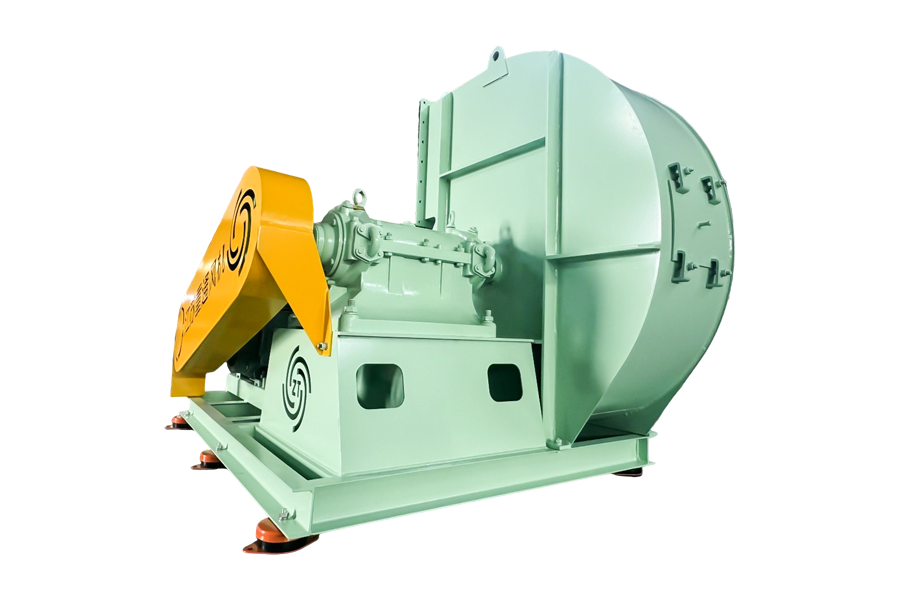
Main fan Product Name Air volume All-in Medium temperature Conveying medium Main fan 1000-30000...
See Details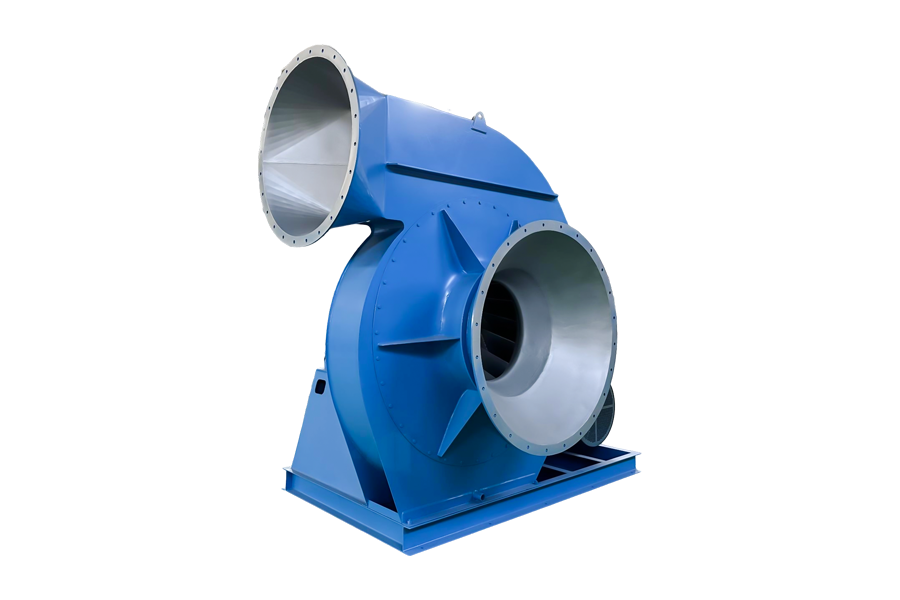
Induced draft fan Product Name Air volume All-in Medium temperature Conveying medium induced dr...
See Details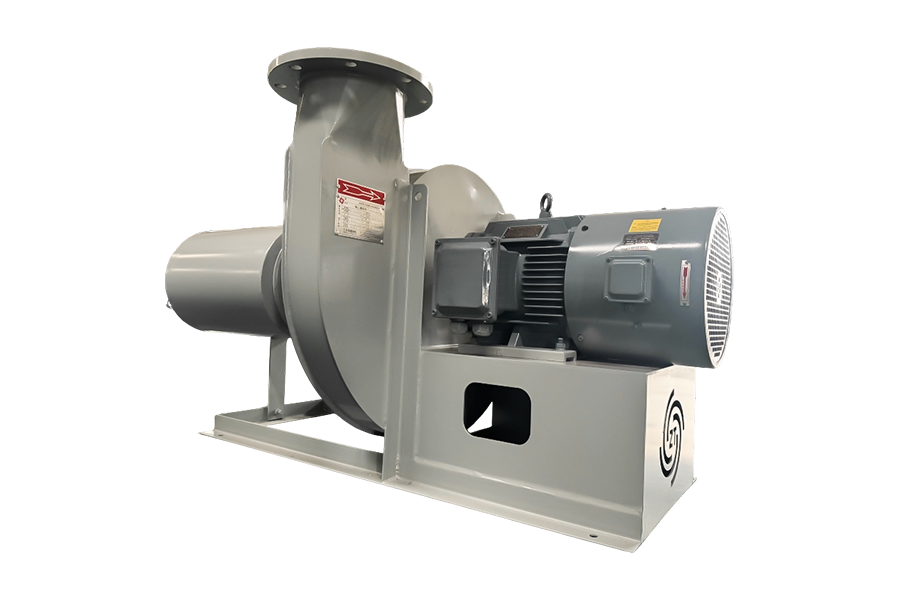
Combustion-supporting fan Product Name Air volume All-in Medium temperature Conveying medium Co...
See Details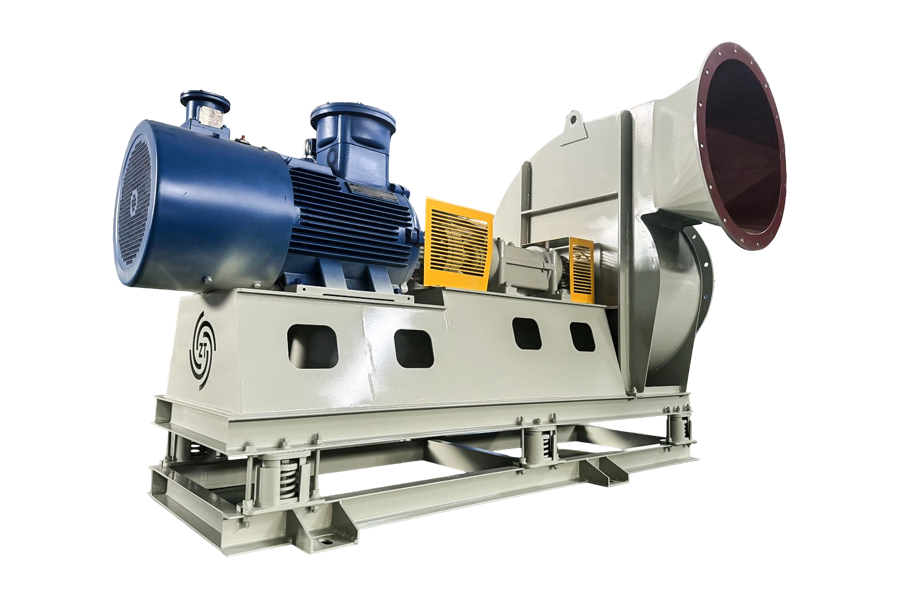
Oxygen supplement fan Product Name Air volume All-in Medium temperature Conveying medium Oxygen...
See Details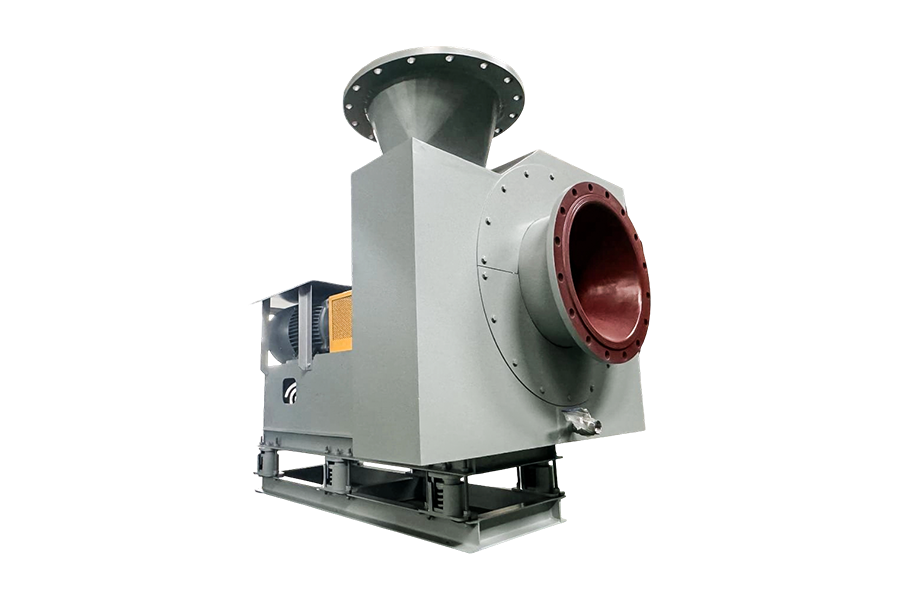
Purge fan Product Name Air volume All-in Medium temperature Conveying medium Purge fan 1000-500...
See Details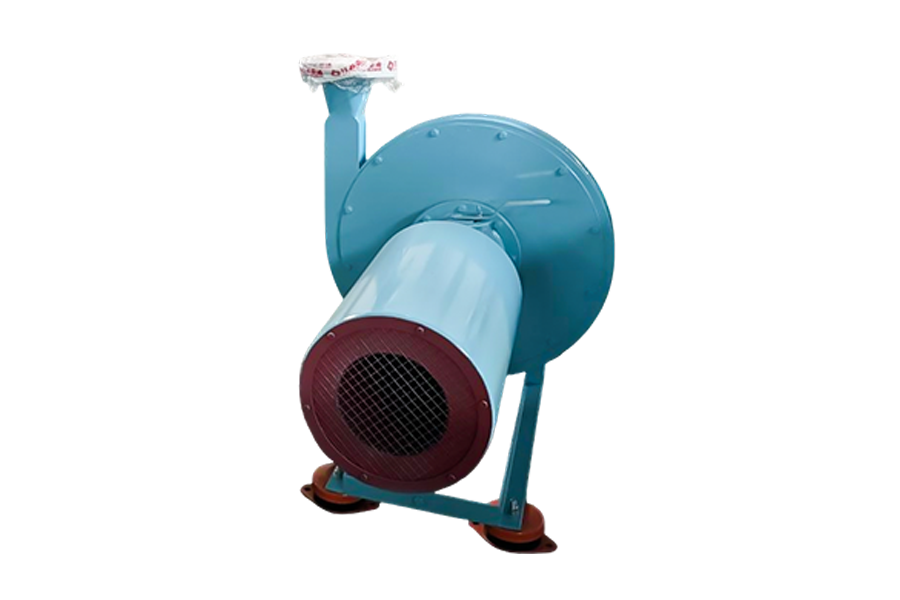
Sealed fan Product Name Air volume All-in Medium temperature Conveying medium Sealed fan 500-10...
See DetailsMobile: +86-188 6157 1101
No.58 Wendong Road, Xushe Town Industrial Zone, Yixing City, Jiangsu Province, China

Copyright © JIANGSU ZT FAN CO.,LTD. All Rights Reserved.
Stainless Steel Centrifugal Fan Manufacturers


+86-188 6157 1101
