Comprehensive Industry Guide: High Pressure Centrifugal Fan Blowers
This guide provides in-depth knowledge about High Pressure Centrifugal Fan Blowers, covering principles, selection criteria, and application-specific considerations for industrial professionals.
1. Working Principle and Core Components
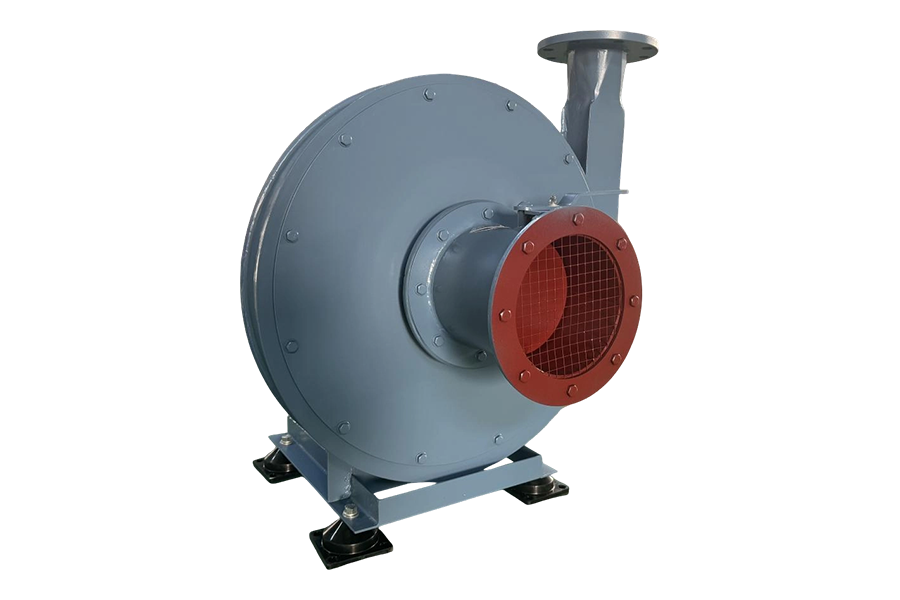
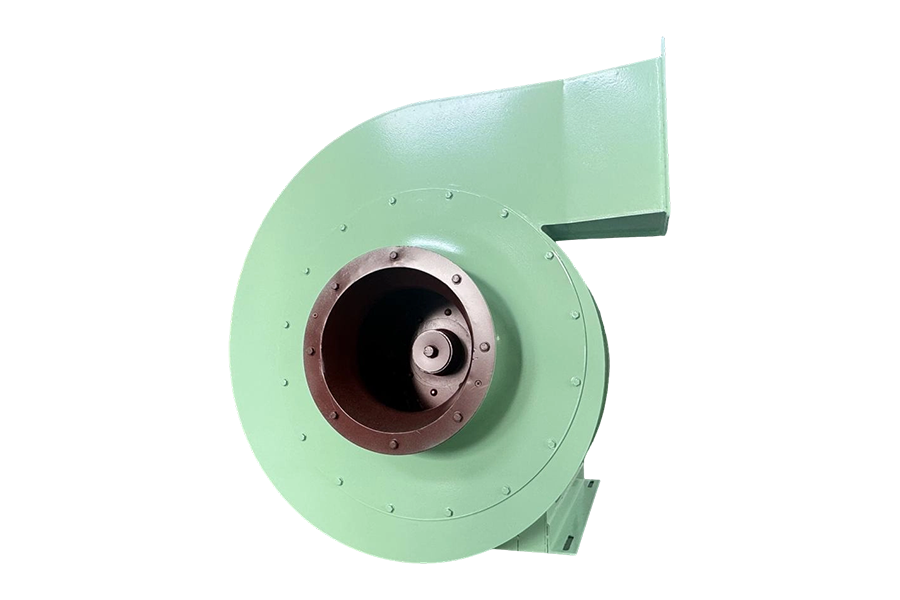
A High Pressure Centrifugal Fan Blower operates on the principle of centrifugal force. A rotating impeller accelerates air or gas outward, converting kinetic energy into pressure energy within the volute or diffuser casing. Key components include:
- Impeller: The rotating element with backward-inclined, forward-curved, or radial blades.
- Casing (Volute): Guides the airflow and converts velocity into static pressure.
- Inlet & Outlet Cones: Direct flow into and out of the fan efficiently.
- Shaft & Bearings: Support the impeller and handle radial/axial loads.
- Drive System: Typically an electric motor with direct coupling or belt drive.
- Seals: Prevent gas leakage (e.g., labyrinth, mechanical seals).
2. Key Technical Parameters and Selection Table
Selecting the correct blower requires analyzing several critical parameters. The following table outlines the primary considerations:
| Parameter |
Description & Impact |
Common Range / Options |
| Volume Flow Rate (Q) |
The quantity of air moved per unit time. Determines system capacity. |
100 - 50,000 m³/h (customizable) |
| Static Pressure / Total Pressure (P) |
The fan's ability to overcome system resistance (ducting, filters, etc.). |
10 - 100 kPa (Medium to High Pressure) |
| Gas Conditions |
Temperature, density, moisture, and corrosiveness dictate material selection. |
Standard: 20°C, 1.2 kg/m³. High-Temp/Chemical options available. |
| Impeller Type |
Defines performance curve shape, efficiency, and stability. |
Backward-inclined (High Efficiency), Radial (Robust), Forward-curved (Compact). |
| Efficiency (η) |
Ratio of useful output power to input power. Directly affects operating cost. |
65% - 85%+ (varies with design and operating point) |
| Drive & Control |
Method of power transmission and flow/pressure modulation. |
Direct Drive / Belt Drive. Control: VFD (Variable Frequency Drive), Inlet Dampers. |
3. Material Selection for Demanding Applications
The operating environment dictates construction materials to ensure longevity and reliability.
3.1 Standard Construction
- Housings & Impellers: Carbon steel (CS) with protective coating.
- Shafts: Carbon steel, hardened and ground.
3.2 Specialized Constructions
- Corrosion Resistance: Stainless steel (304, 316, 316L), duplex steels, or fiberglass-reinforced plastic (FRP) for acidic/alkaline fumes in chemical or wastewater treatment.
- High-Temperature Resistance: Heat-resistant steels, alloy coatings for exhaust gas, incineration flue gas, and drying processes.
- Abrasion Resistance: Hard-surfaced/wear-resistant steel plates or ceramic linings for dust-laden air in material handling and mining.
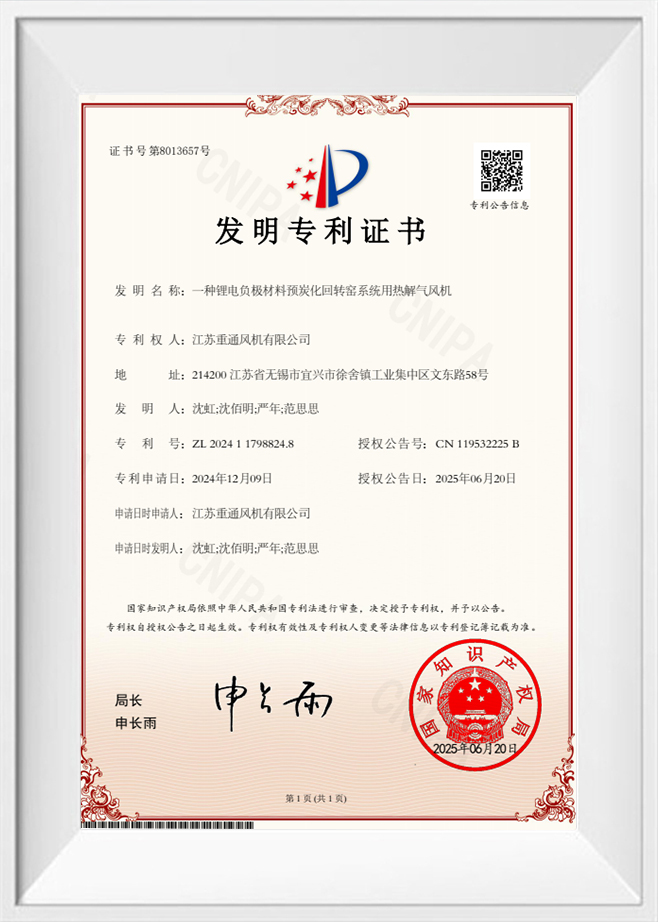
As a professional centrifugal fan manufacturer, Jiangsu ZT Fan Co., Ltd. utilizes components from reputable domestic and international brands. We offer fully customized material specifications to ensure perfect compatibility with challenging processes like lithium battery material production, pharmaceutical waste disposal, and VOC abatement, guaranteeing stable operation and minimal downtime.
4. Critical Applications in Major Industries
High-pressure centrifugal blowers are vital in numerous industrial sectors:
- Waste & Wastewater Treatment: Aeration in activated sludge basins, requiring precise oxygen transfer and constant pressure.
- Combustion & Incineration: Supplying combustion air for boilers, thermal oxidizers (RTOs), and solid/liquid waste incineration systems.
- Pneumatic Conveying: Transporting powders and granules through pipelines in food, cement, and power industries.
- Industrial Ventilation & Pollution Control: Powering dust collection systems (baghouses, cyclones), paint booth exhaust, and fume extraction in metal smelting and steel mills.
- Process Gases: Providing air for drying, cooling, or as a reactant in chemical and manufacturing processes.
ZT FAN's products are engineered for these demanding applications, integrating robust design with precise craftsmanship for durability and performance in factory exhaust systems, dust collectors, and power plant operations.
FAQ
What is the difference between a high-pressure centrifugal fan and a regular centrifugal fan?
The primary difference lies in the pressure generation capability and design focus. High-pressure centrifugal fans (blowers) are specifically engineered to generate higher static pressures (typically from 10 kPa up to 100+ kPa) to overcome significant system resistance. They often feature:
- Impellers with a larger diameter and/or narrower width.
- Multiple impeller stages (in multistage blowers) for incremental pressure increase.
- Sturdier construction, including heavier-duty shafts and bearings to handle higher mechanical stresses.
- A performance curve that is steeper, making them less susceptible to flow fluctuations due to pressure changes in the system. Regular centrifugal fans are optimized for higher volumes at lower pressures (<5 kPa).
How do I size and select a high-pressure blower for a VOC/RTO system?
Sizing for a Regenerative Thermal Oxidizer (RTO) or VOC system is critical and involves several precise calculations:
- Determine Required Flow Rate (SCFM or m³/h): This is based on the process exhaust volume, accounting for duct leakage and future capacity. Safety factors are often applied.
- Calculate Total System Pressure Drop: Sum the resistance from the process hoods, ductwork (including length, elbows, dampers), the RTO valve system, heat exchanger, and the stack. This defines the required fan static pressure.
- Adjust for Actual Conditions: Correct the flow and pressure for site-specific inlet temperature and altitude. High inlet temperatures significantly reduce air density, requiring a larger fan.
- Material Selection: For VOC-laden streams, choose corrosion-resistant materials like 316L stainless steel for wet or acidic streams.
- Control Strategy: Specify a Variable Frequency Drive (VFD) for precise control of flow and pressure, which is essential for RTO efficiency and adapting to varying process conditions.
Working with an experienced manufacturer like ZT Fan, which specializes in custom solutions for VOC treatment and paint booth lines, ensures the blower is perfectly matched to the system's dynamic needs, optimizing energy use and destruction efficiency.
What maintenance is required for a high-pressure centrifugal blower in continuous operation?
Preventive maintenance is key to achieving the "extremely low failure rate" expected in industrial settings. A comprehensive schedule includes:
- Daily/Weekly: Check and log amperage, vibration levels, and unusual noises. Inspect for leaks.
- Monthly/Quarterly:
- Clean inlet filters/screens to prevent impeller fouling.
- Check belt tension and alignment (for belt-driven units).
- Inspect lubrication: oil level, color, and condition. Follow manufacturer guidelines for oil change intervals.
- Annually/Biannually:
- Perform detailed vibration analysis to detect bearing wear or imbalance early.
- Inspect impeller for erosion, corrosion, or dust buildup. Clean or repair as needed.
- Check all seals for wear and replace if necessary.
- Verify alignment between motor and fan shaft.
- Calibration of control instruments and safety devices.
Adherence to a structured plan, using quality parts from reputable brands as employed by ZT FAN, maximizes uptime and extends service life significantly.
Can an existing centrifugal fan be upgraded for higher efficiency or changed process conditions?
Yes, retrofits and upgrades are common and can be highly cost-effective. Potential modifications include:
- Impeller Replacement/Upgrade: Installing a newly designed, aerodynamically efficient impeller can improve fan efficiency by 5-15%, reducing energy consumption.
- Drive System Conversion: Replacing fixed-speed drives or inlet guide vanes with a Variable Frequency Drive (VFD) allows the fan to match exact process demand, yielding substantial energy savings.
- Material Upgrade: Replacing components with more corrosion or abrasion-resistant materials to handle a change in process gas composition.
- Inlet/Outlet Modifications: Optimizing inlet cones or outlet diffusers to reduce turbulence and system effect losses.
- Rehousing: In some cases, the entire fan casing may be redesigned to accommodate a new performance point.
As a custom centrifugal fan factory, Jiangsu ZT Fan Co., Ltd. provides professional audit and upgrade services. We assess the current performance, identify bottlenecks, and deliver tailored retrofit solutions that enhance efficiency and reliability for applications in power plants, steel mills, and chemical plants.
What are the leading causes of failure in high-pressure blowers, and how can they be prevented?
Premature failures typically stem from a few common, preventable issues:
- Imbalance and Vibration: Caused by dust buildup on the impeller, wear, or improper initial balancing. Prevention: Regular cleaning, proper filtration, and high-precision dynamic balancing during manufacturing and repair (e.g., to ISO G2.5 standard).
- Bearing Failure: The most common mechanical failure, due to improper lubrication, contamination, misalignment, or overload. Prevention: Use high-quality bearings, establish a strict lubrication schedule, ensure perfect shaft alignment, and monitor bearing temperature/vibration.
- Fatigue and Corrosion: Cyclic stresses and aggressive gases cause cracking and material loss. Prevention: Correct material selection for the duty (e.g., stainless steel), robust design to minimize stress concentrations, and protective coatings.
- Surge/Stall Operation: Running the fan to the left of its peak pressure on the curve causes unstable, pulsating flow that damages components. Prevention: Proper system design, selecting an appropriate fan curve, and implementing anti-surge controls or recirculation lines.
ZT FAN's philosophy of "Quality First, Integrity Above All" addresses these root causes through first-class design, meticulous craftsmanship, and comprehensive testing before dispatch, ensuring reliable performance in critical systems like incineration and emission treatment.

 Contact Us
 Language
 English
 русский
 Español