
 Contact Us
 Language
 English
 русский
 Español
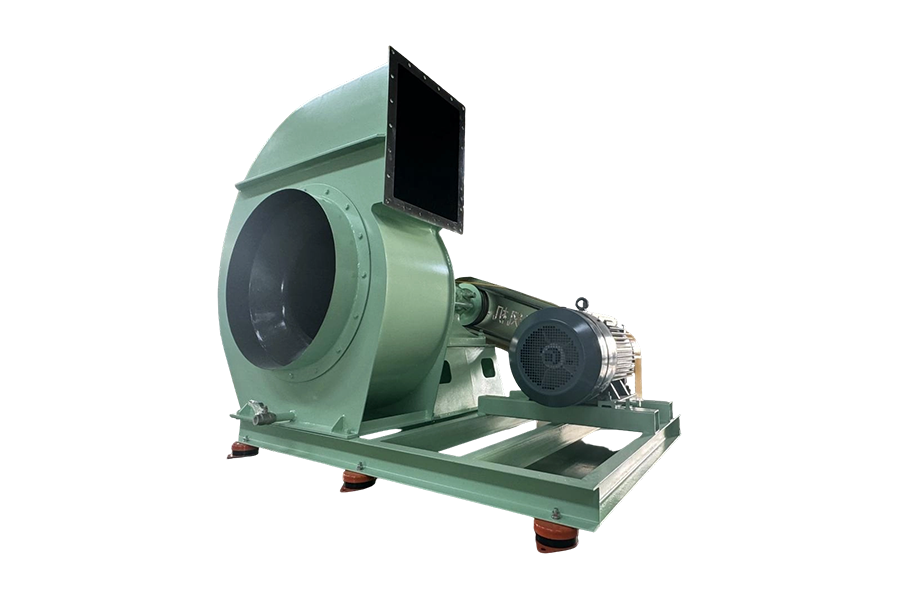
Main fan Product Name Air volume All-in Medium temperature Conveying medium Main fan 1000-30000...
See Details
Content
Engineers and procurement specialists face complex decisions when specifying customized centrifugal fan systems for industrial applications. These mechanical devices convert rotational energy into airflow and pressure through impeller action, serving critical functions across HVAC, manufacturing, chemical processing, and power generation sectors. Understanding the technical relationships between impeller geometry, material construction, and motor efficiency ensures optimal equipment selection that balances initial investment with lifecycle operating costs.
A customized centrifugal fan operates on the principle of radial acceleration. Air enters axially through the impeller eye, then centrifugal force accelerates it outward along the blade surfaces at 90 degrees to the intake direction. The volute housing collects this high-velocity air and converts kinetic energy into static pressure through gradual expansion of the cross-sectional area. This pressure generation capability distinguishes centrifugal designs from axial alternatives, making them essential for systems with significant duct resistance or filtration requirements.
The impeller diameter directly influences performance characteristics. Larger diameters move greater air volumes at lower rotational speeds, improving efficiency and reducing noise. Standard industrial impellers range from 200mm to 3000mm, depending on application requirements. The specific speed calculation, determined by rotational speed, flow rate, and pressure rise, guides proper fan classification for each duty point.
Impeller geometry represents the primary customization variable affecting efficiency, pressure capability, and particulate handling. Three fundamental blade configurations dominate industrial applications, each offering distinct performance profiles
The following comparison table summarizes critical differences between impeller types:
| Characteristic | Forward Curved | Backward Curved | Radial Blade |
| Blade Direction | Curved with rotation | Curved against rotation | Straight, no curvature |
| Number of Blades | 24-64 shallow blades | 6-12 steep blades | 6-12 flat paddles |
| Airflow Volume | High CFM capability | Medium CFM | Medium to high CFM |
| Static Pressure Range | Up to 5 in. w.g. | Up to 15 in. w.g. | Up to 12 in. w.g. |
| Peak Efficiency | 60-65% | 75-85% | 70% |
| Noise Characteristics | Higher at pressure | Lower, smoother flow | Moderate |
| Particulate Handling | Not recommended | Limited dust tolerance | Excellent for conveying |
| Power Curve | Overloading risk | Non-overloading | Non-overloading |
| Typical Applications | HVAC, fan coil units | Industrial exhaust, AHU | Material conveying, dust collection |
Forward curved impellers, commonly called squirrel cage designs, feature numerous shallow blades curved in the direction of rotation. These configurations excel in low-pressure, high-volume applications requiring compact footprints. However, the overloading power curve presents operational risks—motor load increases significantly as static pressure decreases, potentially causing motor failure if system resistance changes .
Backward curved centrifugal fan configurations deliver superior efficiency through aerodynamic blade profiles that curve against the rotation direction. These impellers achieve 75-85% efficiency while maintaining non-overloading power characteristics. The self-cleaning blade design tolerates moderate dust loads, making it suitable for industrial exhaust and air handling units. High-pressure variants achieve static pressures up to 1750 mmWC with air volumes reaching 950,000 CMH
Radial designs employ straight blades extending perpendicular to the rotation axis. These robust configurations handle abrasive materials, stringy fibers, and particulate-laden airstreams that would damage curved blades. Industrial applications include pneumatic conveying, sandblasting systems, and wood chip handling, where durability supersedes efficiency optimization .
Selecting the appropriate impeller type requires analysis of air quality, pressure requirements, and efficiency priorities. Clean air applications with moderate pressure need suit backward curved designs. High-volume, low-pressure HVAC systems work efficiently with forward curved impellers. Abrasive or fibrous materials mandate radial blade configurations despite lower efficiency .
Operating environment dictates material specifications for customized centrifugal fan construction. Temperature extremes, corrosive media, and abrasion levels influence component longevity and maintenance intervals. Standard materials include carbon steel, aluminum alloys, and various stainless steel grades, with specialized coatings available for extreme conditions.
The following table compares material options and their suitability for different industrial environments:
| Material | Maximum Temperature | Corrosion Resistance | Weight Advantage | Primary Applications |
| Carbon Steel (Q235) | 350°C | Poor without coating | Baseline | General ventilation, clean air |
| Aluminum Alloy (A356) | 150°C | Good | 60% lighter than steel | Transportation, spark-resistant |
| 304 Stainless Steel | 600°C | Good | Moderate | Food processing, dairy |
| 316L Stainless Steel | 1000°F (538°C) | Excellent | Moderate | Chemical, marine, scrubbers |
| Nickel Alloys (625, C276) | 1100°C | Superior | Heavy | Severe corrosive environments |
Standard carbon steel grades offer cost-effective solutions for general ventilation and clean air applications. Powder coating or epoxy finishes extend service life in moderately corrosive environments. Heavy-gauge welded construction withstands pressures up to 22 inches water gauge for industrial duty cycles [^45^].
Stainless steel centrifugal fan construction addresses demanding environments in chemical processing, food manufacturing, and marine applications. Type 304 stainless steel resists organic chemicals and standard cleaning protocols. Type 316L provides superior chloride resistance for coastal installations and chemical scrubber systems.
Aluminum A356 alloy impellers, manufactured through low-pressure casting and T6 heat treatment, achieve tensile strengths exceeding 280 MPa with elongation above 3.5% .These lightweight components reduce overall fan weight by approximately 60% compared to steel equivalents, benefiting transportation applications and installations with structural limitations. Aluminum construction also satisfies spark-resistant requirements for explosive atmosphere applications.
Extreme environments may require specialized materials, including titanium for superior corrosion resistance, Monel for marine applications, or fiberglass reinforced plastic (FRP) for chemical resistance. These premium options increase initial investment but reduce lifecycle costs through extended maintenance intervals.
Motor efficiency classification significantly impacts customized centrifugal fan operating economics. The International Electrotechnical Commission (IEC) establishes efficiency classes under standard 60034-30-1, with regulatory mandates driving adoption of higher efficiency tiers .
The following table outlines efficiency class characteristics and compliance requirements:
| Efficiency Class | Description | Efficiency Range | Loss Reduction vs IE2 | Regulatory Status |
| IE1 | Standard Efficiency | Baseline | Reference | Obsolete/phase-out |
| IE2 | High Efficiency | 80-87% | 10% improvement | Minimum for 0.12-0.75kW (2021) |
| IE3 | Premium Efficiency | 87-93% | 15-20% reduction | Mandatory 0.75-1000kW (2021) |
| IE4 | Super Premium | 93-96% | Additional 10% vs IE3 | Mandatory 0.75-200kW (2023) |
IE2 motors represent the baseline for fractional horsepower applications between 0.12 kW and 0.75 kW under current regulations. These motors suit intermittent duty applications where continuous operation does not justify premium efficiency investment.
Since July 2021, EU regulations mandate IE3 efficiency for motors between 0.75 kW and 1000 kW . Centrifugal fan IE3 IE4 motor efficiency compliance ensures energy consumption reduction of 15-20% compared to IE2 equivalents. These motors suit continuous operation applications,s including industrial ventilation and process cooling.
IE4 motors deliver maximum efficiency for demanding applications with near-continuous operation. Regulatory requirements mandate IE4 compliance for motors 0.75-200 kW from July 2023 . These motors achieve efficiency levels exceeding 96%, providing rapid return on investment through energy savings despite higher initial cost .
Procurement teams must verify motor efficiency compliance against applicable regulations. Non-compliant motors face import restrictions and operational penalties in regulated markets. Variable frequency drive (VFD) integration with IE2 motors may satisfy efficiency requirements in certain jurisdictions, though direct IE3 or IE4 motor specification ensures universal compliance .
Centrifugal fan impeller diameter selection requires balancing performance requirements with physical constraints. Standard diameters range from 200mm for compact HVAC units to 3000mm for heavy industrial applications. The impeller width, measured axially, determines airflow capacity at a given diameter. Wider impellers process greater volumes but require proportionally higher power input.
Selection software calculatethe s optimal diameter based on the required flow rate, system pressure, and rotational speed. The Euler equation couples impeller diameter with blade loading angles—smaller diameters require steeper blade angles to achieve equivalent pressure rise .
High-pressure centrifugal fan applications demand careful analysis of system resistance. Static pressure requirements include ductwork friction losses, filter resistance, and component pressure drops. Underestimating system resistance results in inadequate airflow, while overestimation wastes energy and increases noise.
Standard industrial fans achieve static pressures ranging from 0.5 to 6.0 inches water column, with specialized high-pressure designs reaching 70 inches water column or higher. Performance verification to DIN 24166 Class 1 or BS 848 Class A standards ensures rated capacity delivery.
Operating temperature ranges influence material selection and bearing specifications. Standard fans accommodate temperatures up to 80°C, while high-temperature designs with stainless steel construction operate continuously at 350°C and intermittently at 550 °C. High-temperature applications require thermal expansion accommodation in mounting designs and shaft seals rated for elevated temperatures.
Systematic selection ensures customized centrifugal fan performance matches application requirements. The following selection matrix guides procurement decisions:
| Application Type | Recommended Impeller | Material Specification | Motor Efficiency | Drive Type |
| HVAC Air Handling | Backward curved | Aluminum or coated steel | IE3 | Belt or direct |
| Industrial Exhaust (clean) | Backward curved | Carbon steel | IE3 | Belt drive |
| Material Conveying | Radial blade | Hardened steel/AR400 | IE2 or IE3 | Belt drive |
| Chemical Processing | Backward curved | 316L Stainless steel | IE3 | Belt drive |
| Food/Dairy Processing | Backward curved | 304 Stainless steel | IE3 | Direct drive |
| High Temperature (>300°C) | Radial or backward | 316L or nickel alloy | IE3 with thermal protection | Belt drive with cooling |
| Mine Ventilation | Backward curved | Heavy-duty steel | IE3 | Belt drive |
Accurate static pressure calculation requires the summation of all system components. Ductwork friction depends on diameter, length, and surface roughness. Filter resistance varies with media type and loading. Bends, transitions, and dampers contribute additional losses. The recommended practice specifies fans achieving the required CFM at 1.25 times the calculated system pressure to ensure an adequate performance margin .
Optimal efficiency occurs when the system operating point intersects the fan curve near the Best Efficiency Point (BEP). Operating significantly left of BEP causes instability and recirculation. Right-of-BEP operation reduces efficiency and increases noise. Variable frequency drives enable operation at multiple duty points while maintaining efficiency .
Direct drive configurations mount the impeller directly on the motor shaft, eliminating belt losses and maintenance. These compact arrangements suit clean air applications with consistent duty requirements. Belt drive systems allow speed adjustment through pulley ratio changes and provide motor isolation from airstream temperatures. Coupling drives offer intermediate efficiency with minimal maintenance requirements.
Variable frequency drives adjust motor speed to match varying system demands, delivering significant energy savings compared to damper control. Fan laws dictate that airflow varies linearly with speed, pressure varies with speed squared, and power varies with speed cubed. A 20% speed reduction yields approximately 50% power savings .
Standard industrial fans achieve 40,000 to 100,000 hours bof earing life, depending on operating conditions. Grease-lubricated bearings require periodic relubrication, while oil bath systems offer extended intervals. Impeller balancing to ISO 1940 Grade 6.3 or 2.5 minimizes vibration and extends component life [^52^]. Regular inspection of blade wear, particularly in particulate-laden applications, prevents catastrophic failure.
Selection requires defining four parameters: required airflow (CFM), total system static pressure (inches water gauge), air density at operating temperature, and acceptable noise level. Backward curved impellers suit applications requiring medium to high static pressure (up to 15 in. w.g.) with clean or moderately dusty air. These fans achieve 75-85% efficiency and feature non-overloading power curves that protect motors from overload. Match the fan curve to your system resistance curve, ensuring the operating point falls within 80-100% of the BEP flow rate for optimal efficiency .
High-pressure centrifugal fans incorporate specialized impeller designs and robust construction to achieve static pressures exceeding standard ranges. These units typically employ backward curved or radial impellers with reinforced blade construction, heavy-gauge welded housings rated to 22 in. w.g., and precision-balanced components to withstand higher stress levels. Applications include long duct runs, high-efficiency filtration systems, and pneumatic conveying where pressure requirements exceed 10 in. w.g. Standard fans typically handle 0.5-6 in. w.g., while high-pressure designs reach 70+ in. w.g .
Continuous duty applications (24/7 operation) justify IE4 Super Premium Efficiency motors despite higher initial cost. The 10% efficiency improvement over IE3 motors generates a rapid payback through energy savings. For applications operating 4,000+ hours annually, IE3 Premium Efficiency represents the minimum specification under EU regulations for motors above 0.75 kW. Intermittent duty or seasonal applications may utilize IE2 motors where regulations permit. Always verify local regulatory requirements, as efficiency mandates vary by jurisdiction and implementation dates extend through 2023 for IE4 compliance.
Impeller diameter directly influences airflow capacity, pressure generation, and rotational speed requirements. Larger diameters move greater air volumes at lower RPM, improving efficiency and reducing noise. However, diameter selection must balance performance requirements with physical constraints and tip speed limitations. The specific speed calculation (ns = 5.54 × n × √Q / H^(3/4)) guides proper sizing. Excessive diameter relative to system requirements causes operation far left of BEP, reducing efficiency and potentially causing instability. Insufficient diameter requires higher rotational speeds to achieve rated performance, increasing noise and wear
Your email address will not be published. Required fields are marked*
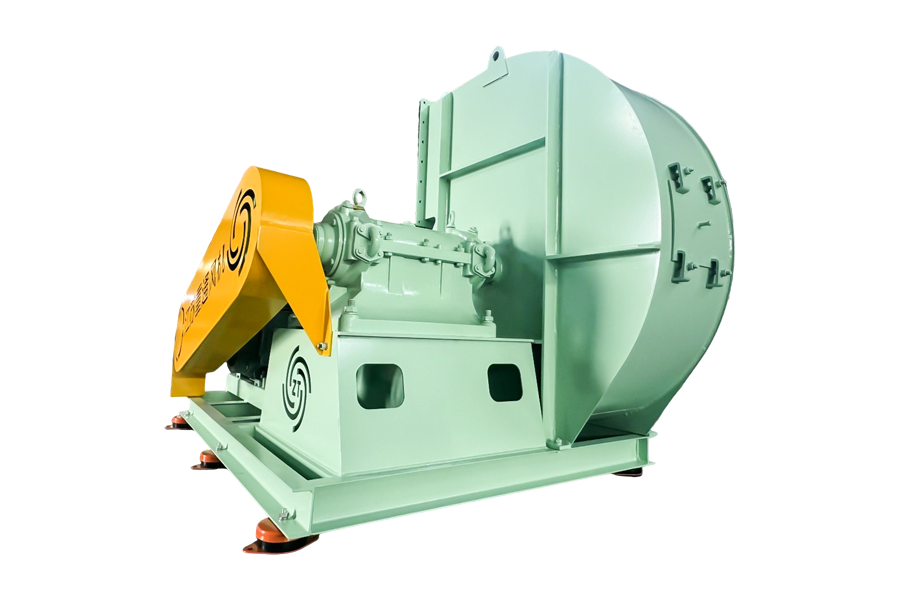
Main fan Product Name Air volume All-in Medium temperature Conveying medium Main fan 1000-30000...
See Details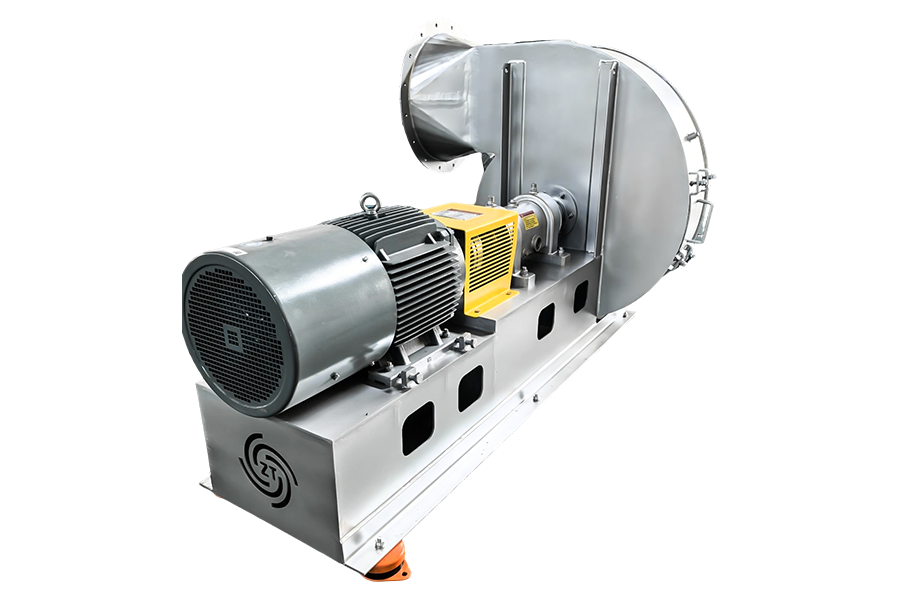
Desorption fan Product Name Air volume All-in Medium temperature Conveying medium Desorption fa...
See Details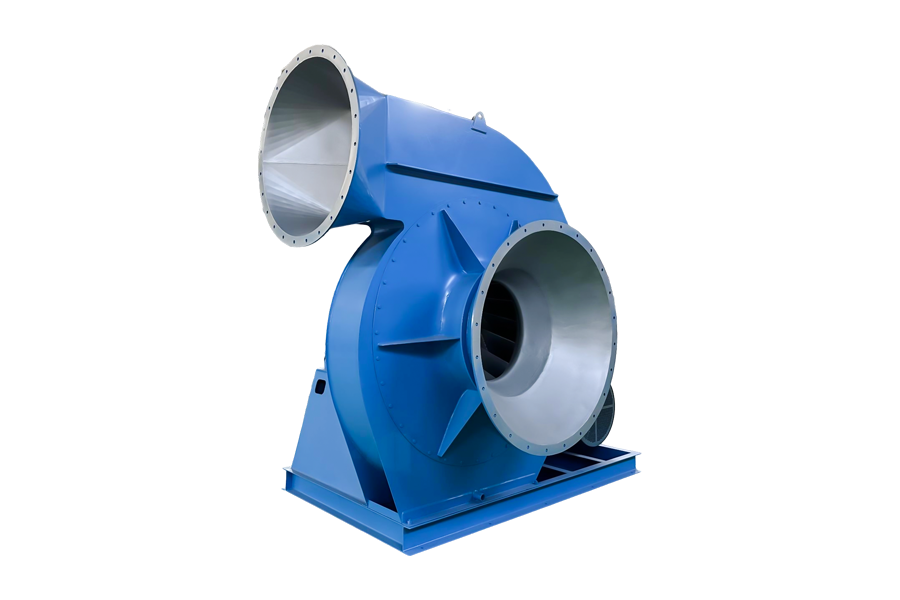
Induced draft fan Product Name Air volume All-in Medium temperature Conveying medium induced dr...
See Details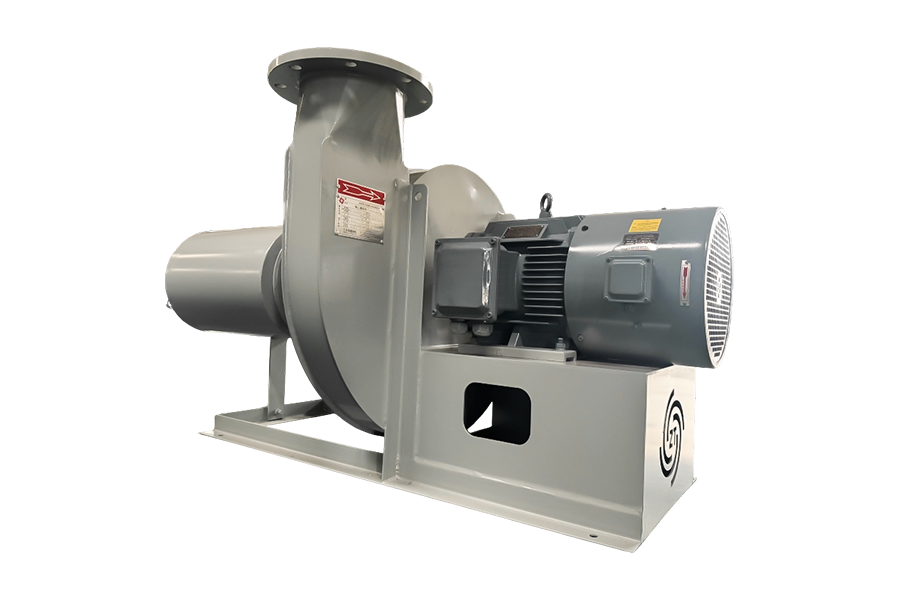
Combustion-supporting fan Product Name Air volume All-in Medium temperature Conveying medium Co...
See Details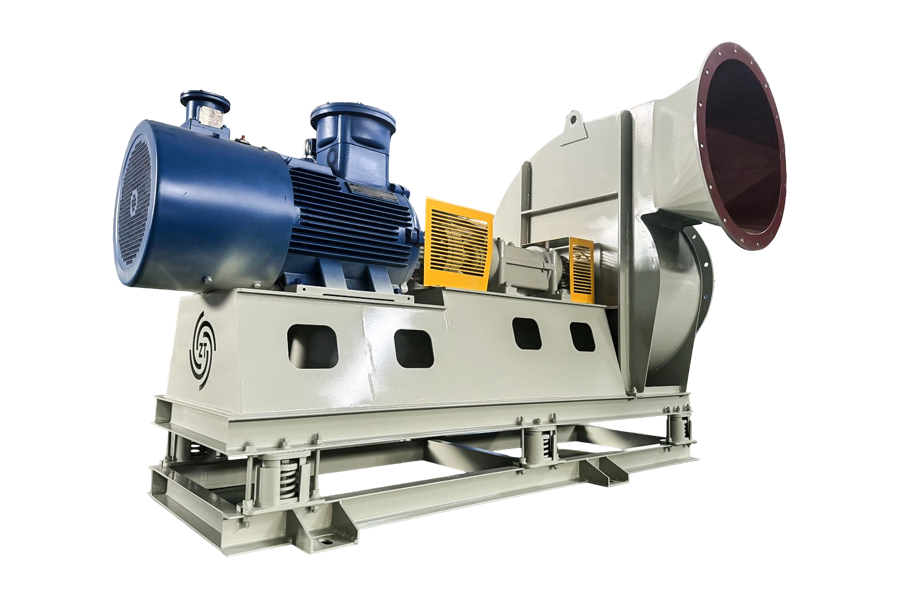
Oxygen supplement fan Product Name Air volume All-in Medium temperature Conveying medium Oxygen...
See Details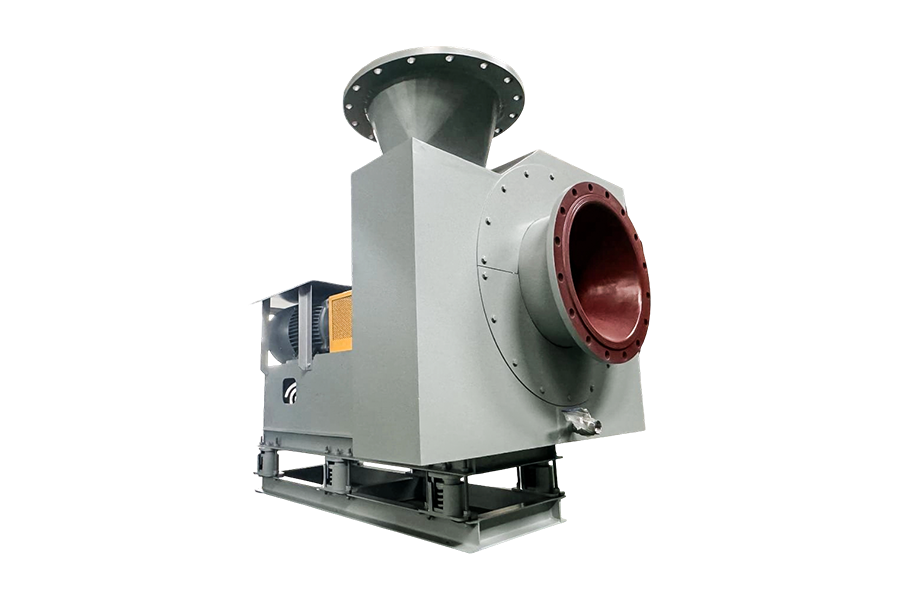
Purge fan Product Name Air volume All-in Medium temperature Conveying medium Purge fan 1000-500...
See DetailsMobile: +86-188 6157 1101
No.58 Wendong Road, Xushe Town Industrial Zone, Yixing City, Jiangsu Province, China

Copyright © JIANGSU ZT FAN CO.,LTD. All Rights Reserved.
Stainless Steel Centrifugal Fan Manufacturers


+86-188 6157 1101
