
 Contact Us
 Language
 English
 русский
 Español
Category: Centrifugal fans for the coating industry Plug-in high-temperature fan Product Name Air...
See Details
Content
Specifying the correct heavy-duty centrifugal fan for an industrial application is one of the most consequential decisions in a ventilation or process air system design. An undersized fan cannot overcome system resistance and fails to deliver the required airflow. An oversized fan wastes energy, increases noise, accelerates bearing wear, and often operates in an unstable region of its performance curve. For procurement engineers, plant managers, and wholesale distributors, this guide provides an engineering-level evaluation framework covering impeller design, aerodynamic performance, motor selection, application matching, and sourcing criteria.
A centrifugal fan accelerates air by transferring rotational kinetic energy from a driven impeller to the airstream. Air enters the impeller axially at the eye (center), is accelerated radially outward by the rotating blades, and exits into a volute casing where velocity pressure is converted to static pressure. The term "heavy duty" in industrial fan classification denotes fans built to handle elevated operating demands — including high static pressures above 1,000 Pa, continuous duty cycles at elevated temperatures, corrosive or particle-laden airstreams, and structural loading from large impeller diameters and high rotational speeds.
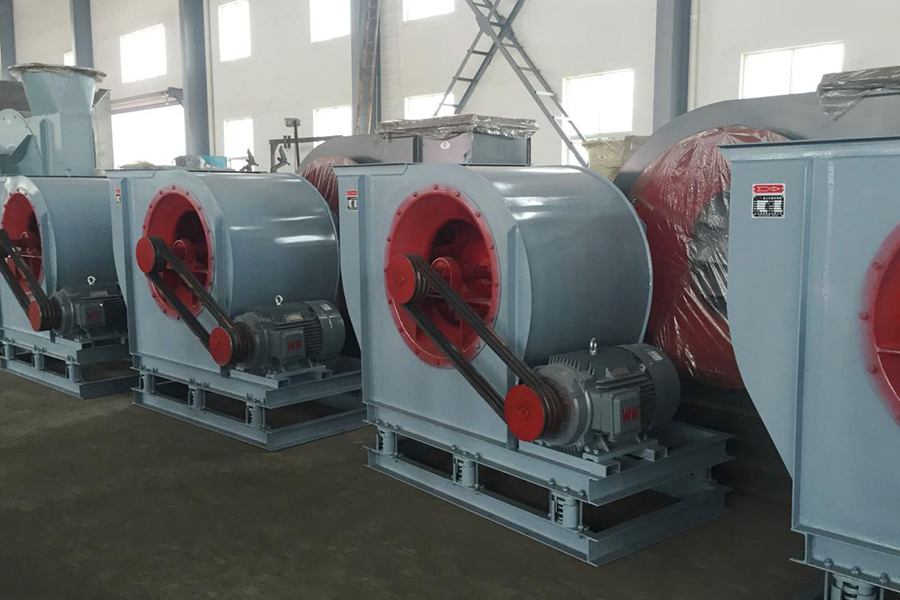
The fundamental performance relationship in a centrifugal fan is described by the fan laws, which govern how airflow volume (m3/h), static pressure (Pa), shaft power (kW), and noise level change with impeller speed and size. These relationships are fixed by fluid mechanics and apply uniformly across all centrifugal fan designs:
These laws have direct implications for energy cost in variable-load ventilation systems. A variable frequency drive (VFD) reducing fan speed by 20% reduces power consumption by approximately 49%, which is why VFD control ia s standard specification in modern energy-efficient industrial ventilation design.
Impeller blade geometry is the primary determinant of a centrifugal fan's pressure-volume characteristic, efficiency peak, and suitability for different air quality conditions. The three principal blade geometries — backward-curved, forward-curved, and radial — each serve different pressure, efficiency, and contamination-handling requirements. The table below compares these designs across the parameters most relevant to industrial procurement decisions.
| Impeller Type | Peak Total Efficiency | Pressure Characteristic | Self-Cleaning Ability | Noise Level | Primary Application |
|---|---|---|---|---|---|
| Backward-curved (BC) | 75–85% | Non-overloading (power curve peaks and flattens) | Low deposits on the concave blade face | Low | Clean air HVAC, process ventilation, boiler FD fans |
| Backward-inclined (BI) flat blade | 70–80% | Non-overloading | Moderate | Low to moderate | Slightly dusty air, general industrial ventilation |
| Radial (paddle blade) | 55–65% | Steep rising curve — high-pressure capability | Very high — open blade profile resists buildup | High | Dust-laden air, pneumatic conveying, material handling |
| Forward-curved (FC) multiblade | 60–70% | Overloading — power rises continuously with flow | Low | Moderate | Low-pressure clean air, domestic HVAC, air handling units |
Material selection for heavy-duty impellers depends on the temperature, chemical composition, and abrasive content of the handled airstream. Standard carbon steel (S235JR or S355JR per EN 10025) is used for ambient-temperature clean-air applications. Hot-dip galvanized or epoxy-coated carbon steel extends service life in moderately corrosive environments. Stainless steel (304 or 316L) is specified for chemical plant ventilation and food processing environments. High-chrome wear-resistant steel (typically 28% Cr content) is used in mineral processing and cement plant applications where abrasive particle impact is the primary failure mechanism.
Correct aerodynamic sizing requires plotting the fan's performance curve against the system resistance curve. The system operating point is the intersection of these two curves. A well-selected fan operates at or near its peak efficiency point at the design operating condition. Operating far left of the peak efficiency point risks surge — an aerodynamic instability that causes cyclic flow reversal, severe vibration, and rapid impeller fatigue damage. The table below provides reference heavy-duty centrifugal fan airflow and static pressure specs across typical industrial fan size categories.
| Fan Size Category | Typical Airflow Range (m3/h) | Typical Static Pressure Range (Pa) | Impeller Diameter Range (mm) | Typical Motor Power (kW) |
|---|---|---|---|---|
| Medium industrial | 5,000–30,000 | 500–2,000 | 400–800 | 4–30 |
| Large industrial | 30,000–150,000 | 1,000–5,000 | 800–1,600 | 30–200 |
| Heavy process/mining | 100,000–500,000+ | 3,000–15,000 | 1,200–2,500+ | 150–2,000+ |
Static pressure requirements for a duct system are calculated by summing all pressure losses along the longest duct run — including straight duct friction losses (calculated per the Darcy-Weisbach equation), fitting losses (bends, contractions, expansions), filter and coil pressure drops, and terminal device resistances. Buyers should specify total system static pressure at the design airflow rate, not just one of these values, when requesting fan selection from suppliers.
Motor selection for a heavy-duty centrifugal fan must account for service factor, starting current, drive configuration, and energy efficiency class. The motor's rated power must exceed the fan shaft power at the maximum system operating point — typically with a service factor of 1.10 to 1.25 applied to the calculated shaft power to prevent thermal overload during demand peaks or system resistance variations.
Drive configuration directly affects installation flexibility, speed adjustment capability, and maintenance access:
Motor energy efficiency classification follows IE (International Efficiency) standards defined in IEC 60034-30-1. IE3 (Premium Efficiency) is the minimum mandatory class for motors above 0.75 kW in the European Union under EU Regulation 2019/1781, effective July 2023. IE4 (Super Premium Efficiency) is increasingly specified in procurement contracts for continuous-duty industrial fans to minimize lifecycle energy cost. The heavy-duty centrifugal fan motor power and efficiency rating should always be evaluated together — a higher-efficiency motor at the same rated power reduces annual energy consumption and operating cost over the fan's service life.
The heavy-duty centrifugal fan for industrial ventilation systems market spans a wide range of process environments, each imposing specific material, coating, sealing, and safety requirements on fan construction. The following categories represent the most common industrial application segments with their defining technical requirements:
For buyers evaluating heavy-duty centrifugal fan wholesale pricing and MOQ, the market segments sharply by fan size, material specification, and custom engineering content. Standard catalog fans in medium industrial size ranges (impeller diameter 400–800 mm, motor power 4–30 kW) in carbon steel construction are the highest-volume commodity segment and carry the most competitive pricing with MOQs as low as 1–5 units. Custom-engineered large fans above 75 kW are typically single-unit or small-batch orders with full engineering documentation packages and lead times of 8 to 20 weeks.
Wholesale procurement qualification for industrial centrifugal fans should include the following documentation and verification requirements:
A heavy-duty centrifugal fan generates pressure by converting rotational kinetic energy to static pressure through radial airflow in a volute casing. It achieves high static pressures (500–15,000 Pa and above) at relatively lower volumetric flow rates, making it suitable for duct systems with high resistance. An axial fan moves air parallel to the shaft axis and achieves high flow rates at low static pressures (typically below 500 Pa). Centrifugal fans are preferred for ducted industrial ventilation, process air, and material handling systems. Axial fans are preferred for large-volume, low-resistance applications such as cooling towers and roof exhaust.
The required shaft power for a centrifugal fan is calculated from the formula: P = (Q x Ps) / (3600 x eta), where P is shaft power in kW, Q is airflow volume in m3/h, Ps is fan static pressure in Pa, and eta is the fan total efficiency expressed as a decimal. For example, a fan delivering 20,000 m3/h at 1,500 Pa with 70% total efficiency requires shaft power of (20,000 x 1,500) / (3,600 x 0.70) = approximately 11.9 kW. Motor rated power should be selected at least 10–25% above this calculated value to provide an adequate service factor for startup and system variation.
Industrial centrifugal fans are evaluated against ISO 14694, which specifies vibration severity limits in terms of vibration velocity (mm/s RMS) measured at the bearing housings during operation at rated speed and load. For standard heavy-duty centrifugal fans, the acceptance limit is typically BV-3, corresponding to a maximum vibration velocity of 4.5 mm/s RMS in the installed condition. Fans installed on flexible mounts or operating in sensitive structural environments may be specified to BV-2 (2.8 mm/s RMS) or BV-1 (1.8 mm/s RMS). Buyers should specify the required vibration grade in the purchase specification and request factory test records for each unit.
Centrifugal fans installed in areas classified as potentially explosive atmospheres under ATEX Directive 2014/34/EU (European Union) or IECEx system (international) must be certified for the applicable equipment category and gas or dust group. The required equipment category depends on the zone classification of the installation area — Zone 1 or Zone 2 for gas/vapor hazards, Zone 21 or Zone 22 for dust hazards. Fan construction in explosive atmosphere service requires spark-resistant material combinations (typically non-sparking impeller material versus casing, or non-metallic construction), antistatic grounding provisions, and temperature class compliance to prevent ignition of the specific flammable substance present.
Your email address will not be published. Required fields are marked*
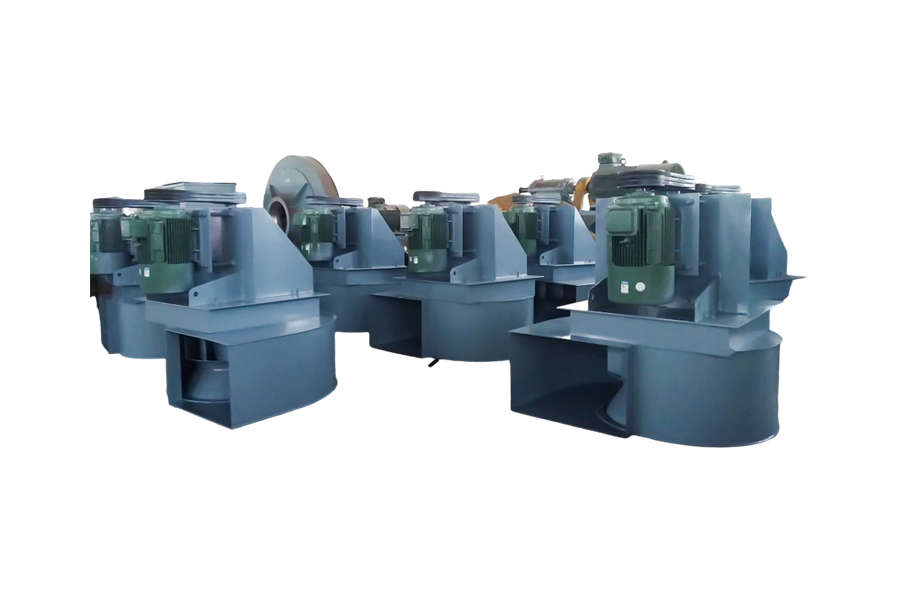
Category: Centrifugal fans for the coating industry Plug-in high-temperature fan Product Name Air...
See Details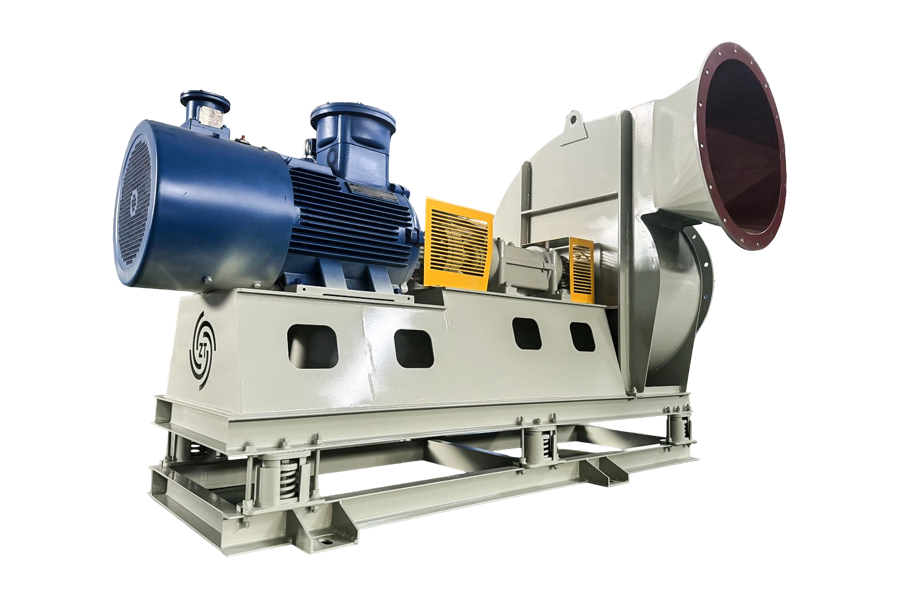
Oxygen supplement fan Product Name Air volume All-in Medium temperature Conveying medium Oxygen...
See Details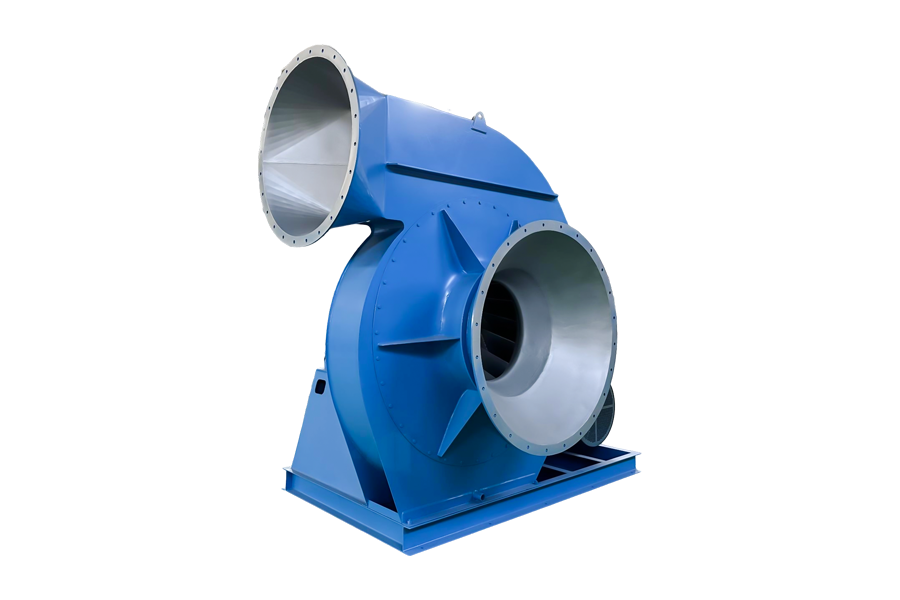
Induced draft fan Product Name Air volume All-in Medium temperature Conveying medium induced dr...
See Details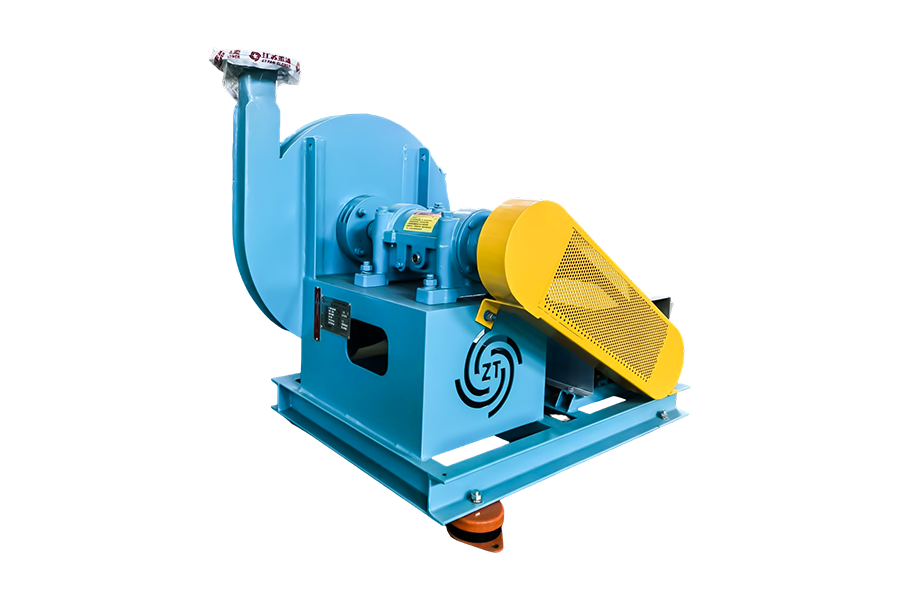
Exhaust fan Product Name Air volume All-in Medium temperature Conveying medium exhaust fan 1000...
See Details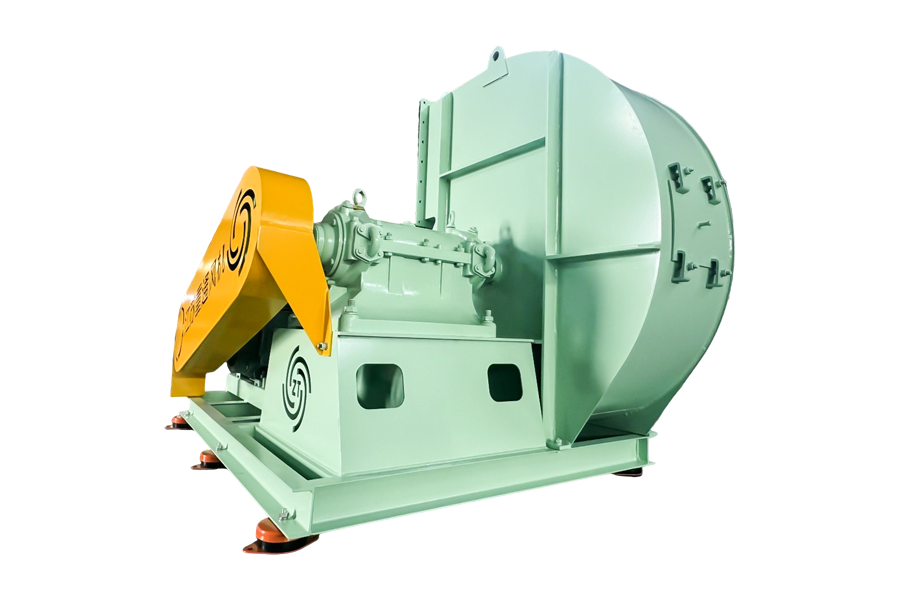
Main fan Product Name Air volume All-in Medium temperature Conveying medium Main fan 1000-30000...
See Details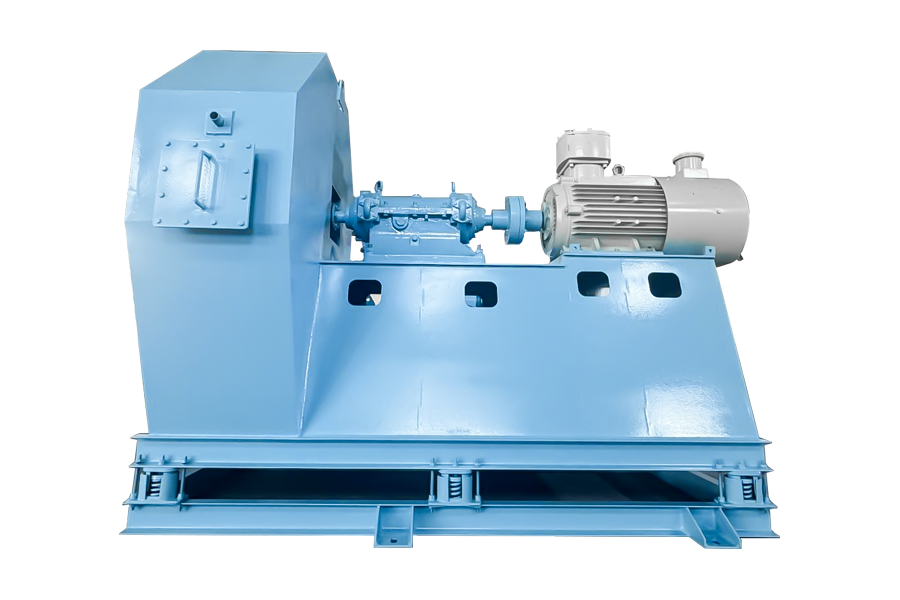
Category: Boiler System Centrifugal Fan Induced draft fan (suction fan) Product Name Air volum...
See DetailsMobile: +86-188 6157 1101
No.58 Wendong Road, Xushe Town Industrial Zone, Yixing City, Jiangsu Province, China

Copyright © JIANGSU ZT FAN CO.,LTD. All Rights Reserved.
Stainless Steel Centrifugal Fan Manufacturers


+86-188 6157 1101
