
 Contact Us
 Language
 English
 русский
 Español
Anti-blower Product Name Air volume All-in Medium temperature Conveying medium Anti-blower 1000...
See Details
Content
In industrial air handling applications, the ability to move air against significant resistance determines process efficiency and system reliability. The Centrifugal Industrial Blower stands as the preferred solution for applications requiring high static pressure, consistent airflow, and durability in demanding environments. This article provides a technical examination of design principles, selection criteria, and application considerations for engineers and procurement professionals seeking optimal air movement solutions.
A Centrifugal Industrial Blower operates by drawing air into the center of a rotating impeller and accelerating it outward through centrifugal force. This action converts rotational energy into kinetic energy, which then converts to pressure as air exits through the scroll housing. Engineers value this design for its ability to generate static pressures from 10 to 50 inches of water gauge, making it suitable for ducted systems, dust collection, and pneumatic conveying applications.
When evaluating centrifugal blower systems, engineers must examine several critical parameters that determine system performance and longevity.
The selection of a Centrifugal Industrial Blower directly impacts energy consumption, with properly matched systems achieving efficiencies of 75% to 85% at design operating points.
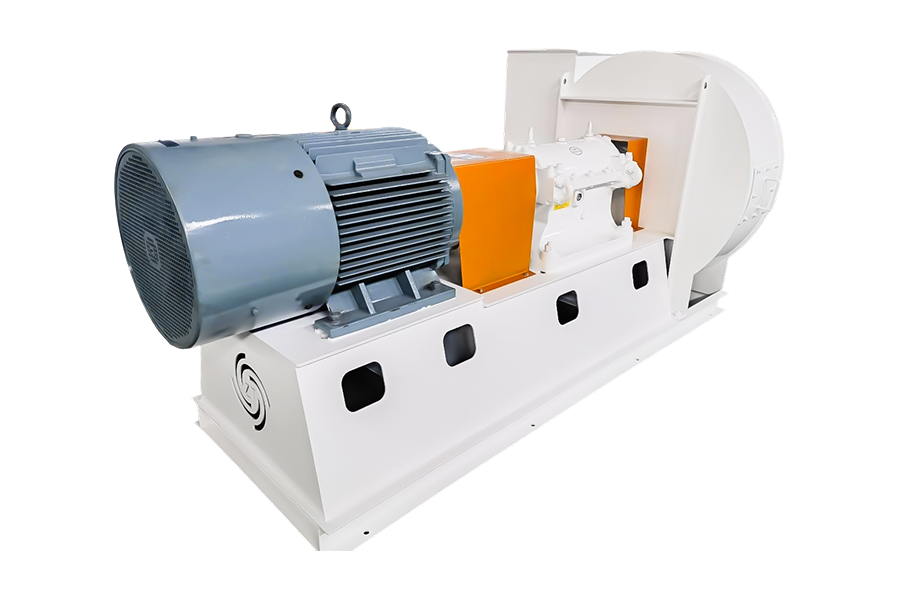
To address specific user intents, we focus on five high-search long-tail keywords that represent common procurement and engineering scenarios.
The impeller design fundamentally determines blower performance characteristics. Each impeller type offers distinct advantages for specific applications. The following comparison highlights the differences among common centrifugal impeller configurations.
For applications involving particulate handling, a centrifugal industrial blower for dust collection typically utilizes radial or backward-inclined impellers. The table below outlines key distinctions.
| Impeller Type | Pressure Characteristics | Efficiency Range | Particulate Handling | Typical Applications |
|---|---|---|---|---|
| Forward-Curved | Low to moderate | 65% - 70% | Poor, prone to accumulation | HVAC, low-pressure applications |
| Backward-Inclined | Moderate to high | 75% - 85% | Good, self-cleaning | Dust collection, industrial ventilation |
| Radial (Paddle Wheel) | High | 65% - 70% | Excellent, rugged construction | Material handling, heavy particulate |
| Airfoil | High | 80% - 85% | Poor, clean air only | Clean air HVAC, process air |
Selecting the right Centrifugal Industrial Blower requires systematic evaluation of application conditions, system constraints, and operational requirements. Working with an experienced custom centrifugal industrial blower manufacturer ensures proper specification and reliable performance.
Engineers must calculate system resistance curves before selecting blower equipment. The operating point occurs at the intersection of the fan performance curve and the system resistance curve. Oversized blowers operate inefficiently at reduced flow, while undersized units fail to achieve the required airflow. Variable frequency drives (VFDs) allow matching blower speed to actual demand, reducing energy consumption by 30% to 50% compared to constant-speed operation. For high-pressure centrifugal industrial blower applications, VFD control also provides soft-start capabilities that reduce mechanical stress on bearings and drive components.
For corrosive environments, stainless steel centrifugal industrial blower construction provides superior longevity compared to coated carbon steel. Type 304 stainless steel suits most industrial applications involving moisture or mild chemicals, while Type 316 offers enhanced chloride resistance for marine environments or chemical processing with corrosive agents. For applications involving combustible dust, non-sparking aluminum impellers with spark-resistant construction are essential to meet NFPA standards.
Different industries impose unique demands on centrifugal blower systems. In woodworking and metal fabrication, a centrifugal industrial blower for dust collection must handle heavy particulate loads without impeller imbalance, making backward-inclined impellers the preferred choice. For pneumatic conveying systems, a high-pressure centrifugal industrial blower with radial impeller construction provides the pressure capability required for moving bulk materials through long pipeline runs. When sourcing from a custom centrifugal industrial blower manufacturer, facility managers can specify exact inlet and discharge orientations, mounting configurations, and special coatings to match existing system requirements.
The backward inclined centrifugal industrial blower has gained popularity across multiple industries due to its non-overloading power characteristic. As system resistance increases, the power consumption peaks and then declines, preventing motor overload during upset conditions. This self-limiting characteristic makes it suitable for variable system conditions such as filter loading in dust collection applications.
For industrial procurement, verifying compliance with recognized standards ensures consistent quality and safety. Reputable manufacturers adhere to AMCA (Air Movement and Control Association) standards for performance testing and certification. Key procurement documents should include:
Partnering with an established custom centrifugal industrial blower manufacturer provides access to engineering support, replacement parts availability, and documented quality systems essential for large-scale industrial operations.
A Centrifugal Industrial Blower moves air radially outward from the impeller center, generating high static pressure suitable for overcoming duct system resistance. An axial fan moves air parallel to the fan shaft, producing high volume airflow at relatively low pressure. For applications requiring air movement through long duct runs, filtration systems, or against significant resistance, centrifugal blowers are the appropriate choice. For open area ventilation or low-resistance cooling applications, axial fans typically provide adequate performance at a lower initial cost.
To determine static pressure requirements for a Centrifugal Industrial Blower, you must calculate total system resistance. Sum the pressure losses from all components, including straight duct friction losses (typically 0.05 to 0.10 in. wg per 100 feet), fitting losses (elbows, transitions, and dampers), filter pressure drop (which increases as filters load), and terminal device losses (hoods, nozzles, or discharge outlets). Most industrial ventilation systems require a total static pressure between 5 and 20 in. wg. For complex systems, computer-aided duct design software or professional engineering analysis is recommended.
Proper maintenance significantly extends the operational life of a Centrifugal Industrial Blower. Key practices include regular vibration monitoring to detect bearing wear or impeller imbalance before failure occurs. Monthly belt tension inspection for belt-driven units prevents premature bearing and pulley wear. Quarterly cleaning of impellers prevents imbalance from material accumulation. Annual lubrication of bearings according to manufacturer specifications prevents premature failure. For facilities with corrosive environments, routine inspection of coatings and touch-up of damaged areas prevents corrosion progression. Facilities implementing predictive maintenance programs typically achieve 20 to 25 years of service life from quality centrifugal blower equipment.
A backward inclined centrifugal industrial blower is the preferred choice for applications requiring moderate to high pressure (5 to 25 in. wg) with clean to moderately dirty air streams. The non-overloading power characteristic prevents motor overload as system resistance changes, making it ideal for variable system conditions such as dust collection with loading filters or variable volume systems. For applications with heavy particulate, abrasive materials, or sticky contaminants, a radial impeller provides superior durability and cleanability. For clean air applications requiring maximum efficiency, an airfoil impeller offers the highest efficiency but requires clean operating conditions.
Your email address will not be published. Required fields are marked*
Anti-blower Product Name Air volume All-in Medium temperature Conveying medium Anti-blower 1000...
See Details
Category: Centrifugal fans for the coating industry Plug-in high-temperature fan Product Name Air...
See Details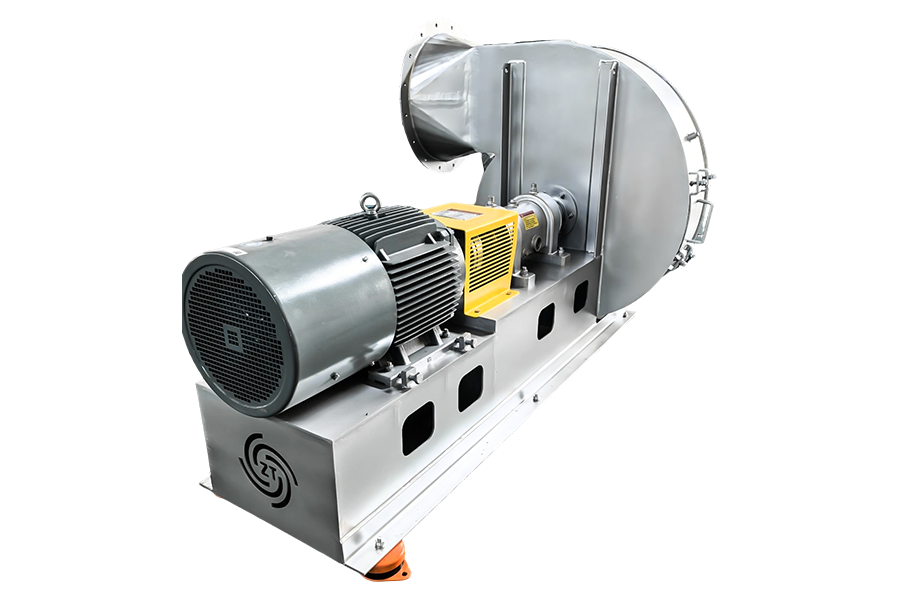
Desorption fan Product Name Air volume All-in Medium temperature Conveying medium Desorption fa...
See Details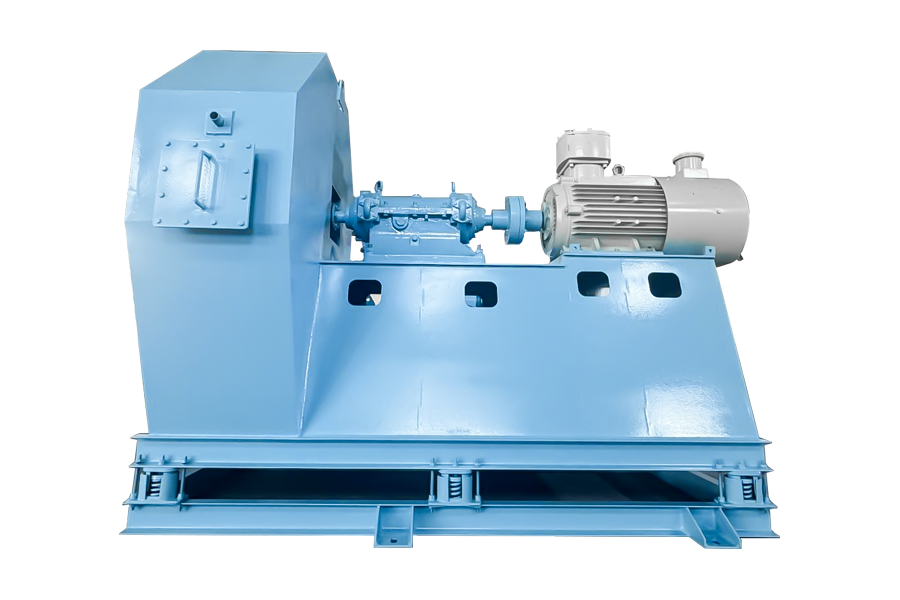
Category: Boiler System Centrifugal Fan Induced draft fan (suction fan) Product Name Air volum...
See Details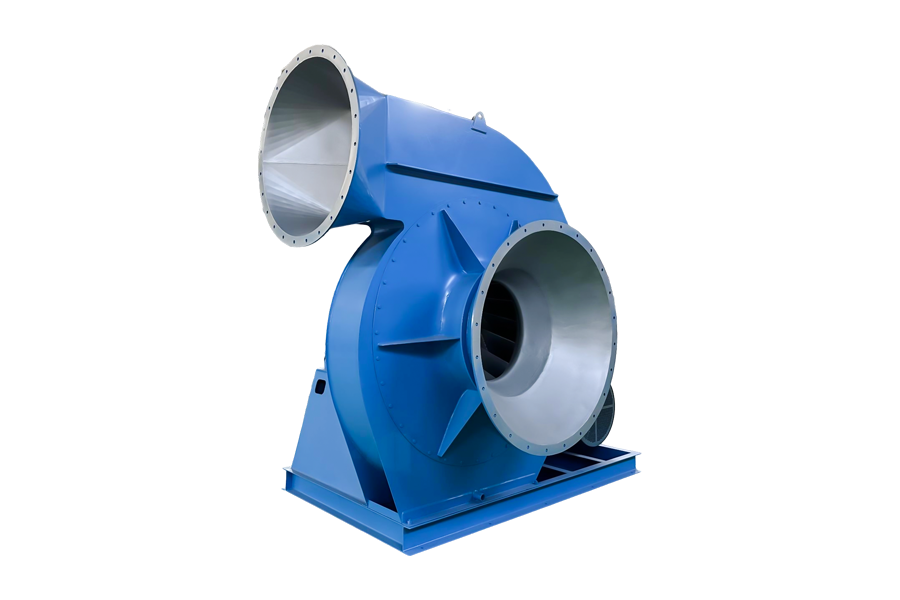
Induced draft fan Product Name Air volume All-in Medium temperature Conveying medium induced dr...
See Details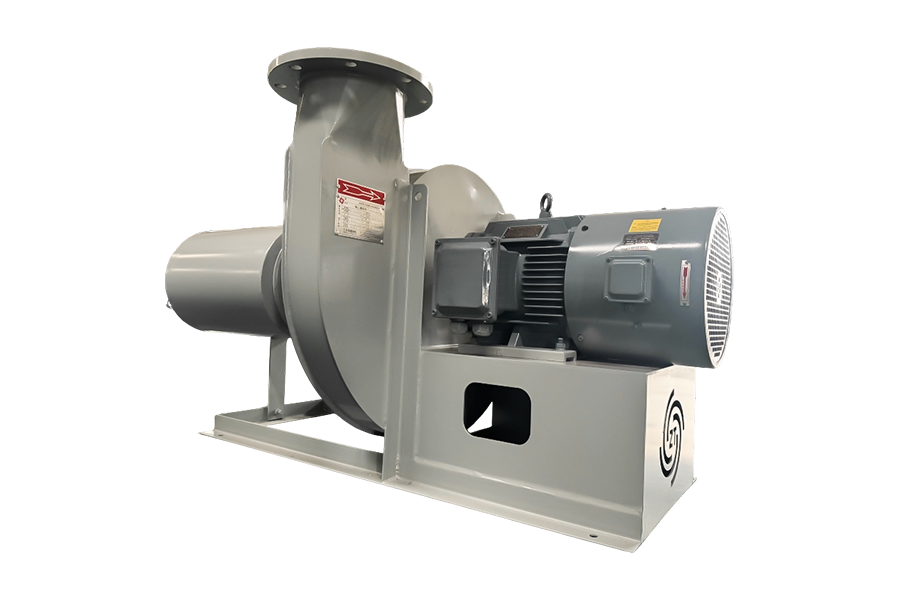
Combustion-supporting fan Product Name Air volume All-in Medium temperature Conveying medium Co...
See DetailsMobile: +86-188 6157 1101
No.58 Wendong Road, Xushe Town Industrial Zone, Yixing City, Jiangsu Province, China

Copyright © JIANGSU ZT FAN CO.,LTD. All Rights Reserved.
Stainless Steel Centrifugal Fan Manufacturers


+86-188 6157 1101
