
 Contact Us
 Language
 English
 русский
 Español
Category: Boiler System Centrifugal Fan Air blower Product Name Air volume Total pressure ...
See Details
Content
1. In high-density greenhouse environments, the localized depletion of carbon dioxide near the leaf stomata creates a boundary layer that limits photosynthetic efficiency; the strategic positioning of an Agriculture Blower Fan is essential to disrupt this stagnant air. 2. When analyzing how blower fan placement affects CO2 distribution, engineers must consider the "throw distance" and the horizontal air speed, aiming for a consistent 0.5 to 1.0 meters per second at the crop canopy level. 3. Utilizing an Agriculture Blower Fan with integrated stator vanes allows for a laminar airflow profile that extends further into the greenhouse, minimizing the internal turbulence that often traps CO2 in the upper gable areas. 4. The impact of fan height on greenhouse air circulation is a critical variable; mounting fans too high results in inefficient air mixing at the substrate level, while mounting too low can cause mechanical damage to delicate foliage or uneven tensile strength in plant stems due to excessive wind stress.
1. Why corrosion-resistant fan blades are critical for livestock: In integrated agriculture-livestock systems, the high concentration of ammonia (NH3) can lead to rapid oxidation of aluminum or standard steel components. 2. For an Agriculture Blower Fan, selecting hot-dip galvanized steel vs stainless steel for agricultural fans is a decision based on cost-to-longevity ratios; stainless steel (Grade 304 or 316) provides superior tensile strength and chemical inertness in acidic environments. 3. Achieving a specific Ra surface finish on the impeller blades (typically below 6.3 micrometers) prevents the accumulation of organic dust and fungal spores, which can alter the dynamic balance and decrease the aerodynamic efficiency of the Agriculture Blower Fan over time. 4. Testing the IP65 rating of agricultural blower motors ensures that the drive system can withstand high-pressure wash-downs and 100 percent relative humidity without electrical insulation failure or bearing seizure.
1. Calculating the air exchange rate for greenhouse ventilation requires a precise understanding of the total volume and the heat load; an Agriculture Blower Fan must be sized to provide at least 1 to 1.5 air changes per minute during peak solar radiation. 2. Comparing AC vs EC motors for agriculture blower fans reveals that Electronically Commutated (EC) motors offer superior modulation, allowing the Agriculture Blower Fan to maintain the uniformity coefficient of CO2 distribution while consuming up to 30 percent less energy at partial loads. 3. Optimizing agriculture blower fan pitch for noise reduction is vital in facilities where acoustic stress can impact animal welfare; adjusting the blade angle reduces broadband noise and vibration frequencies transmitted through the greenhouse structure. 4. Ventilation Performance Matrix:
| Engineering Parameter | Standard Axial Fan | High-Efficiency Agriculture Blower Fan |
| Air Throw Distance | 10 - 15 meters | 25 - 40 meters |
| Motor Efficiency Class | IE2 | IE4 / IE5 (EC Motor) |
| Corrosion Protection | Powder Coating | Hot-dip Galvanized / FRP |
| Ingress Protection | IP54 | IP65 / IP67 |
1. Implementing VFD control for agriculture fan systems allows for a "soft start" that protects the mechanical drive-train and enables a seamless response to CO2 sensor feedback loops. 2. How to measure CO2 uniformity in large scale greenhouses: Data is collected via a grid of infrared sensors at various elevations to verify that the Agriculture Blower Fan array is eliminating "dead zones" where gas concentrations drop below 400 ppm. 3. Analyzing the vibration spectrum of agriculture fans during routine maintenance can identify early-stage bearing wear caused by fine particulate matter typical in grain handling and poultry environments, ensuring a longer Mean Time Between Failure (MTBF).
1. What is the ideal distance between multiple Agriculture Blower Fans? To ensure CO2 distribution uniformity, fans should be spaced so that the airflow from one fan enters the intake zone of the next, typically every 15 to 20 meters, depending on the thrust capacity of the Agriculture Blower Fan. 2. Can these fans withstand the high humidity of hydroponic systems? Yes, provided they feature an IP65 ingress protection rating and the motor windings are treated with anti-corrosion varnish to prevent short circuits in 95%+ humidity. 3. Does the blade material affect the airflow volume? The shape (airfoil profile) and the Ra surface finish affect the volume more than the material itself, though fiberglass-reinforced plastic (FRP) blades often allow for more complex aerodynamic shapes than pressed steel. 4. How does fan placement affect humidity alongside CO2? A properly placed Agriculture Blower Fan facilitates evapotranspiration, preventing localized humidity spikes that lead to Botrytis and other fungal pathogens. 5. Are EC motors worth the higher initial investment? In vertical farming or precision greenhouse operations, the energy savings and the ability to integrate with 0-10V automated climate controllers make the EC-driven Agriculture Blower Fan a higher-value asset over its lifecycle.
1. ASABE S352: Placement of Fans and Air Inlets for Greenhouse Ventilation. 2. ErP Directive 2009/125/EC: Ecodesign requirements for energy-related products (Fans). 3. ISO 5801: Industrial fans — Performance testing using standardized airways.
Your email address will not be published. Required fields are marked*
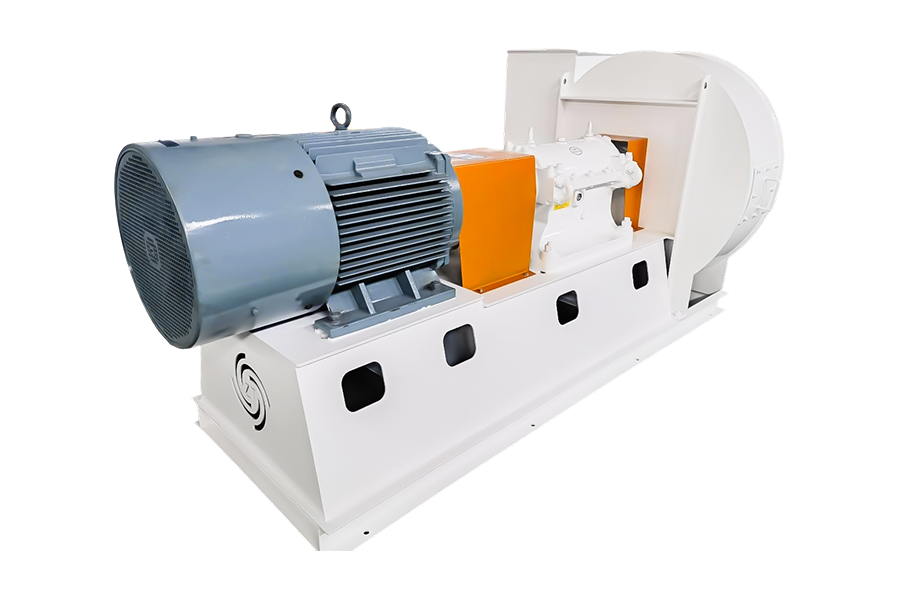
Category: Boiler System Centrifugal Fan Air blower Product Name Air volume Total pressure ...
See Details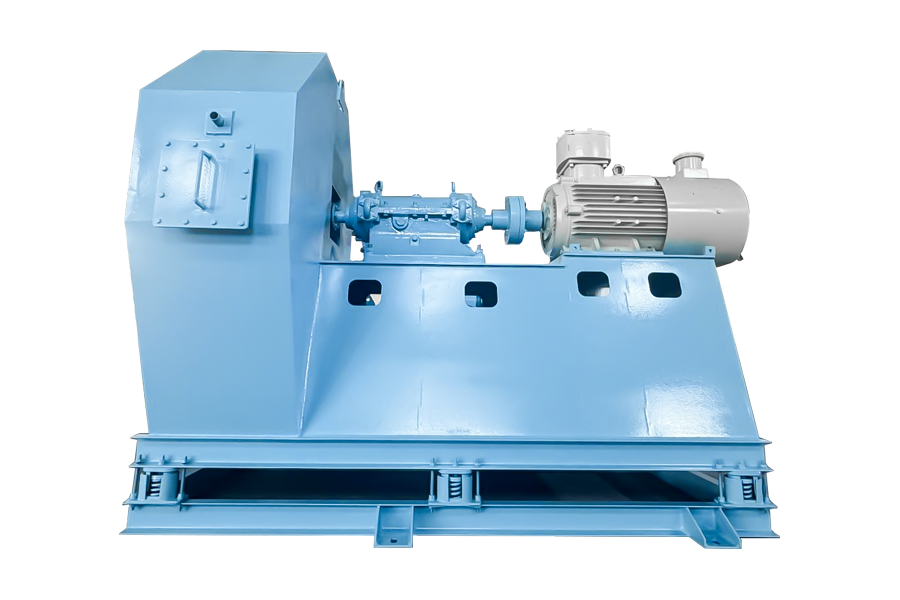
Category: Boiler System Centrifugal Fan Induced draft fan (suction fan) Product Name Air volum...
See Details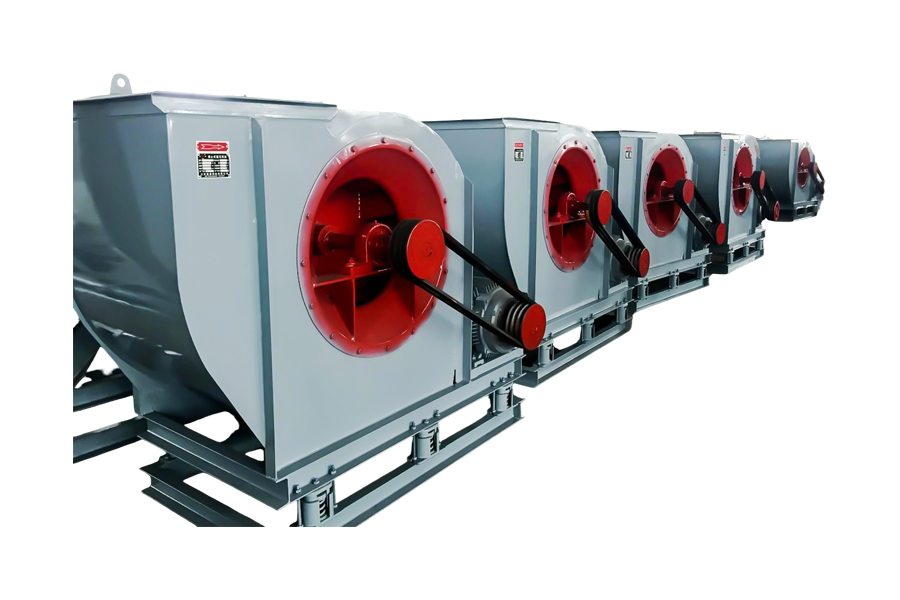
Category: Centrifugal fans for the coating industry Blower for paint spray booth Product Name Air...
See Details
Desorption fan Product Name Air volume All-in Medium temperature Conveying medium Desorption fa...
See Details
Adsorption fan Product Name Air volume All-in Medium temperature Conveying medium Adsorption fa...
See Details
Regeneration fan Product Name Air volume All-in Medium temperature Conveying medium Regeneratio...
See DetailsMobile: +86-188 6157 1101
No.58 Wendong Road, Xushe Town Industrial Zone, Yixing City, Jiangsu Province, China

Copyright © JIANGSU ZT FAN CO.,LTD. All Rights Reserved.
Stainless Steel Centrifugal Fan Manufacturers


+86-188 6157 1101
